Quiz

First or second conditional quiz: 12 questions

Try a first or second conditional quiz with twelve questions on possible and imagined situations, with clear examples and explanations for each choice.

In short

Use the first conditional for a future possibility you treat as real: If the hall is free, we'll book it. Use the second for an imagined situation: If we had a bigger hall, we'd invite everyone. A past form after if can describe an imagined situation now, not a past event.

Yellow the idea to rememberBlue English to learnRed watch out
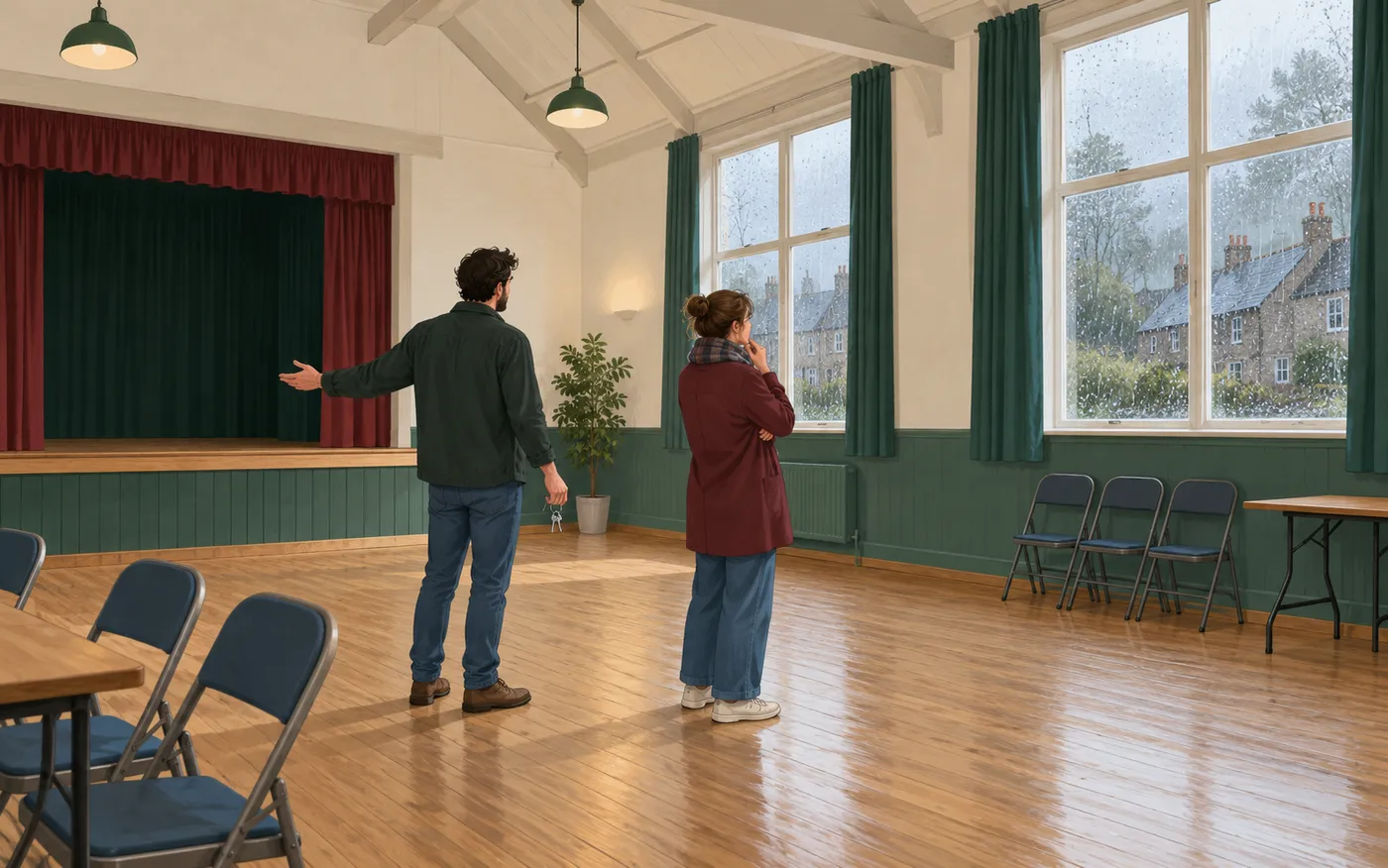
Two adults discuss a community hall booking beside a rainy window.
If the hall is free, we’ll book it; if we had a bigger hall, we’d invite everyone. Illustration: Atelier

How do you choose the first or second conditional?

First conditionalA possible future plan

Focus: You think this could really happen.

if + present simple, will + base verb

If Jo brings the key, we will open the hall.
Jo may bring it. This is our plan.

Second conditionalAn imagined situation now or in the future

Focus: You imagine something different from the facts, or less likely.

if + past simple, would + base verb

If Jo had a spare key, we would use it.
Jo has no spare key. We imagine having one.

Read the situation before choosing. Is this a real future plan, or are you imagining something different? In these patterns, put will or would in the result. Use the present form after if for the real possibility, and the past form for the imagined situation.

Can you choose the right conditional in 12 situations?

  1. Question 1No account needed
    We are checking tomorrow's weather. Complete this possible future plan.If it ___ tomorrow, we'll use the hall.

    Choose one answer.

    Answer and explanation

    rains. This is a real plan for tomorrow. Use rains after if and will use for the result.

  2. Question 2No account needed
    We have a small room. Imagine a different room now.If we had a bigger room, we ___ more people.

    Choose one answer.

    Answer and explanation

    would invite. The room is small now. Had imagines a different situation, so the result is would invite.

  3. Question 3No account needed
    Maya may finish early today. Complete her plan.If I finish early, I ___ you outside the library.

    Choose one answer.

    Answer and explanation

    will meet. Maya treats finishing early as a real possibility. If I finish goes with I will meet here.

  4. Question 4No account needed
    I cannot drive. Imagine having that skill now.If I ___ drive, I would give you a lift.

    Choose one answer.

    Answer and explanation

    could. Could imagines an ability I do not have. The result uses would give, not will give.

  5. Question 5No account needed
    Give a friend advice about checking a booking.If I ___ you, I'd phone the hall before paying.

    Choose one answer.

    Answer and explanation

    were. If I were you, I'd... is a common way to give advice. I'd means I would here.

  6. Question 6No account needed
    The shop may be open when we arrive. Complete our plan.If the shop is open, we ___ some milk.

    Choose one answer.

    Answer and explanation

    will buy. The shop may really be open. Use the first conditional: is open and will buy.

  7. Question 7No account needed
    I have no garden. Which sentence imagines a different home now?

    Choose one answer.

    Answer and explanation

    If I had a garden, I would grow vegetables.. Had and would grow imagine a garden now. The first conditional would present getting a garden as a future possibility.

  8. Question 8No account needed
    Ellis may forget the key. Choose the correct form for our back-up plan.If Ellis ___ the key, we'll ring Mari.

    Choose one answer.

    Answer and explanation

    forgets. Use the present simple forgets after if in this future plan. Ellis takes the form ending in -s.

  9. Question 9No account needed
    The train tickets are too expensive, so we are staying at home. Imagine cheaper tickets.If the tickets were cheaper, we ___ to York.

    Choose one answer.

    Answer and explanation

    would go. We are imagining different prices now. Were cheaper goes with would go in the second conditional.

  10. Question 10No account needed
    We are waiting for a reply. Complete our possible future plan.We ___ the room if the manager confirms the price.

    Choose one answer.

    Answer and explanation

    will book. The reply may arrive, and this is our plan. The result comes first, but the pattern stays will book + if ... confirms.

  11. Question 11No account needed
    I live a long way from work. Imagine living closer.If I lived nearer, I ___ so much time on the bus.

    Choose one answer.

    Answer and explanation

    wouldn't spend. Lived nearer imagines a different home now. The negative result is wouldn't spend: would not + base verb.

  12. Question 12No account needed
    Your friend may need help tomorrow. Which offer uses the first conditional?

    Choose one answer.

    Answer and explanation

    I'll help you if you need me.. I'll help ... if you need is the first conditional: a real future possibility. I'd help ... if you needed is the second; I helped describes the past.

Why does the second conditional use a past form?

If I knew the answer, I would tell you.

I do not know the answer now. I imagine knowing it.

The past form knew makes the situation imagined. There is no finished past time in this sentence.

You can put the result first: I would tell you if I knew the answer. The meaning stays the same. Use a comma when the if-part comes first; you usually leave it out when the result comes first.

Built from