वर्तमान निरंतर काल: अभी क्या हो रहा है
am, is और are, -ing की वर्तनी, प्रश्न, नकारात्मक वाक्य, चित्र-दृश्य और प्रश्नोत्तरी से अभी जारी कामों का वर्तमान निरंतर काल सीखें।
संक्षेप में
अभी हो रहे काम के लिए वर्तमान निरंतर काल रखें: I am working, she is reading, they are waiting। am, is या are + -ing वाली क्रिया से बनाएँ। am, is या are रखें: She is reading कहें, She reading नहीं।
पीला याद रखने योग्य मुख्य बातनीला सीखने योग्य अंग्रेज़ीलाल सावधानी
वर्तमान निरंतर काल कैसे बनाएँ?
| व्यक्ति | पूरा रूप | छोटा रूप |
|---|---|---|
| I | I am working. | I'm working. |
| you | You are working. | You're working. |
| he / she / it | She is working. | She's working. |
| we | We are working. | We're working. |
| they | They are working. | They're working. |
he, she और it के साथ is रखें: He is waiting. It is raining. you, we और they के साथ are रखें। you एक या अधिक लोगों के लिए हो सकता है।
-ing रूप की वर्तनी कैसे करें?
| क्या करें | क्रिया | -ing रूप |
|---|---|---|
| अधिकतर क्रियाएँ: -ing जोड़ें | work / read | working / reading |
| अंत का मौन e: e हटाएँ, -ing जोड़ें | make / write | making / writing |
| ee बनाए रखें | see | seeing |
| कुछ छोटी क्रियाएँ: अंतिम अक्षर दो बार लिखें | run / sit / stop | running / sitting / stopping |
| ie को y करें, फिर -ing जोड़ें | lie / tie | lying / tying |
| y बनाए रखें | play / study | playing / studying |
-ing जोड़ने से पहले वर्तनी देखें। Make से making होता है। अंतिम n दो बार लिखें: run से running। Lie से lying: The cat is lying on the sofa.
नकारात्मक वाक्य और प्रश्न कैसे बनाएँ?
| वाक्य | नकारात्मक वाक्य | प्रश्न |
|---|---|---|
| I am waiting. | I am not waiting. | Am I waiting in the right place? |
| She is working. | She is not working. | Is she working? |
| They are reading. | They are not reading. | Are they reading? |
नकारात्मक में am, is या are के बाद not रखें। बोलने में she is not अक्सर she isn't या she's not होता है। They are not से they aren't या they're not हो सकता है। I am not के लिए I'm not कहें।
| प्रश्न | हाँ | नहीं |
|---|---|---|
| Are you waiting? | Yes, I am. | No, I'm not. |
| Is Mina working? | Yes, she is. | No, she isn't. |
| Are the visitors reading? | Yes, they are. | No, they aren't. |
now और usually में क्या अंतर है?
Mina works at the desk every morning.यह उसकी नियमित गतिविधि है।
ध्यान दें: अधिकतर दिनों में क्या होता है।
सामान्य वर्तमान काल
Mina works at the desk every morning.
वह अधिकतर सुबह यह करती है।
Mina is talking on the phone now.यह इसी क्षण हो रहा है।
ध्यान दें: वह अभी क्या कर रही है।
am / is / are + -ing
Mina is talking on the phone now.
आप अभी उसे बोलते सुन सकते हैं।
Rob usually opens the room at nine. Today he is waiting for a key.
कमरा खोलना उसका नियमित काम है। चाबी का इंतज़ार अभी हो रहा है।
Usually आदत पहचानने में मदद करता है। Now और at the moment अभी जारी काम दिखाते हैं।
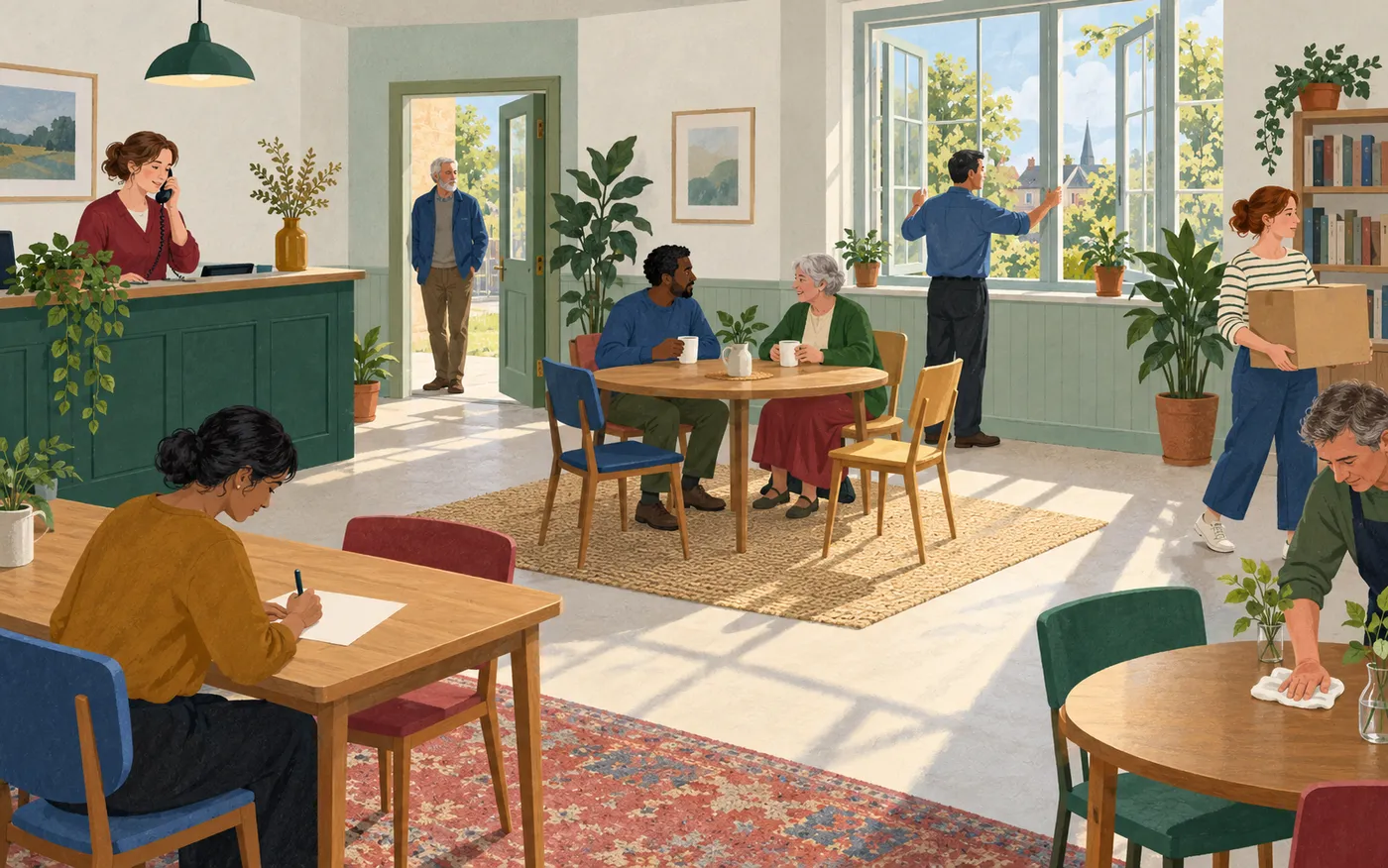
सामुदायिक कक्ष में क्या हो रहा है?
Mina डेस्क पर है और फ़ोन पर बात कर रही है। Rob बाहर चाबी का इंतज़ार कर रहा है। दो आगंतुक गोल मेज़ पर विराम ले रहे हैं। अन्य भी व्यस्त हैं। क्रिया-कार्डों से हर व्यक्ति का काम बताएँ।
हर काम कौन कर रहा है?
ढूँढ़ें:

वर्तमान निरंतर काल की किन गलतियों से बच सकते हैं?
- She talking on the phone.She is talking on the phone.
she के साथ is रखें। रूप is + talking है।
- They are wait outside.They are waiting outside.
अभी जारी काम के लिए are के बाद -ing रूप रखें।
- He is writeing a note.He is writing a note.
write का अंतिम e हटाकर -ing जोड़ें: writing।
- Does she working now?Is she working now?
प्रश्न is से शुरू करें। Is she working? रखें, Does she working? नहीं
- I am knowing the answer.I know the answer.
Know मन की जानकारी बताता है। अभी के लिए भी I know रखें।