Cheat sheet

Future continuous and future perfect

Compare future continuous and future perfect for actions in progress and results completed by a deadline, with clear examples and practice questions.

In short

Use will be doing for an activity in progress at a future time: At ten, I'll be checking the route. Use will have done to look back from a future time at a completed action: By noon, I'll have checked it. In progress at that time, or finished by that time? Will have done needs a past participle, not a past simple form.

Yellow the idea to rememberBlue English to learnRed watch out

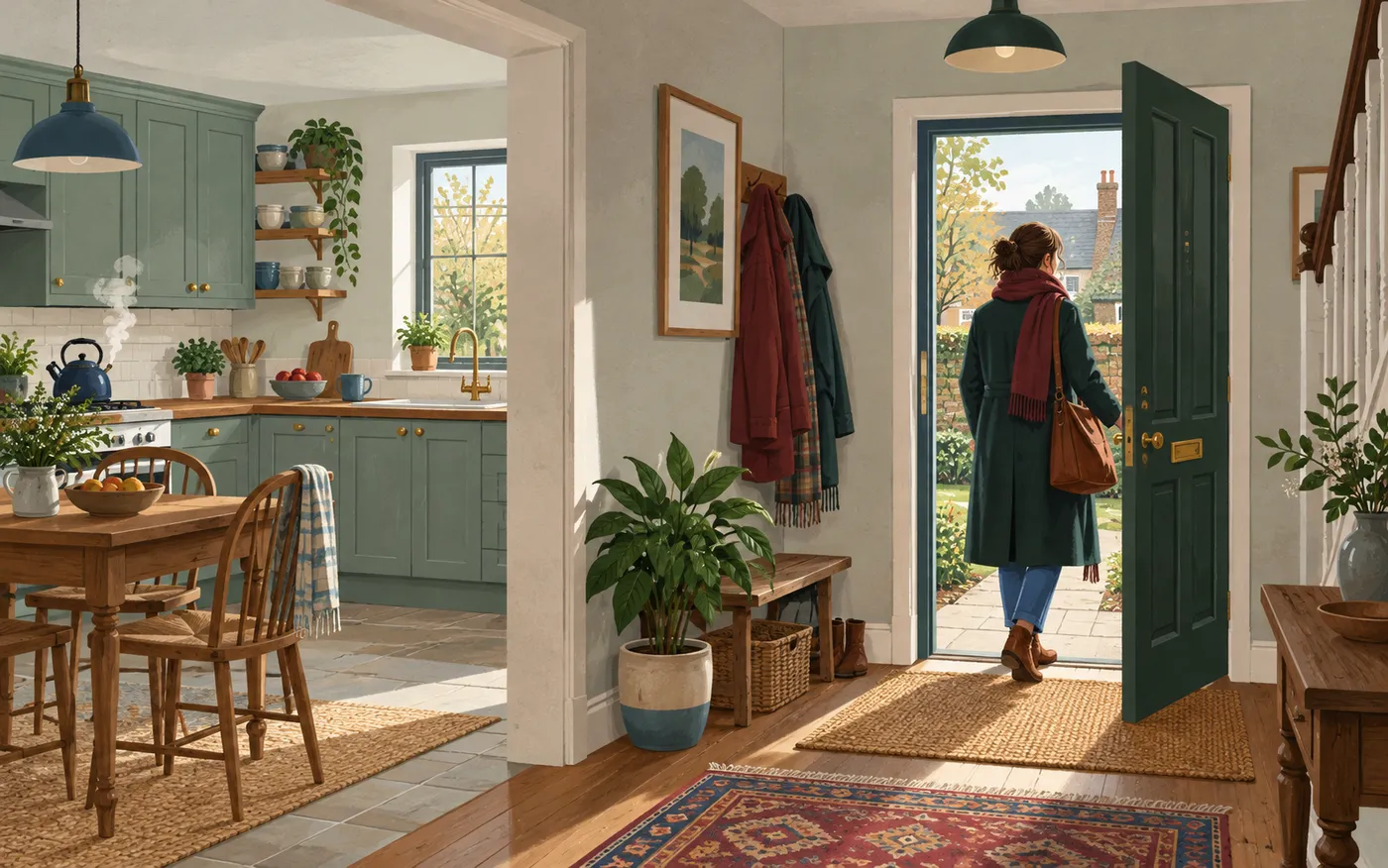
A traveller leaves home while a kettle steams in the kitchen.
At ten, I'll be checking the route; by noon, I'll have checked it. Illustration: Atelier

How do you use the future continuous and future perfect?

Future continuous and future perfect: seven rules

1 · What does will be doing mean?

Use will be + the -ing form. You are looking at an activity in the middle. It may start earlier and finish later.

At ten tomorrow, we will be checking the route.The checking will be in progress at ten.

Don't call at eight. I'll be driving to work.Driving will be in progress at eight.

2 · How do you make a negative or a question?

Use won't be + the -ing form for a negative. In a question, put will before the subject. Will you be using...? is useful when you want to check someone's plans.

I won't be working on Friday.Work will not be part of my Friday.

Will you be using the car this evening?Do your plans include using the car this evening?

3 · What does will have done mean?

Use will have + a past participle. Look ahead to a future time, then look back at an action expected to be complete by then. It can finish before that time or exactly at it.

By noon, we will have checked all the directions.The checking will be complete at or before noon.

The review is on Friday. By then, I'll have finished the report.The report will be finished at or before the review.

4 · Which verb form comes after will have?

Use a past participle: finished, written, gone, seen, done. The form stays the same with I, she, we and they. For a negative use won't have; for a question put will first.

She will have written the summary by five.The summary will be ready by five.

We won't have finished by lunchtime.The work will still be unfinished at lunchtime.

Will they have left by the time we arrive?Will their departure happen before our arrival?

5 · What is the difference between at, by and until?

At names a time. By means at or before a time. Until shows how long something continues. Choose the meaning first, then the tense.

At three, I'll be painting the room.Painting will be in progress at three.

By three, I'll have painted the room.The painting will be complete at or before three.

I'll be painting until three.I expect to continue painting up to three.

6 · Do you use will after when or if?

In these future time clauses, use a present form after when, before or by the time. Use a present form after if for a possible future condition too. Put will in the main clause.

By the time she arrives, we'll have set everything up.The preparation will be complete before her arrival.

If the printer works, we'll have prepared the route cards by Sunday.Finishing by Sunday depends on the printer working.

7 · Can the future perfect describe a length of time?

Yes. It can show that a period will reach a particular length at a future point. The situation may continue after that point. For gives the length of time.

By September, I'll have lived here for ten years.My time here will reach ten years in September. I may stay longer.

Can you use both forms in the same plan?

Getting route cards ready for a walking group
  1. Asha

    What will you be doing at noon on Saturday?

    Asha asks about the activity in progress at a future time.

  2. Ben

    We'll be checking the directions. There are still two paths to check.

    The checking will be in progress then.

  3. Asha

    Will you have prepared the route cards by Sunday?

    Asha asks whether the cards will be ready by a future point.

  4. Ben

    Yes, if the printer works. I'll let you know on Saturday evening.

    Ben expects to finish, with a clear condition.

These forms show how you see the action. A clock time alone does not choose the tense: both At six, I'll be cooking and At six, I'll have finished cooking are possible. The first shows an activity; the second shows a result.

What mistakes should you watch for?

  • At this time tomorrow, I will working.At this time tomorrow, I will be working.

    Keep be between will and the -ing form: will be working.

  • By Friday, she will have wrote the report.By Friday, she will have written the report.

    After will have, use the past participle. The forms are write, wrote, written.

  • By the time you will arrive, we'll have finished.By the time you arrive, we'll have finished.

    Use the present simple in this future time clause: by the time you arrive.

  • I'll have finished the report until five.I'll have finished the report by five.

    For completion at or before five, use by. For an activity continuing up to five, say I'll be working until five.

Question 1No account needed
The journey is from nine to eleven tomorrow. Choose the form that shows the activity in progress at ten.At ten, we ___.

Choose one answer.

Answer and explanation

will be travelling. Ten is in the middle of the journey. Use will be travelling for the activity in progress.

Question 2No account needed
The deadline is Friday. Choose the form that says the report will be complete by then.By Friday, I ___ the report.

Choose one answer.

Answer and explanation

will have written. Use will have written for a completed result by Friday. Written is the past participle of write.

Question 3No account needed
Choose the correct question about an activity in progress.

Choose one answer.

Answer and explanation

Will you be working at six?. The question order is will + subject + be + the -ing form.

Question 4No account needed
Choose the correct time clause.By the time the guests ___, we'll have cleaned the kitchen.

Choose one answer.

Answer and explanation

arrive. Use the present simple arrive after by the time in this sentence about the future.

Question 5No account needed
By June, I'll have lived here for a year. What does the sentence tell you?

Choose one answer.

Answer and explanation

My time here will reach one year in June.. The future perfect can measure a period up to a future point. The sentence does not say that the situation will end.

Built from