Present perfect continuous: I've been waiting for ages
Learn present perfect continuous forms for ongoing activities, durations and visible results, with clear examples, common mistakes and practice questions.
In short
Use have/has been + verb + -ing for an activity that started before now and continues, or has just stopped with a result you can see: I've been waiting for ages. It often answers How long? Keep been: I've waiting is missing a word.
Yellow the idea to rememberBlue English to learnRed watch out
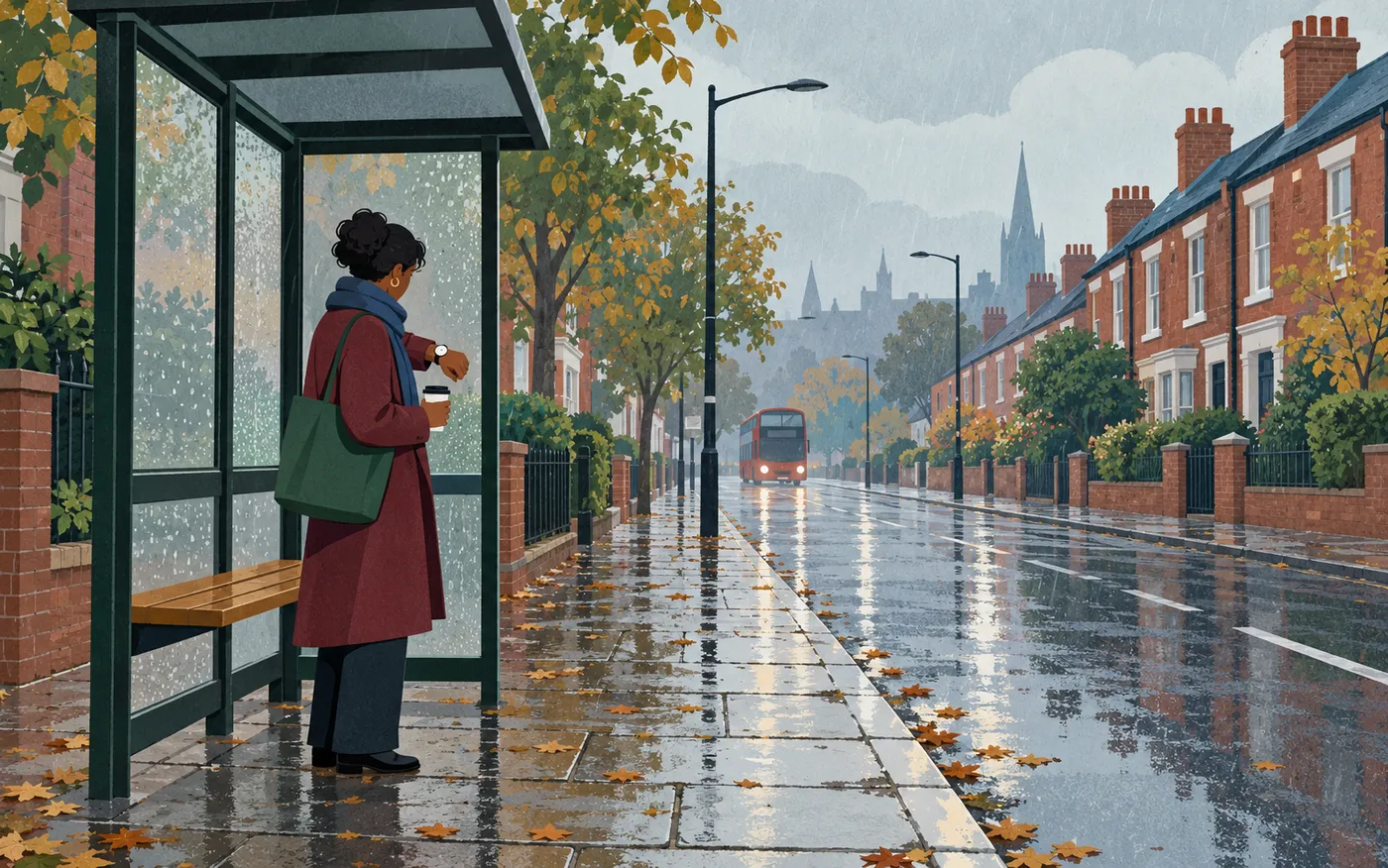
How do you form the present perfect continuous?
| Who? | Form | Example |
|---|---|---|
| I / you / we / they | have been + -ing | I've been working on the leaflet. |
| he / she / it | has been + -ing | She's been checking the names. |
| I / you / we / they: negative | have not been + -ing | We haven't been waiting long. |
| he / she / it: negative | has not been + -ing | He hasn't been sleeping well. |
| Question with have | Have + subject + been + -ing? | Have you been waiting long? |
| Question with has | Has + subject + been + -ing? | Has it been raining? |
I've means I have here; she's means she has. Keep been the same for every person. In short answers, use have or has: Yes, I have. No, she hasn't.
How long have you been waiting?
When did you start waiting, and how much time has passed?
For ages means for a very long time in everyday conversation: I've been waiting for ages.
When do you use it for an activity that is still happening?
Use it when an activity began in the past and is still happening now. It can be one long activity or something you have done again and again recently.
We have been waiting here for twenty minutes.
We arrived twenty minutes ago. We are still waiting.
I've been cycling to work this week.
I have cycled to work several times this week. It is my recent routine.
Can you use it when the activity has stopped?
Yes. The activity may have stopped a moment ago. You use it to explain something you can see or feel now. The continuous form focuses on the activity; the situation tells you whether it is still happening.
- Rosa
Your hands are blue!
Rosa notices the paint.
- Euan
I've been painting the display boards.
The painting explains the blue hands.
- Rosa
Are you still working on them?
Rosa asks whether the activity continues.
- Euan
No, I've finished. I'm just washing my hands.
The painting has stopped, but the paint is still on his hands.
When do you use since and for?
| Use | Examples | In a sentence |
|---|---|---|
| since + the start | since nine o'clock / since Monday | I've been checking the labels since nine o'clock. |
| for + a length of time | for two hours / for a week | She's been working on the leaflet for a week. |
| all + a period | all morning / all week | It's been raining all morning. |
Since tells us when the activity started. For tells us how long it has lasted. With all morning, leave out for: I've been working all morning.
How is it different from the present perfect simple?
I've been checking the pages.Think about the activity and the time spent.
Focus: What have you been doing? How long?
have/has been + -ing
I've been checking the leaflet all morning.
I have spent the morning checking.
She's been writing emails for an hour.
The focus is the time she has spent writing.
I've checked three pages.Think about the finished work or the number.
Focus: What have you finished? How many?
have/has + past participle
I've checked three pages so far.
Three pages are now checked.
She's written six emails today.
Six emails are complete.
Both forms can describe a situation that continues. I've lived here for five years and I've been living here for five years can both mean that this is still my home. The simple form gives a fact about my home. The continuous form makes us think more about the time spent here.
Use the simple form with know, and with have when it means something belongs to you: I've known Ali for years. She's had that car since 2020. Don't use been knowing in this meaning.
Which form and time mistakes should you check?
- She have been working all morning.She has been working all morning.
With she, use has. Then add been and the -ing form.
- I've been wait for twenty minutes.I've been waiting for twenty minutes.
After have been, use the -ing form: waiting.
- I've been waiting since two hours.I've been waiting for two hours.
Two hours is a length of time. Use for, not since.
- I've been working on it yesterday.I worked on it yesterday.
Yesterday is a finished time. Use the past simple to say what you did then.
Can you build the forms?
Complete the gaps. Use the present perfect continuous, except in the last question, which asks for a number of finished pages.
1 · An activity, a time and a completed count
- She been working since nine. (have or has)
- They have waiting for twenty minutes. (the missing word)
- I have been all morning. (study: -ing form)
- He has been , so he's out of breath. (run: -ing form)
- the labels since Monday. (I / check)
- well recently. (she / not / sleep)
- How long ? (you / wait)
- How many pages so far? (you / check: completed number)