Updated
Spot the mistake
Possessive apostrophe rules: singular, plural and names
Learn possessive apostrophe rules for one owner, several owners and names. Compare its with it's, then find and repair errors in eight phrases.
- A2
- 8 sentences
- Tap the wrong word
- Learn this in the A2 notebook →
In short
The main possessive apostrophe rules are add 's to a singular owner and an apostrophe after s to a regular plural owner: the student's bag, the students' bags. An irregular plural takes 's: the children's coats.
Yellow the idea to rememberBlue English to learnRed watch out
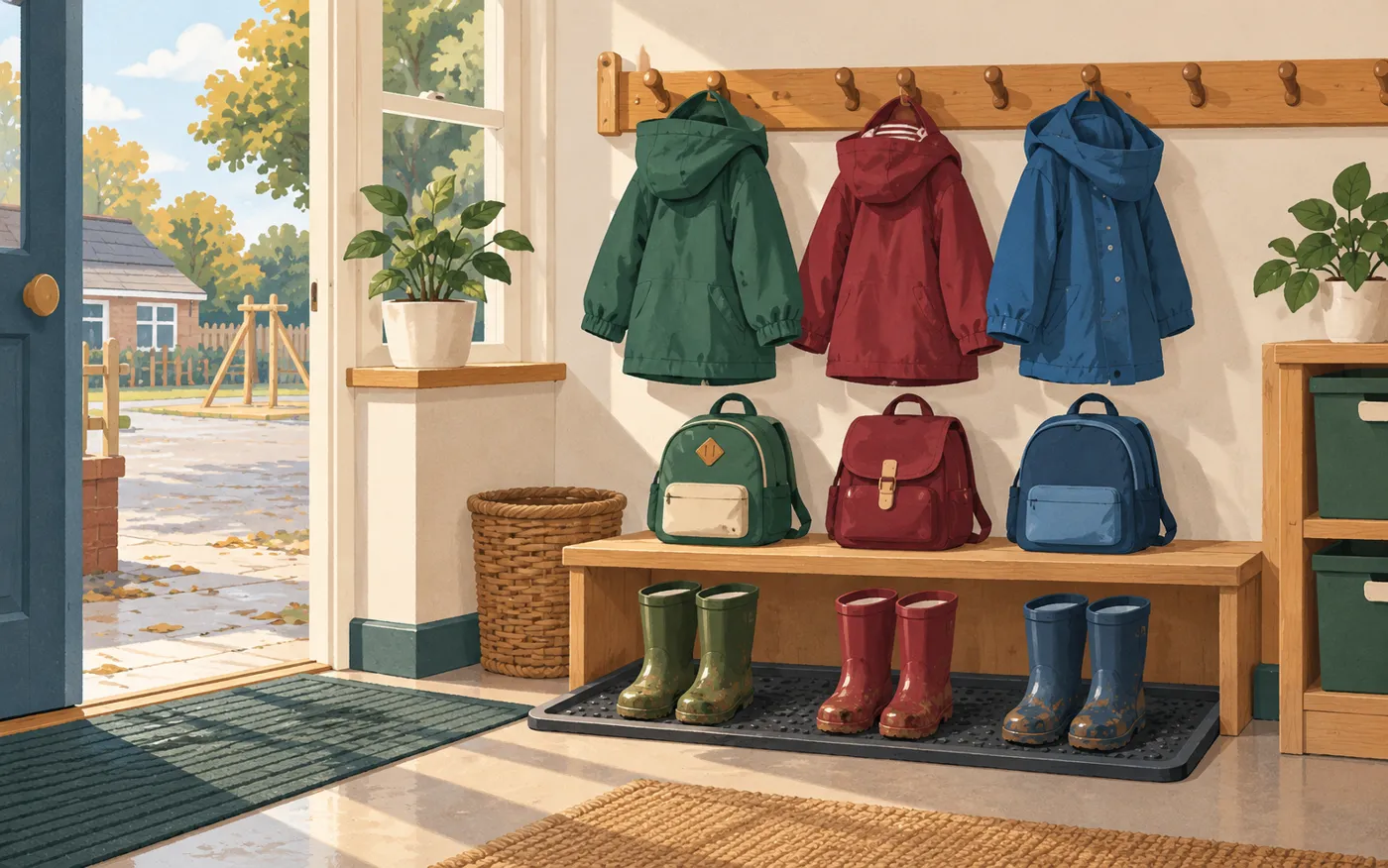
Where does the apostrophe go?
Identify the owner before you look at the thing owned. The teacher's books means one teacher owns several books. The teachers' books means several teachers own the books. The number of books does not determine the apostrophe position. Write the owner first, then add the ending it needs. This keeps phrases such as the children's teacher clear even though there are several children and only one teacher.
| Owner | Possessive phrase | Meaning |
|---|---|---|
| one colleague | my colleague's wallet | one person owns the wallet |
| two colleagues | my colleagues' wallets | more than one colleague owns them |
| several children | the children's bags | irregular plural owner |
| James | James's coat | one named person owns the coat |
| Anna and Ben together | Anna and Ben's flat | one shared home |
| Anna and Ben separately | Anna's and Ben's rooms | separate rooms |
What about names ending in s and the word its?
For a singular name such as James, James's coat is a useful consistent choice. Some style guides prefer James' coat; follow the style required for your document. Possessive pronouns do not take apostrophes: hers, ours, yours, theirs and its. It's means it is or it has: It's raining; It's been a long day.
Can you repair the owner word?
In this exercise, each clue tells you how many owners there are. Replace one whole word, keeping its punctuation. The wrong word may be missing an apostrophe or may put it on the wrong side of s. Remember that an ordinary plural is different from a possessive: three bags needs no apostrophe.
Tap the word that's wrong in each sentence.
The wallet belongs to Rina.
One named owner takes apostrophe plus s.
This room is for several teachers.
A regular plural ending in s takes an apostrophe after s.
The coats belong to the children.
Children is already plural and does not end in s.
I have one sister; these are her keys.
One sister takes apostrophe plus s.
There are two dogs.
Put the apostrophe after the plural s.
The paw belongs to the cat.
Possessive its has no apostrophe.
She owns these bags.
Possessive pronouns do not take apostrophes.
This is a quantity, not ownership.
An ordinary plural needs s, without an apostrophe.
A possessive can show a relationship as well as ownership: my sister's friend is a person connected with my sister. You can also leave out a repeated noun: This is Rina's bag, and that is Owen's. The apostrophe still marks the owner.
- The childrens' shoes are here.The children's shoes are here.
The plural is children, not childrens; add 's to that plural.