IELTS Speaking Part 2: how to talk for two minutes
Practise IELTS Speaking Part 2 with a two-minute talk plan, useful phrases and a model answer, then review relevant detail, structure and development.
In short
Use one clear example, with details and a reason it matters. In IELTS Speaking Part 2, you have one minute to prepare notes, then speak for up to two minutes; use the card's points to guide you. Writing a full script uses up your preparation time: write a few words such as who, when and what changed.
Yellow the idea to rememberBlue English to learnRed watch out
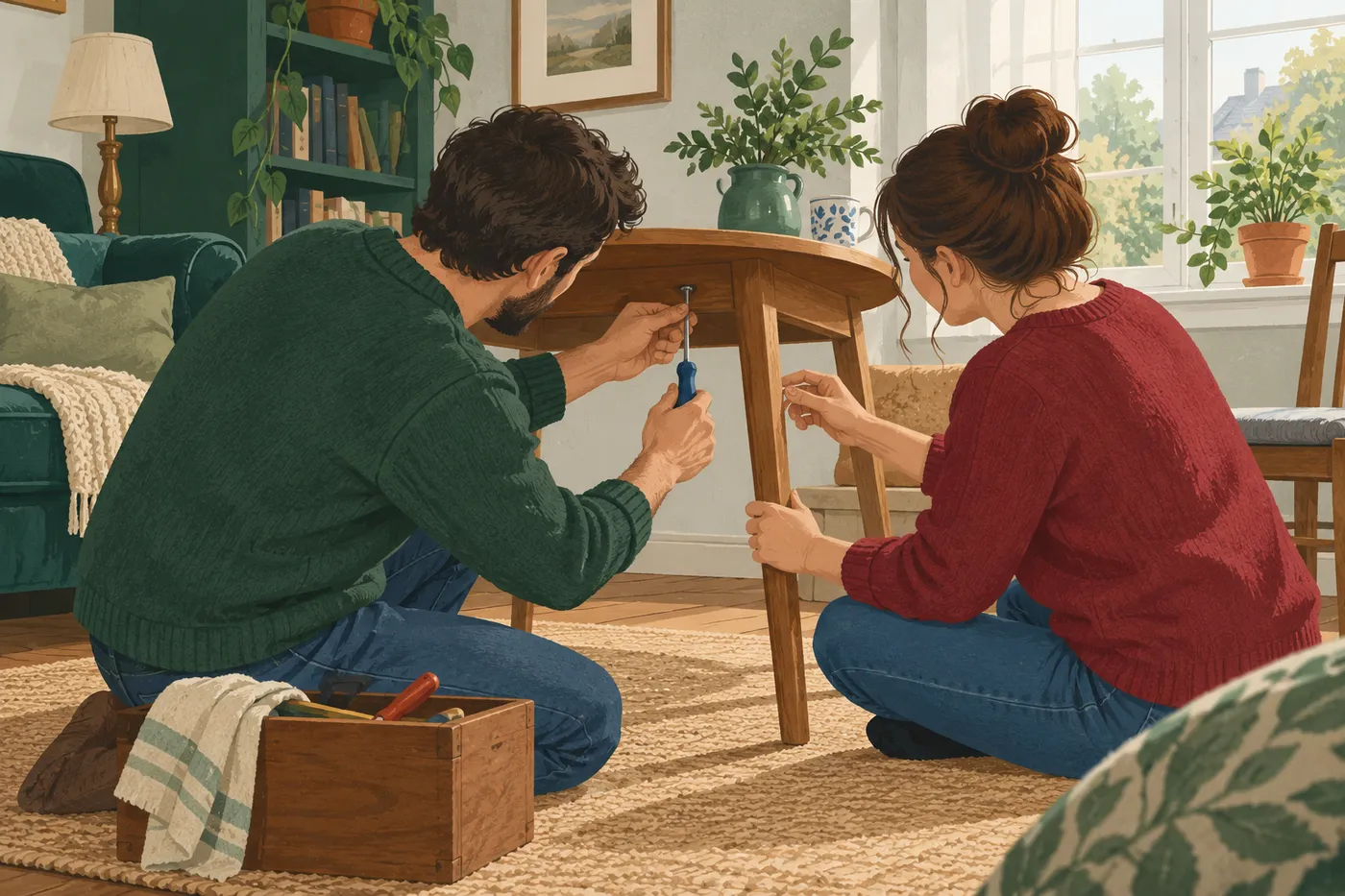
What should you talk about in this practice task?
Describe a time when someone helped you learn a practical skill.
- Say who helped you.
- Say when and where it happened.
- Describe what you learnt and how the person helped.
- Explain why this experience was useful to you.
Choose one event you can describe easily. For this card, a cooking lesson, a bicycle repair or help with a computer would all give you something specific to explain.
What should you write in the one-minute preparation time?
| Time | Action | Example notes |
|---|---|---|
| 0-10 seconds | Choose one event. | repair morning - tool library |
| 10-35 seconds | Put a few words beside each point on the card. | Joel / last autumn / small table / showed me slowly |
| 35-50 seconds | Add one clear moment and its result. | wobbly table / checked floor / table steady |
| 50-60 seconds | Choose your first sentence and check the order. | I'd like to talk about... / why useful |
These times are a practice plan. Keep your notes short enough to read at a glance. Joel - showed me slowly can become several spoken sentences: who Joel is, what he showed you and why the slow explanation helped.
How can you turn four notes into two minutes of speech?
| Rough time | What to add | Useful opening |
|---|---|---|
| First 20 seconds | Name the person, skill and occasion. | I'd like to talk about a time when... |
| Next 30 seconds | Give the setting and explain the problem. | At the time, I was... |
| Next 45 seconds | Describe one action, your response and the result. | First, he showed me... |
| Final 25 seconds | Explain why it mattered and what changed later. | Looking back, the most useful part was... |
Develop a point before you move on. After He helped me repair a table, add how he helped: He showed me once, then let me try. Add your response and the result. These details give the listener a clear picture.
What could a complete answer sound like?
Read the model aloud with a two-minute timer. Notice how it moves from the event to a small problem, then to a result. Your speed and pauses will change the length.
Model spoken answer
Learning to repair a small table
I'd like to talk about Joel, a volunteer who showed me how to do a few simple furniture repairs. This happened last autumn at a Saturday workshop in our local tool library. I'd brought along a small wooden table with a wobbly1 leg. I'd been meaning to fix it for months, but I didn't know where to start.
Joel didn't take over and do everything himself. First, he asked me to turn the table over so we could see how the legs were fixed. He pointed out2 a loose screw and showed me how to tighten it. Then he let me tighten the other screws while he watched. I liked that because I could ask questions as I worked.
The most useful moment came when the table still wasn't completely steady. I assumed one leg was too long, but Joel suggested checking the floor first. We moved the table, and it stopped wobbling. That small check saved me from3 cutting a perfectly good table leg. We both laughed, and I felt much more relaxed.
By the end of the morning, I could use the tools more confidently4, and I understood why checking the problem matters as much as fixing it. Since then, I've repaired a cupboard handle at home. Looking back5, the best part was Joel's patience. He gave me time to think and let me make the decisions. I'd like to go to another workshop because there's still a lot I want to learn. It was a small job, but it made me more willing to have a go6.
What can you add if your answer is too short?
A general statementIt names a quality but gives little detail.
Focus: What was the person like?
Joel was patient.
A useful starting point.
A developed pointIt shows the quality through an action and a response.
Focus: How did you notice that quality?
Joel was patient. He showed me again when I got confused, so I felt comfortable asking questions.
The listener can understand why you describe him as patient.
If you lose your place, look at the next note and continue: Another thing I remember is... If you cannot remember a word, describe the thing: the tool you use to tighten a screw. Keep the detail connected to the card.
- He explained me how to use it.He explained to me how to use it.
Use explain something to someone. For a shorter sentence, say He showed me how to use it.
- I have learnt it last autumn.I learnt it last autumn.
Last autumn is a finished time, so use the past simple learnt.
- I was very interesting in the workshop.I was very interested in the workshop.
Interested describes your feeling. Interesting describes something that holds your attention.