Updated
Dialogue
IELTS speaking part 3: develop opinions with reasons and examples
Prepare for IELTS speaking part 3 with discussion questions, developed sample answers, comparison phrases and a checklist for stronger reasoning.
- B2
- 6 lines
- Practice mode
- Learn this in the B2 notebook →
In short
IELTS Speaking Part 3 is a 4–5-minute discussion that develops the Part 2 topic in a more general or abstract way. Explain your view, support it and consider a useful limit or alternative. A personal anecdote alone may not answer a question about society.
Yellow the idea to rememberBlue English to learnRed watch out
How is Part 3 different from Part 1?
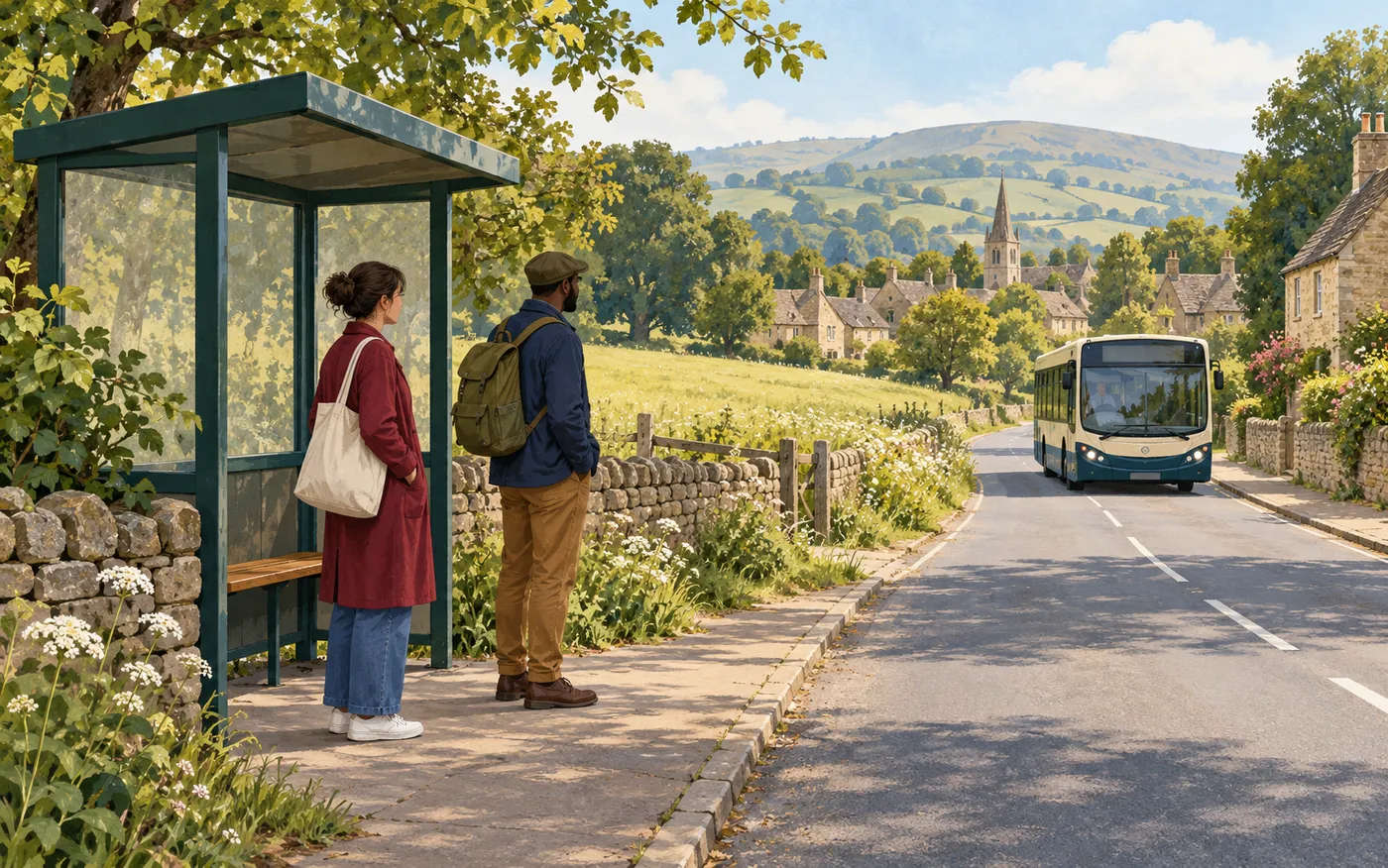
Part 1 often asks about your own life. Part 3 may ask why people behave in a certain way, how something has changed or what might happen in future. If your Part 2 talk was about a place you enjoyed visiting, Part 3 might discuss tourism, public transport or the effects of travel on local communities.
- Examiner
Why do some people prefer public transport to driving?
Meaning
Discuss people generally.
- Candidate
Cost is probably one reason. In a city, parking can be expensive, whereas a bus pass may be cheaper. Public transport can also let people read or relax during the journey.
Give two possible reasons.
Meaning
Give a reason and extend it with a comparison.
- Examiner
Do you think that is true everywhere?
Meaning
Consider the limits of your answer.
- Candidate
Not everywhere. In rural areas, buses may be less frequent, so driving can be more practical. It depends on whether the service matches people's daily journeys.
Explain one exception.
Meaning
Qualify the claim with a relevant condition.
- Examiner
How might travel change in the future?
Meaning
Make a supported prediction.
- Candidate
More journeys could be made by public transport if services become reliable and affordable. However, better vehicles alone may not be enough; people also need useful routes.
Predict a change and name a condition.
Meaning
Use a condition and avoid claiming certainty.
Which questions help you practise?
Six discussion prompts
- Why do some people prefer shopping locally?
- How has technology changed the way people keep in touch?
- Should towns make more space for pedestrians?
- What are the advantages and disadvantages of working from home?
- How can schools encourage children to read?
- Do you think people will travel less for work in future?
| Purpose | Useful phrase |
|---|---|
| Give a view | One reason might be that... |
| Compare | Compared with the past,... |
| Show a limit | That may be true in cities, but... |
| Give an example | For example, someone who... |
| Consider a result | That could lead to... |
Choose the phrase because it fits your thought. A long chain of linking expressions can hide a simple idea. Develop one clear reason before adding a second. If you change your mind, explain why: Actually, I would make a distinction between short journeys and long ones. That is more useful than defending an answer you no longer believe.
Practise one prompt aloud
- I give a general answer, not only my own story.
- I explain why my main claim could be true.
- I use an example that supports that claim.
- I consider a relevant exception or condition.
- I avoid presenting a guess as a certain future fact.
That may be true in cities, but rural areas can be different.
Give a relevant limit to a general claim.