مقترح لساحة بلدة من خلال عنوانين
Who gets to use the square?
What would change at ten o'clock?
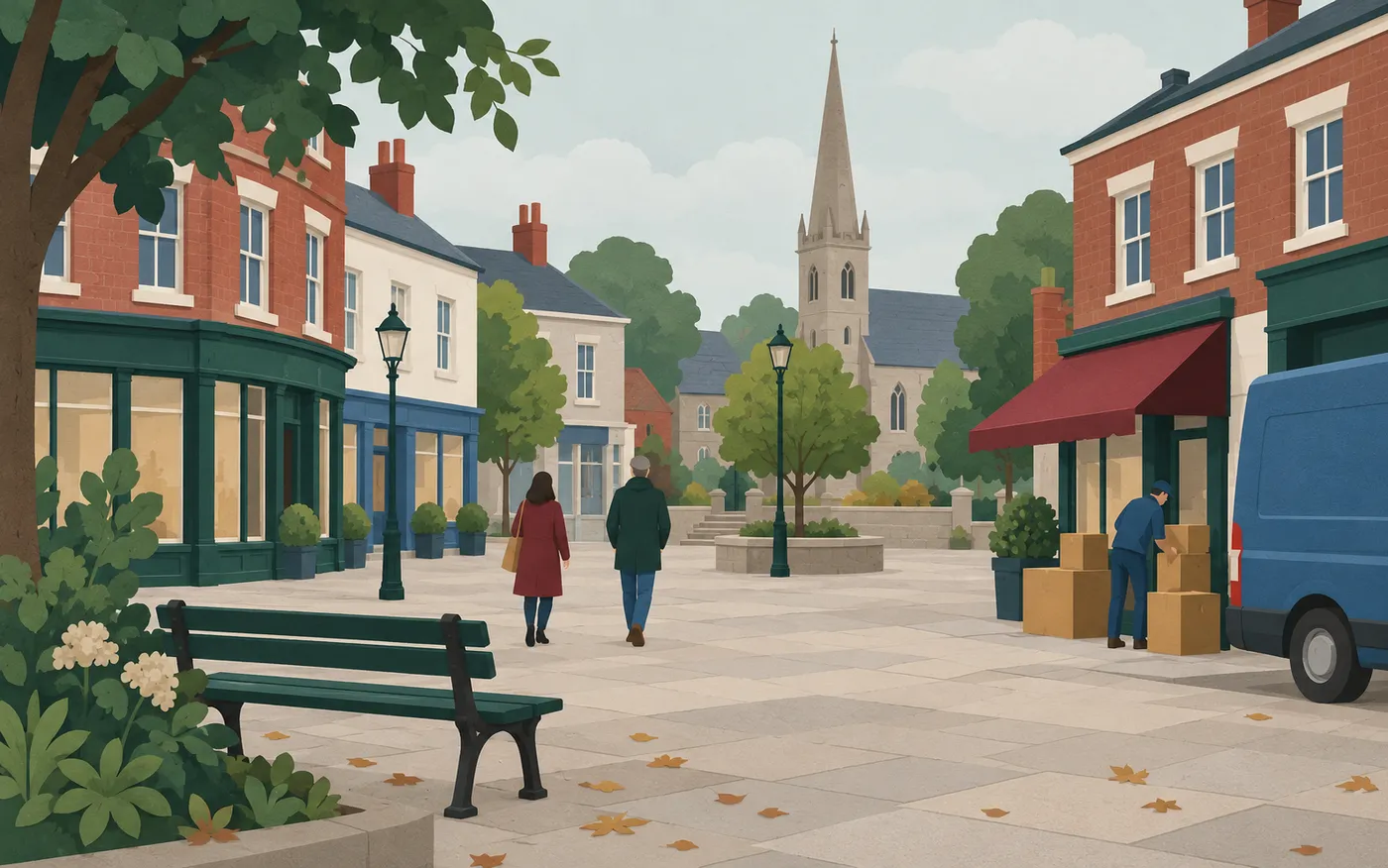
Beside a stack of unopened boxes, shopkeeper Mara Holt makes an awkward subject for a cheerful story about public space. Her supplier visits several businesses on one route. If Bellford Square admits delivery vehicles only before ten, rearranging that route will take more than goodwill. Mara cannot choose which shop receives its goods first. For her, the proposed arrival window1 is a practical problem before it becomes a political argument.
The Bellford Forum is consulting on a six-week trial. Deliveries before ten would remain possible, and the proposal has yet to be approved. Those details matter: a temporary arrangement still under discussion is different from a permanent closure. The forum has asked businesses to explain where the early-delivery arrangement would fail. Its position remains provisional2, even though the two headlines give the debate a more settled shape.
Whose experience comes first?
The Bellford Ledger leads with 'Traders face ban'. It places the trial's length and the continued morning access below several paragraphs about inconvenience. This order foregrounds3 the traders' loss of flexibility. Mara's concern follows from a simple constraint: she depends on a route she does not control. Yet a reader who stops at the headline may imagine restrictions on every vehicle throughout the day. The full article gives a narrower picture.
Square Life begins elsewhere. It opens with a parent describing the difficulty of crossing between parked vans. This brings the experience of walking into view. 'Square reclaimed for people', its headline announces. That verb offers a story of restoration4: something has been taken away and should be returned. It also leaves a question unanswered. When did the square belong to pedestrians alone? Shop workers and delivery drivers use public space too. The headline's attraction lies partly in the simple division it creates.
The accompanying artist's impression5 shows benches, conversation and an open square. It is easy to picture the proposal through that image. But the forum has approved neither new benches nor a redesign. The illustration offers a possible future rather than a record of a decision. Square Life labels it, yet the pleasant scene may stay in a reader's memory longer than the small words explaining its status.
What can forty messages tell us?
Both publications mention the forty messages received during the consultation6. Some support the trial, some object and others ask for detail. The number establishes that people responded. It leaves unanswered whose views are missing, whether anyone wrote more than once and how much of the town is reflected. The messages are therefore not a representative7 measure of local opinion. Even a supportive response may disagree with part of the scheme.
There is a missing perspective in both accounts: the delivery driver's. A morning window may suit one route and cause difficulty on another. Asking about those routes could turn a broad dispute into specific questions about timing and access. Similarly, describing where pedestrians struggle to cross would give the discussion more substance than a general promise of a calmer square. These questions test the proposal rather than merely repeat the headlines.
Must readers choose between shops and people?
The two articles make different experiences visible, but their weaknesses need separate explanations. The Ledger's headline leaves out limits on a restriction; Square Life's wording suggests a shared entitlement that it has not established. Treating both choices as identical errors would hide that difference. Readers can value safer walking and reliable deliveries at the same time. The false choice8 between shops and people becomes less convincing once the people inside the shops, vans and passing crowds come into focus.
بكلمات أبسط
Mara receives goods from a supplier who visits several shops. She cannot decide the order of those deliveries, so an early deadline could be difficult.
The forum is asking about a six-week trial. It has not approved the trial. Deliveries before ten would still be allowed.
The Ledger starts with traders' difficulties. Its headline leaves out the time limit, although the full article explains it.
Square Life starts with a parent's difficulty crossing the square. Its headline suggests that pedestrians should get the square back, but it does not explain that earlier ownership.
The illustration shows a pleasant possible future. The forum has not agreed to the benches or a new design.
Forty messages show that people responded. They do not show what the whole town thinks.
Neither article explores delivery routes from a driver's point of view. Details about routes and crossing problems could help people discuss the plan.
The headlines have different effects. Readers can care about both walking and deliveries; supporting one need does not mean rejecting the other.