القراءة

قراءة إنجليزية بمستوى C1 عن المدن: رأي واختبار

جرّب قراءة إنجليزية بمستوى C1 عن المدن، مع عمود رأي عن الشوارع اليومية والأسئلة البلاغية والمقابلة والتسليم بنقطة من الرأي الآخر، وأسئلة لفحص الحجة.

باختصار

يدعو عمود الرأي هذا بمستوى C1 إلى شوارع تتيح للناس وقتًا للعبور والجلوس واللقاء. ابحث عن رأي الكاتب واللغة التي تجعله مقنعًا معًا. يعني concession قبول نقطة معقولة من رأي آخر؛ ولا تُعدّ صورة جذّابة دليلًا على نجاح خطة.

أصفر الفكرة الجديرة بالتذكّرأزرق تعبير إنجليزي للتعلّمأحمر انتبه

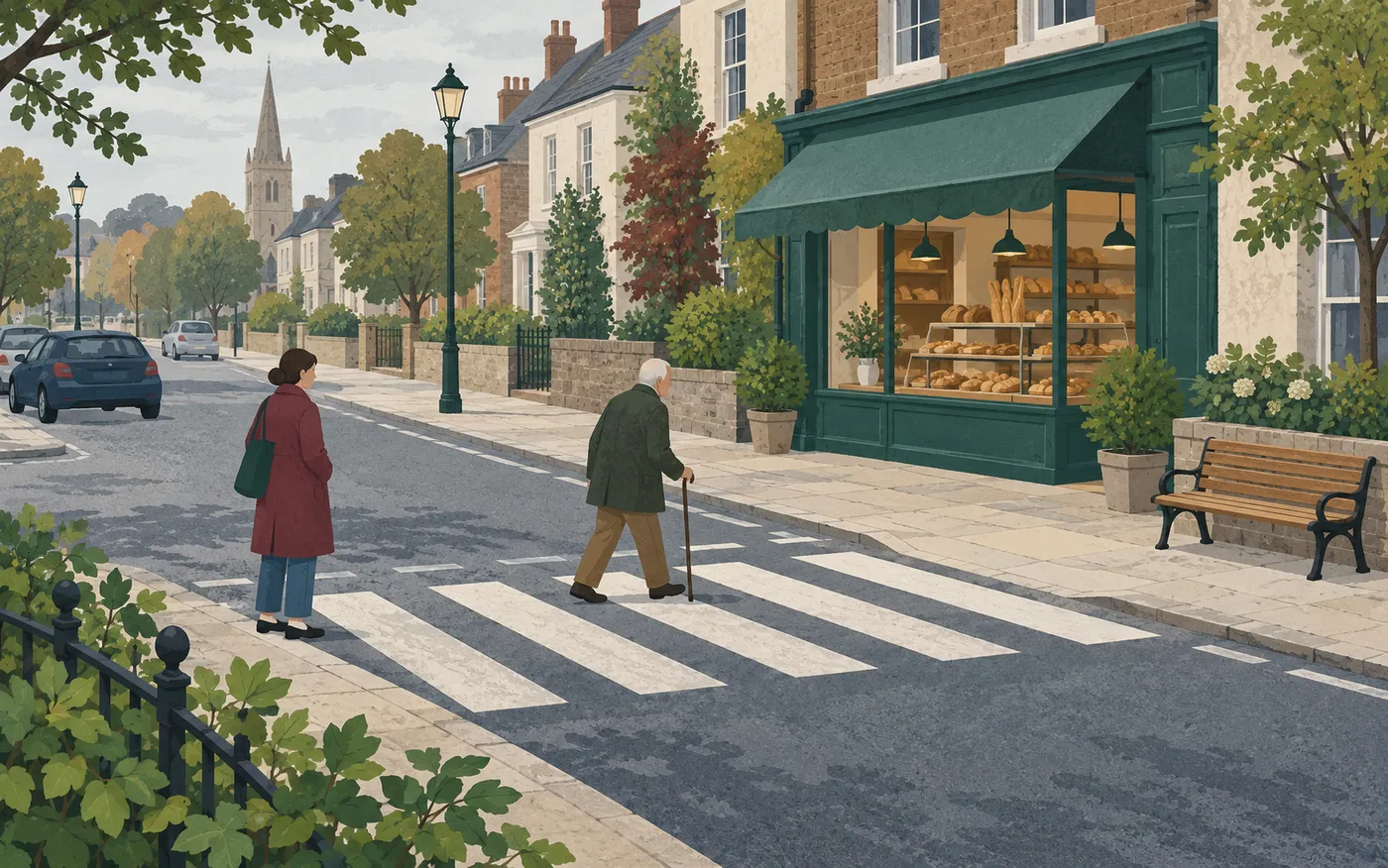
معبر هادئ في بريطانيا، فيه شخص يستخدم عصًا للمشي ومقعد قريب.
قد يتيح الشارع للناس وقتًا للعبور والجلوس والبقاء قليلًا (linger). رسم توضيحي: Atelier

رأي | اقرأ لتحديد الادعاء الرئيسي وحدوده

The case for slower cities

At the crossing near my flat, the green figure seems permanently in a hurry. A man with a walking stick starts across; a driver taps the steering wheel. Nobody says anything. The street has already set the pace1.

We have become very good at asking how quickly traffic can move through a place. I would like us to ask a different question: how easily can someone live there? A street is a route, certainly. It is also the space outside a front door, the queue at the bakery, the place where a child learns to ride a bicycle. Why should the first purpose trump2 all the others?

The case for a slower city begins with these ordinary uses. I want crossings that allow an unhurried walk, benches where stopping is welcome and pavements wide enough for two people to talk without blocking everyone else. These are modest ambitions. Their absence, however, tells a forceful story about whose time matters.

Of course, some journeys must be quick. An ambulance needs access; a care worker may have several visits to make; a shop needs deliveries. Any proposal that brushes aside3 these needs deserves to fail. Nor should walking become a test of civic virtue. A person who needs a vehicle should not have to argue for the right to reach their own door.

But accepting those needs does not mean accepting every street as it is. We can protect essential access while questioning how much space we give to vehicles passing through. We can ask when deliveries are needed, where stopping places belong and how a bus passenger reaches the pavement. The useful argument concerns design and trade-offs4, not which group deserves to lose.

Picture a square with a bench in the sun. It is a compelling5 image, and an easy one to put on a campaign leaflet. It also leaves questions unanswered. Can a wheelchair user reach the bench? Where will the delivery van stop? Will traffic simply move to the next street? A drawing cannot settle6 those questions. A carefully designed trial, followed by a review of who benefits and who struggles, would be a better start.

Slower, then, should describe a choice about public space, not a demand that everyone move at the same speed. The point is to give people room to linger7 without making essential journeys harder. Before we celebrate another minute saved at the wheel, let us ask what happens when we arrive. Can we cross? Can we sit? Can we stay? These are everyday freedoms worth taking seriously8.

ما معالم الشارع التي يريد الكاتب منك ملاحظتها؟

تبدأ الحجة بأشياء ملموسة

كيف يجعل العمود حجته مقنعة؟

سمِّ الأسلوب، ثم اشرح أثره
كلمات من العمودالأسلوبالأثر في القارئ
The street has already set the pace.التشخيص: منح شيء قدرة بشريةيبدو الشارع كأنه يقرّر من يجب أن يسرع.
Why should the first purpose trump all the others?سؤال بلاغي: سؤال يُستخدم لإبراز فكرةيدعو القارئ إلى مساءلة الأولوية الممنوحة لحركة المرور.
Of course, some journeys must be quick.التسليم بنقطة: قبول نقطة معقولة من الرأي المعارضيعترف بالحاجة إلى الرحلات العاجلة قبل السؤال عن كيفية تغيير الشوارع.
We can protect ... We can ask ...تركيب متوازٍ: تكرار نمط جملةيعرض عدة إجراءات عملية بوصفها أجزاء من نهج واحد.
Can we cross? Can we sit? Can we stay?ثلاثة أسئلة قصيرة متوازيةيجعل الإيقاع الأخير استخدامات الشارع العادية سهلة التذكّر.

يضع الكاتب مستخدمي الشارع اليوميين في المقدّمة (foregrounds): فتحظى احتياجاتهم بالاهتمام أولًا. وتظهر شاحنة التوصيل لاحقًا، عند التسليم بالحاجة إليها وفي الأسئلة المتعلقة بتجربة. يساعد الترتيب والاختيار على تشكيل الحجة، مثل الكلمات المفردة.

هل تستطيع الفصل بين الادعاء والنقطة المُسلَّم بها والأدلة؟

السؤال 1لا تحتاج إلى حساب
أي عبارة تلخّص الحجة الرئيسية بأفضل صورة؟

اختر إجابة واحدة.

الإجابة والشرح

Public space should support everyday uses while protecting essential access.. تجمع الفقرة الأخيرة مساحة للبقاء مع إتاحة الوصول للرحلات الضرورية. وتتجاوز الحجة مجرد تخفيض السرعة.

السؤال 2لا تحتاج إلى حساب
لماذا يذكر الكاتب سيارة إسعاف وعامل رعاية وتوصيل البضائع إلى المتاجر؟

اختر إجابة واحدة.

الإجابة والشرح

To accept important needs that a street plan must address. تمثّل هذه الأمثلة تسليمًا بنقطة من الرأي الآخر. فهي تعترف باحتياجات مشروعة قبل أن يعود الكاتب إلى تغييرات تصميمية ممكنة.

السؤال 3لا تحتاج إلى حساب
ما دور صورة المقعد تحت الشمس؟

اختر إجابة واحدة.

الإجابة والشرح

It shows an appealing vision that still leaves practical questions.. يصف الكاتب الصورة بأنها جذّابة، ثم يسأل عن سهولة الوصول والتوصيل وحركة المرور القريبة. فجاذبيتها منفصلة عن الإثبات.

السؤال 4لا تحتاج إلى حساب
ما أثر الأسئلة الثلاثة الأخيرة؟

اختر إجابة واحدة.

الإجابة والشرح

They make the writer's everyday priorities memorable.. يمنح النمط القصير المتكرر وزنًا للعبور والجلوس والبقاء، وهي أمور محورية لرأي الكاتب.

السؤال 5لا تحتاج إلى حساب
أي استنتاج يدعمه العمود؟

اختر إجابة واحدة.

الإجابة والشرح

The writer proposes a trial and review to test a design.. التجربة خطوة تالية مقترحة. ويسأل العمود عما ينبغي أن تفحصه، ولا يعرض نتائج تجربة مكتملة.

كيف تردّ على العمود بتسليم منصف بنقطة من الرأي الآخر؟

اكتب 100–130 كلمة عن تغيير تودّ رؤيته في شارع تعرفه. صف معلمًا ملموسًا واحدًا. اقبل مصدر قلق معقولًا، ثم اشرح كيف يمكن لمقترحك معالجته. واختم بسؤال ينبغي لتجربة أن تختبره.

Although delivery vehicles need access, a trial could test a separate loading area.

يقبل الجزء الأول حاجة؛ ويقدّم الجزء الثاني استجابة ممكنة.

استخدم although + جملة. لا تضف but قبل الجملة الرئيسية.

تحقّق من توازن ردّك

أداة للمراجعة الذاتية، وليست درجة. لا تُحفظ علامات الاختيار.

مُعدّ انطلاقًا من