اقرأ لتتبّع العلاقة المتغيّرة بين السجلّ وقرّائه.
The long afterlife of the Domesday Book
What did the survey set out to record?
A book can outlive the task for which it was made. Ordered by William the Conqueror at Christmas 1085 and carried out in 1086, the Domesday survey examined landholding1 and resources across much of England. Officials gathered information about who held land, what it was worth and how it was used. The resulting record would help the king understand the resources of his kingdom.
Although the name suggests a single volume, the record has two main parts: Great Domesday and Little Domesday. The latter covers Essex, Norfolk and Suffolk. Written in Latin on parchment2, Great Domesday turns local information into a structured account. Its entries concern manors3, with details of resources such as woodland, mills and land for growing crops. Comparisons with the period before the Norman Conquest allow readers to trace changes in wealth and power.
Why did later readers keep using it?
An administrative record survives partly because someone continues to need it. Royal officials consulted Domesday when establishing rights and privileges4. In the thirteenth century, a shorter version was copied at Westminster Abbey. This abridged5 text shows that the record remained useful long after the first survey. Its continued use gave people a reason to copy it, while copying helped make continued use possible.
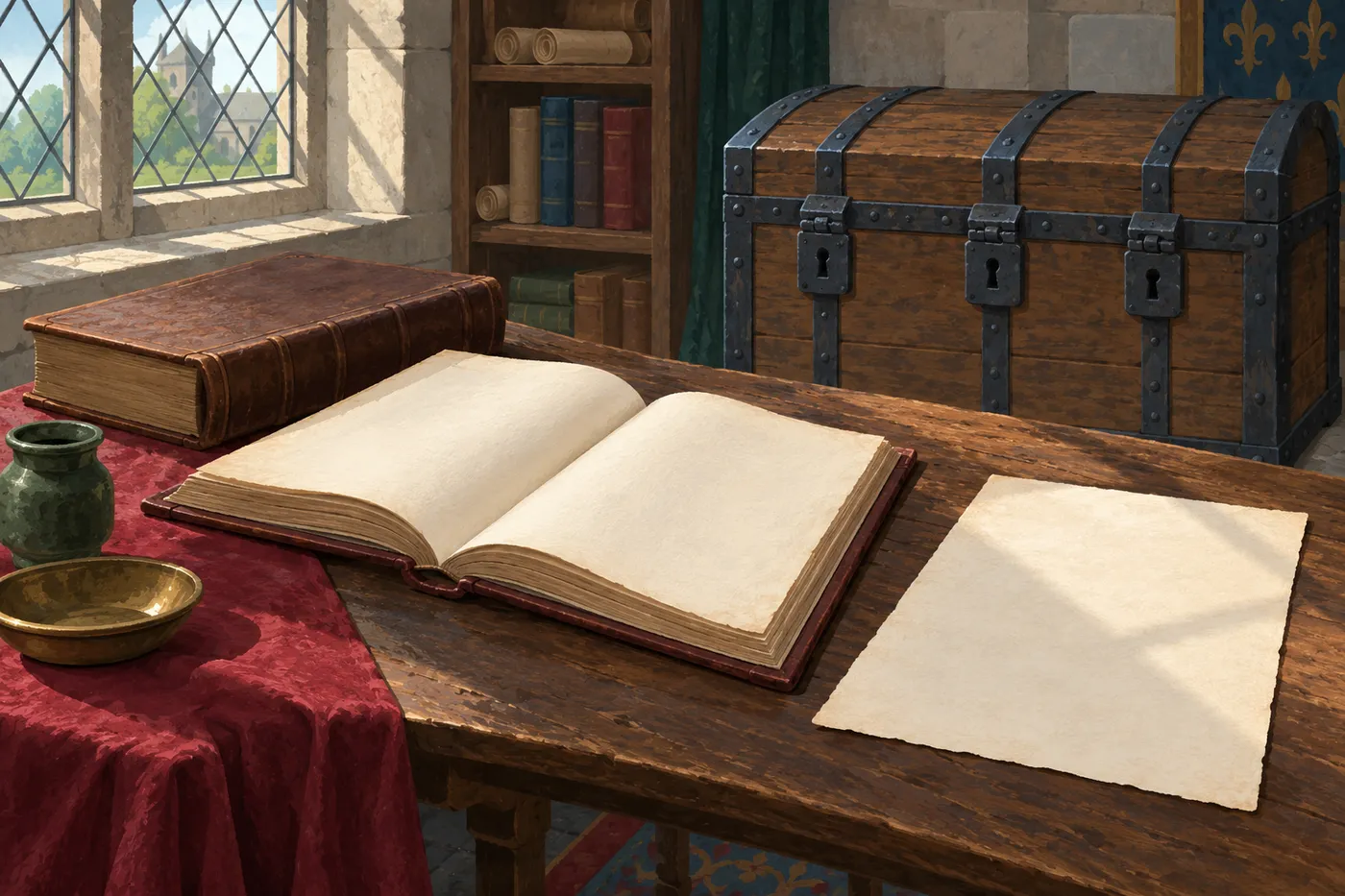
The care given to its storage tells another part of the story. From around 1600, the books were kept in a wooden chest covered with iron and secured by three different locks. Three officials held the keys. The arrangement required their agreement before the chest could be opened. Having survived changes of government and generations of readers, the record now presents a different challenge: how to make it available while protecting it.
What can we ask of it now?
Modern researchers can consult facsimiles6 and translations rather than handle the fragile original. Yet easier access leaves the work of interpretation in place. The National Archives' research guide points out that a modern place name can cover land belonging to several medieval manors. A search result therefore needs to be read in its wider setting.
There is a further limitation7: the people named are almost all landholders. Treating the book as a complete list of the population would confuse the survey's purpose with our own interests. Looking at an entry, a historian must ask whose activities become visible and whose remain outside the account. Read alongside other evidence8, Domesday helps us study medieval society. Its afterlife9 lies in this continuing exchange between old answers and new questions.
بكلمات أبسط
The survey of 1086 recorded who held land, how it was used and what it was worth. William the Conqueror had ordered it the previous Christmas.
The record has two main parts. It contains details about land and resources. Comparing entries helps us understand changes after the Norman Conquest.
Later officials still needed the information. They used the record and made a shorter copy, which helped keep it useful.
The books were protected in a chest with three locks. Keeping them safe and making them available are both part of caring for the record.
Researchers can use copies and translations. They still need to check how a modern place relates to the medieval land described.
The names are mainly those of landholders. Historians must consider the book's purpose and compare it with other sources.