Updated
Sentence builder
Let, make, allow grammar: verb patterns you can build
Learn let, make, allow grammar with permission and obligation examples. Compare base verbs, to-infinitives and the passive, then build sentences.
- B1
- 6 sentences to build
- Tap the tiles
- Learn this in the B1 notebook →
In short
In let, make, allow grammar, use let/make + person + base verb, but allow + person + to + verb. Let and allow give permission; make causes or requires an action, and passive be made takes to.
Yellow the idea to rememberBlue English to learnRed watch out
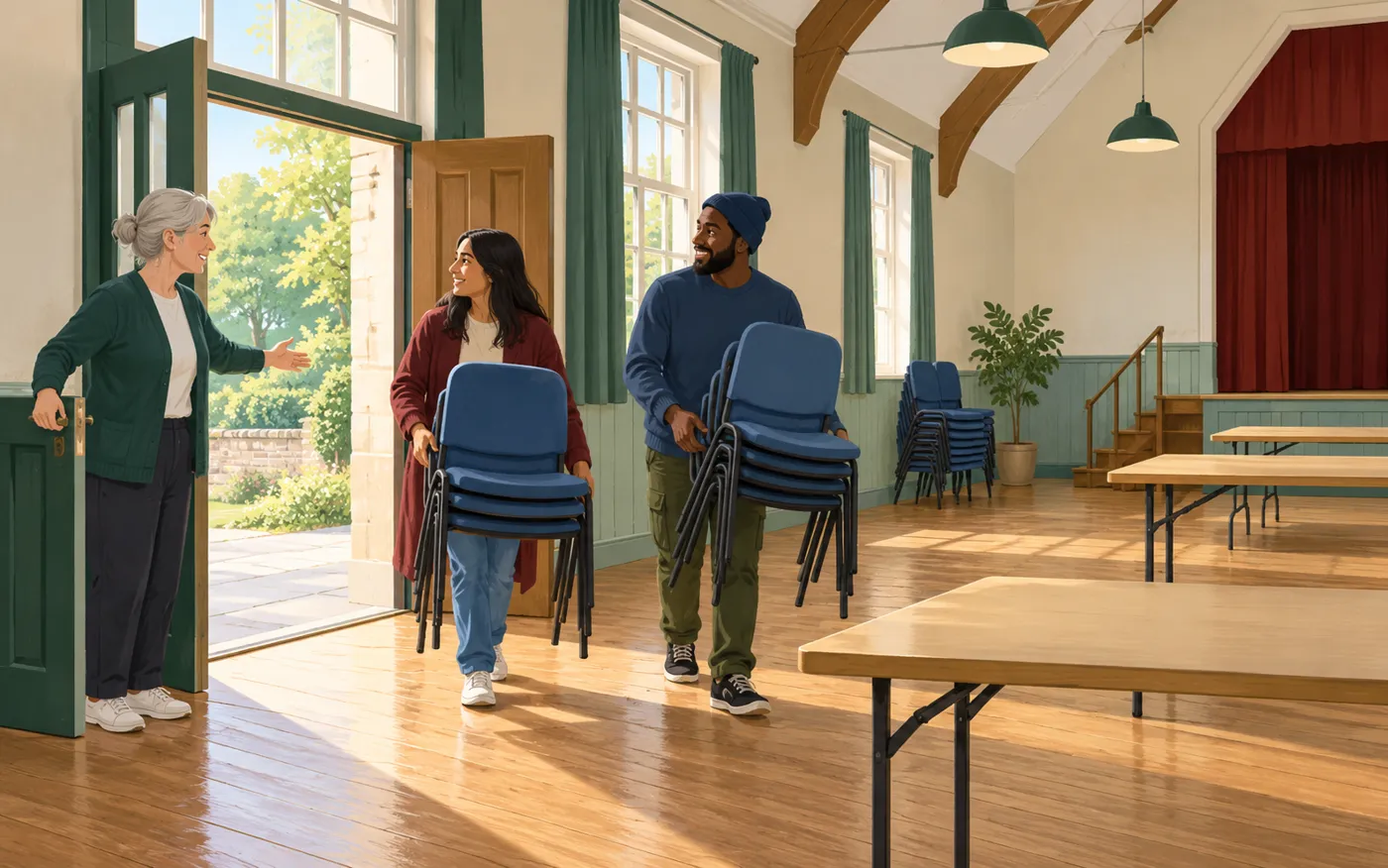
Which verb means permission and which means a requirement?
The manager lets visitors move the chairs means visitors have permission. The manager allows visitors to move the chairs means much the same, with a more formal tone. The manager makes visitors move the chairs means visitors must move them. Keep the person between the first verb and the action: lets visitors move, rather than lets move visitors.
| Verb | Active pattern | Example |
|---|---|---|
| let | let + object + base verb | Staff let guests use the noticeboard. |
| make | make + object + base verb | The system makes users confirm an address. |
| allow | allow + object + to-infinitive | The manager allows guests to enter. |
| allow without a person | allow + -ing | The venue allows cycling in the grounds. |
What changes in the passive?
Use be allowed to for passive permission: We are allowed to move the chairs. For a requirement, use be made to: We were made to wait outside. The to returns in the passive of make. For ordinary permission, choose allowed rather than trying to make a passive with let. The expression be let in is natural, but it is a different fixed pattern.
They made us wait for twenty minutes.
Active: make takes an object and base verb.
We were made to wait for twenty minutes.
Passive: be made takes a to-infinitive.
Can you build the patterns from word tiles?
Tap the words in the right order. Tap a placed word to send it back.
Permission with let: leave out to.
Permission with allow: keep to.
A requirement with make: use the base verb.
A passive requirement: keep to.
Passive permission with allowed to.
A request for permission to finish.
- They let me to leave.They let me leave.
Use the base verb after let + object.
- We were made wait.We were made to wait.
The passive pattern is be made to + base verb.
Can let mean a suggestion?
Let's + base verb suggests a shared action: Let's check the booking. It includes the speaker. Let me check asks for the chance to do something or offers help. The negative suggestion is Let's not print it yet. These expressions follow the same base-verb pattern, but they are used to manage a conversation rather than report a rule.