Cheat sheet

Will or going to? How to choose

Choose will or going to for plans, new decisions, offers and predictions. Use seven simple rules, compare the forms and try five short questions.

In short

Use going to for a plan you made before speaking. Use will for a decision you make now, an offer or a promise. For what you think will happen, going to points to signs you can see now; will often gives your opinion. The word tomorrow can go with either form.

Yellow the idea to rememberBlue English to learnRed watch out

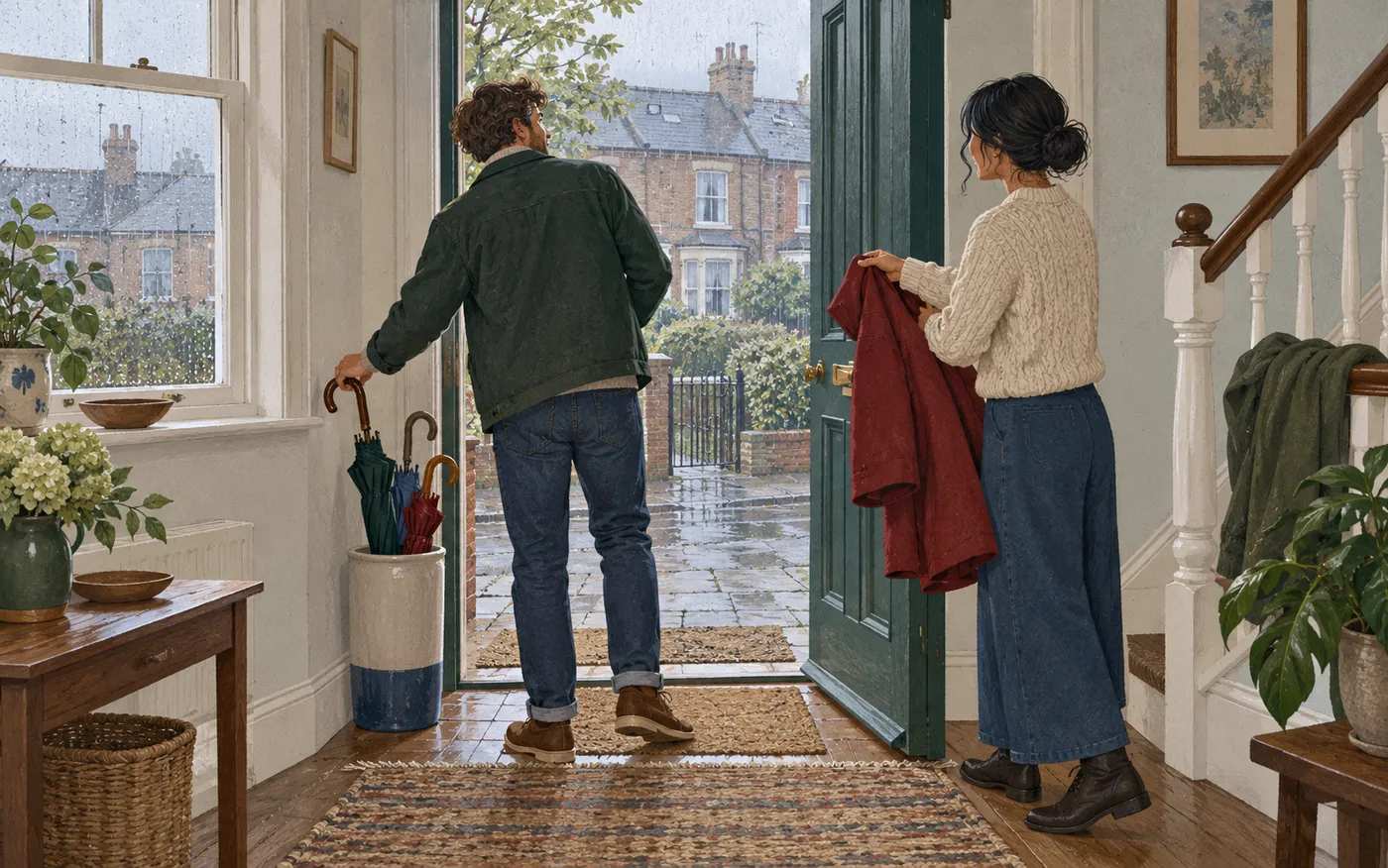
Two friends notice rain and reach for an umbrella at the doorway.
When you see signs of rain, you can say it is going to rain. Illustration: Atelier

Will or going to? Seven questions to help you choose

1 · Did you make the plan earlier?

Use am/is/are going to + the base verb. The plan is already in your mind when you speak.

I am going to visit my sister on Saturday.I decided before this conversation.

We are going to paint the kitchen this weekend.This is our plan.

2 · Are you deciding now?

Use will when you decide as you speak. In conversation, I will often becomes I'll.

There's no milk? I'll buy some on my way home.I hear the problem and decide now.

3 · Are you offering help or making a promise?

Use will to offer help or promise to do something. Won't means will not.

That bag looks heavy. I'll carry it for you.I offer to help.

I won't tell anyone. I promise.I promise to keep the information secret.

4 · Can you see signs of what will happen?

Use going to to point to something you can see now. It helps explain why you expect the next event.

Look at those dark clouds. It is going to rain.The clouds are a sign of rain.

Watch out! That glass is going to fall.The glass is moving towards the edge of the table.

5 · Are you saying what you think will happen?

Use will for an opinion about the future, often after I think. Both forms can sometimes fit; choose the one that shows your meaning best.

I think you will enjoy the visit.This is my opinion about your visit.

I'm sure the journey will be fine.I expect a good journey.

6 · How do you make the going to form?

Keep am, is or are. Add not after it for a negative. Put it before the person in a question.

She isn't going to drive tonight.Her plan is to travel another way.

Are you going to stay for lunch?I ask about your plan.

7 · What comes after will?

Use the base verb after will or won't: go, be, help. Leave out to. In a question, put will before the person.

She will be here soon.I expect her to arrive soon.

Will they need a lift?I ask if they will need someone to drive them.

Can you use both forms in the same conversation?

A visit on Saturday
  1. Maya

    I'm going to visit my sister on Saturday.

    Maya already has a plan.

  2. Ben

    How are you going to get there?

    Ben asks about her travel plan.

  3. Maya

    By train. But I need a lift to the station.

    Maya explains what help she needs.

  4. Ben

    I'll take you.

    Ben offers to help now.

What do the positive, negative and question forms look like?

Compare the forms with the same verb
FormWillGoing to
PositiveShe will call.She is going to call.
NegativeShe won't call.She isn't going to call.
QuestionWill she call?Is she going to call?
Short answer: yesYes, she will.Yes, she is.
Short answer: noNo, she won't.No, she isn't.

Choose from the situation, then build the sentence. A time word gives the time, not the reason for your choice. I'll phone tomorrow can be a promise. I'm going to phone tomorrow can tell someone about an earlier plan.

What mistakes should you check?

  • I going to call her.I'm going to call her.

    Keep am with I: I am going to or I'm going to.

  • She will to help us.She will help us.

    Use the base verb after will, with no to. The same rule gives will go and will be.

  • They are going to visiting us.They are going to visit us.

    After going to, use the base verb visit. Compare They are visiting us, another future form.

Question 1No account needed
You decided last week to learn to drive. Which sentence makes this earlier plan clearest?

Choose one answer.

Answer and explanation

I'm going to learn to drive.. I'm going to learn presents your earlier plan. You made the decision before this conversation.

Question 2No account needed
Your friend says, 'I can't carry this bag.' Which reply offers help now?

Choose one answer.

Answer and explanation

I'll carry it for you.. I'll carry it is an offer made as you speak. It answers the problem your friend has just mentioned.

Question 3No account needed
You see dark clouds moving closer. Which sentence points to that sign of rain?

Choose one answer.

Answer and explanation

It's going to rain.. It's going to rain connects the future rain with the dark clouds you can see now.

Question 4No account needed
Which question has the correct going to form?

Choose one answer.

Answer and explanation

Are they going to stay?. Put are before they in the question, then use going to and the base verb stay.

Question 5No account needed
Which sentence gives a natural opinion about a future journey?

Choose one answer.

Answer and explanation

I think the journey will be easy.. After will, use the base verb be. I think introduces the speaker's opinion about the journey.

Built from