Cheat sheet

Zero conditional: facts and instructions with if and when

Learn zero conditional forms for facts, habits and instructions with if and when, clear examples, common mistakes and a quiz to test your choices.

In short

Use the zero conditional for a result that is generally true or happens regularly: If the printer runs out of paper, it stops. The usual pattern is if/when + present simple, present simple; for instructions, use a command after the condition: If a reminder appears, read it. For one possible event tomorrow, use a future pattern instead.

Yellow the idea to rememberBlue English to learnRed watch out

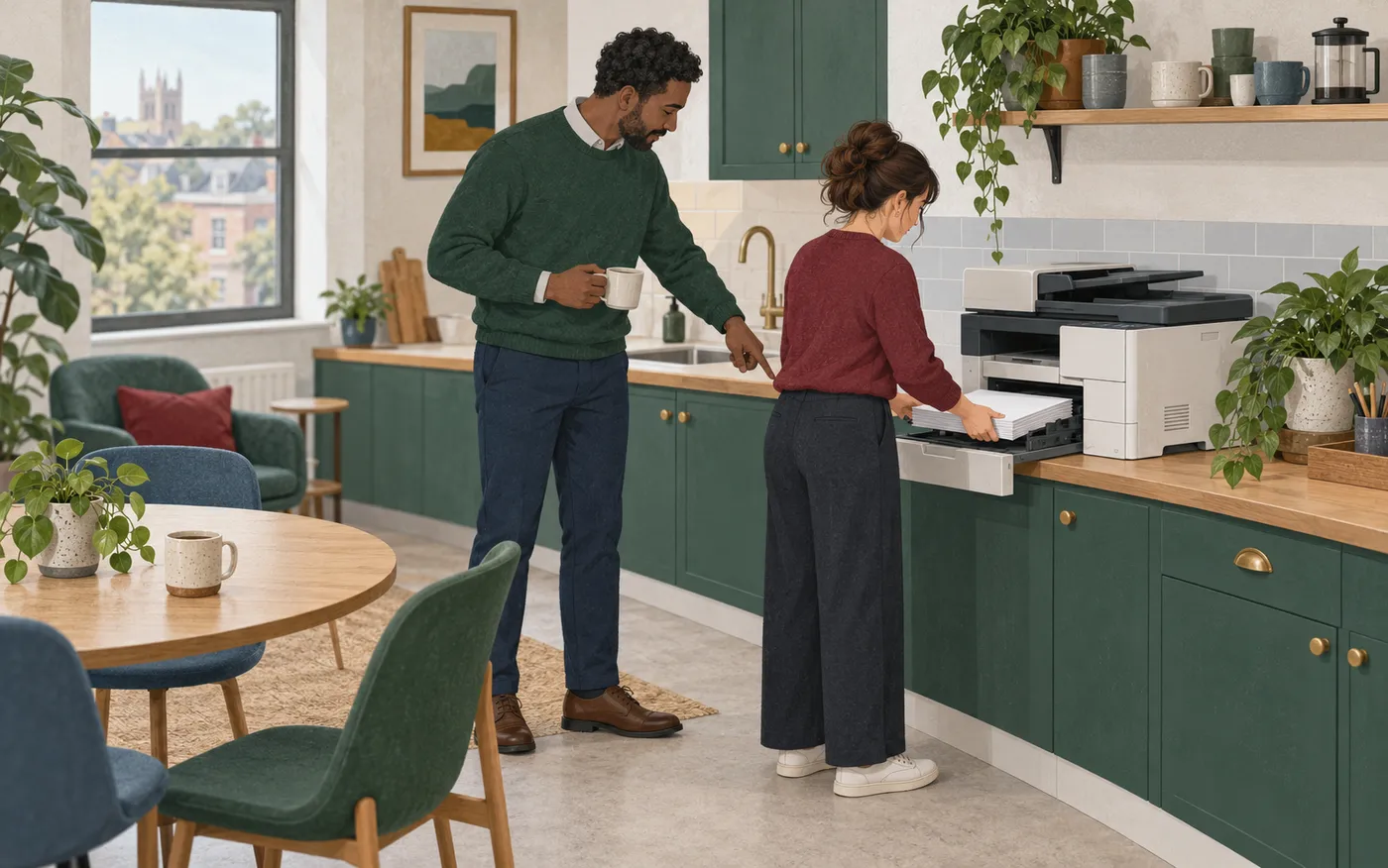
A colleague shows someone how to load paper into an office printer.
If the printer runs out of paper, add more: if + present simple, then an instruction. Illustration: Atelier

Imagine you are showing a colleague how a booking screen works. You need to explain its usual rules and tell your colleague what to do. These examples follow the form from the name box to the printer.

Zero conditional: eight rules you can use

1 · When do you use the zero conditional?

Use it for a general fact or the usual result in a system. The sentence says what happens each time the condition is true.

If the printer runs out of paper, it stops.This is how the printer works.

If you leave the name box empty, the system shows a reminder.This is the screen's usual rule.

2 · Can you use it for a routine?

Yes. Use it for something you regularly do in the same situation. A personal routine can be true for you; it need not be true for everyone.

If I have a question, I ask my colleague.This is my usual action when I need help.

When I finish a booking, I save the form.Saving the form is part of my routine.

3 · Do you use if or when?

Use if to make the condition the main point. Use when when you expect the event to happen. They can both work for repeated situations.

If a reminder appears, I read it.A reminder may appear. This is what I do in that situation.

When the printer runs out of paper, we refill it.This happens from time to time, and we expect it.

4 · How do you form the present simple?

Add -s or -es with he, she and it: shows, stops. In negatives, use don't or doesn't with the base verb: doesn't show.

If a form has no name, it needs a correction.Both subjects are singular.

If we don't understand a message, we don't close it.Both parts are negative.

5 · Can you put the result first?

Yes. If the condition comes first, put a comma after it. If the result comes first, you usually leave out the comma.

If the printer has no paper, it stops.Condition first, then a comma.

The printer stops if it has no paper.Result first, with no comma before the condition.

6 · How do you give an instruction with if?

Use the present simple after if, then a command. Start the command with the base verb. This is a useful instruction pattern with a condition.

If the green button appears, open the form.The button tells you which action to take.

If a reminder appears, read it before you continue.First read the message. Then do the next step.

7 · How do you ask about the usual result?

Use what happens if...? to ask about the result. With another main verb, use do or does in the question.

What happens if I leave this box empty?I want to know the screen's usual response.

What do you do if the printer stops?I want to know your normal action.

8 · How is it different from the first conditional?

The zero conditional gives a general rule. The first conditional often uses will for the result of one possible future event. The time and meaning help you choose.

If it rains, we use the hall.This is our usual rule whenever it rains.

If it rains tomorrow, we will use the hall.This is our plan for one possible event tomorrow.

How do you turn a screen rule into an instruction?

A rule: what the system doesa general result

Focus: the system's response

if + present simple, present simple

If the name box is empty, the screen shows a reminder.
The system responds in this way.

An instruction: what you should doan action for the person using the screen

Focus: your next step

if + present simple, command

If the name box is empty, enter your name.
This tells you how to complete the form.

Which mistakes should you check?

  • If the printer run out of paper, it stop.If the printer runs out of paper, it stops.

    The printer and it are singular. Add -s to both verbs: runs and stops.

  • If the screen doesn't shows a reminder, open the form.If the screen doesn't show a reminder, open the form.

    After doesn't, use the base verb show. The -s is already in doesn't.

  • If you will need help, ask your colleague.If you need help, ask your colleague.

    For this instruction, use the present simple after if. Start the command with ask.

Question 1No account needed
Choose the correct form for a general rule.If the printer ___ no paper, it stops.

Choose one answer.

Answer and explanation

has. The printer is singular, so use has. The result it stops is also in the present simple.

Question 2No account needed
Choose the command that completes the instruction.If a reminder appears, ___ it before you continue.

Choose one answer.

Answer and explanation

read. A command starts with the base verb read. The condition tells you when to take that action.

Question 3No account needed
Which sentence describes a repeated routine?

Choose one answer.

Answer and explanation

If I finish work early, I walk home.. The first sentence uses two present-simple forms to describe a usual action. The others describe a future plan and an imagined situation.

Question 4No account needed
Choose the correct negative.If the system ___ a name, it shows a reminder.

Choose one answer.

Answer and explanation

doesn't recognise. With singular the system, use doesn't and the base verb recognise, with no final -s.

Question 5No account needed
Which sentence has the normal comma pattern?

Choose one answer.

Answer and explanation

If the box is empty, the screen shows a reminder.. When the if part comes first, put a comma after the whole condition, before the result.

Built from