British humour: wordplay, puns and the deadpan
Explore British humour with puns, deadpan and irony in short scenes, then practise decoding jokes and choosing a natural reply when the meaning is unclear.
In short
A pun plays on two meanings or similar sounds; deadpan is a serious-looking way of delivering something funny. The joke's mechanism and its delivery are different things. British comedy uses these tools, but a serious face alone cannot tell you whether someone is joking.
Yellow the idea to rememberBlue English to learnRed watch out
What makes a pun funny?
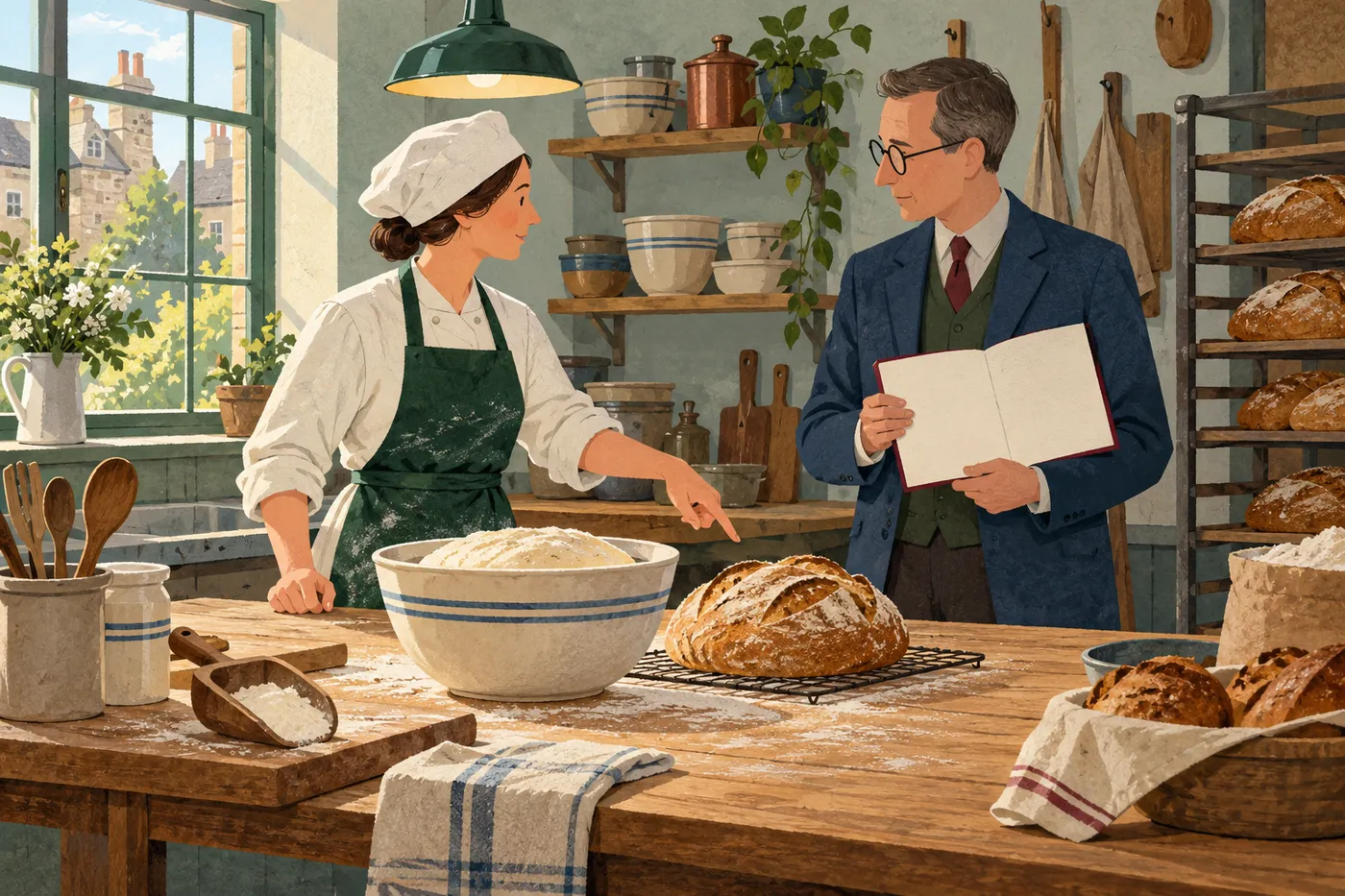
A pun gives you one reading, then makes another reading suddenly relevant. You may understand every word and still miss the switch. Start by asking which word can do two jobs. The pleasure often lies in recognising the link, even when the joke is deliberately silly.
- Accountant
We're short of dough.
The business needs more money.
- Baker
There's a whole bowl of it in the kitchen.
The baker answers as if dough only means the bread mixture.
- Accountant
Lovely. I'll ask the landlord if he'll accept a loaf.
The accountant carries on with the baker's reading, even though the rent needs paying.
Dough means the mixture used to make bread; it is also an informal word for money. The bakery makes both readings easy to find. The accountant's final line develops the joke by treating bread as payment. There is no need for the speaker to mean the opposite of their words: this is wordplay.
Can a pun use sounds as well as meanings?
| Example and setting | First reading | Second reading |
|---|---|---|
| A delayed delivery of herbs arrives. The gardener says, 'It's about thyme!' | The delivery contains thyme, a herb. | Thyme sounds like time. It's about time means something should have happened sooner. |
| A restaurant sign says 'Reserved'. Jo says, 'That table and I have something in common.' | The table is kept for a particular customer. | Reserved can describe a person who keeps their feelings private. |
| A guide to buying ladders promises 'a step up'. | A ladder helps you reach a higher place. | A step up can mean an improvement in your situation. |
Thyme and time sound the same in standard British pronunciation. That is sound-based wordplay. Reserved has different senses within the same word. A step up moves between a physical action and a familiar expression. With each one, name both readings before you explain why the setting connects them.
What does deadpan mean?
Deadpan delivery keeps the face and voice serious while the content supplies the joke. Imagine the following reply said calmly, with no smile and no extra stress on excellent. The gap between the situation and the reaction does the work.
- Pat
The printer's jammed again.
A problem may stop them finishing on time.
- Ruth
Excellent. I was worried we might finish on time.
Ruth treats a delay as if it were welcome. The context points to frustration.
- Pat
Shall I try the printer upstairs?
Pat recognises the problem and offers a useful next step.
Here excellent conflicts with the failed printer, so an ironic reading fits. Deadpan describes how Ruth delivers it. The same words could be delivered with a broad grin, which would change the style. A quiet voice can also carry a completely sincere statement, so listen to the situation as well as the sound.
Are deadpan, irony and understatement the same?
| Term | What to look for | Example |
|---|---|---|
| Wordplay | A switch between meanings or sounds. | The baker and accountant use two meanings of dough. |
| Irony | An apparent judgement that clashes with the situation. | Excellent, after the printer fails. |
| Understatement | Words that deliberately make something sound smaller. | A slight delay, after waiting three hours. |
| Deadpan | A serious manner while delivering comic content. | A calm, unsmiling delivery of Ruth's reply. |
| Sarcasm | A mocking or cutting use of language, often ironic. | Brilliant timekeeping, aimed at someone who is very late. |
These categories can overlap. A deadpan reply may contain a pun, irony or an absurd suggestion. Understatement can soften a complaint, while sarcasm can make it more personal. To understand the social effect, ask who is being laughed at: the speaker, a shared problem or another person.
How do you respond when you are unsure it is a joke?
- Alex
Only forty minutes late. Practically early.
The words describe a late arrival as almost early; the contrast suggests a joke.
- You
Sorry about the wait. The bus broke down.
You acknowledge the actual delay without needing to decide how friendly the remark was.
- Alex
Fair enough. Come in; we've saved you a seat.
The next turn gives more information about Alex's attitude.
The relationship changes how a remark lands. Between close friends, practically early may refer to a shared history of lateness. From a new manager, it may feel like criticism. The words suggest an ironic contrast; they leave the degree of warmth open. A direct question such as Are you joking, or would you prefer me to change it? can settle a practical misunderstanding.
What can go wrong when you copy a joke?
- With a pun, check that your listener knows both meanings. Explain dough as money if the bakery joke misses its mark.
- With deadpan, leave space for the other person to respond. If they look worried, a simple I'm joking clears things up.
- With teasing, notice the relationship. A friend's usual joke may sound unfriendly when repeated by a stranger.
- With a complaint, respond to the problem too. Pat's offer to try another printer works whether Ruth is amused or annoyed.
Do not treat British humour as a rule for every British speaker. These are useful tools for reading comedy and conversation. Personal taste, setting and shared knowledge shape whether a particular joke succeeds.
- Deadpan just means speaking quietly.Deadpan means delivering comic content in a serious manner.
A quiet reply can be sincere. Look for the joke in the words and situation as well as the delivery.
- Every double meaning is sarcasm.A double meaning can make a pun.
In the bakery scene, dough has two senses. Sarcasm involves mockery; a pun can simply play with language.