Updated
Sentence builder
Defining and non-defining relative clauses: when to use commas
Compare defining and non-defining relative clauses, learn when commas change the meaning and rebuild sentences with clear examples and practice.
- B1
- 8 sentences to build
- Tap the tiles
- Learn this in the B1 notebook →
In short
Use no commas when the clause tells us which person or thing you mean: the desk that Dana borrowed. Use commas when it adds extra information about someone or something already clear: Dana, who borrowed the desk, ... Do not use that in a non-defining clause.
Yellow the idea to rememberBlue English to learnRed watch out
How do you choose between defining and non-defining clauses?
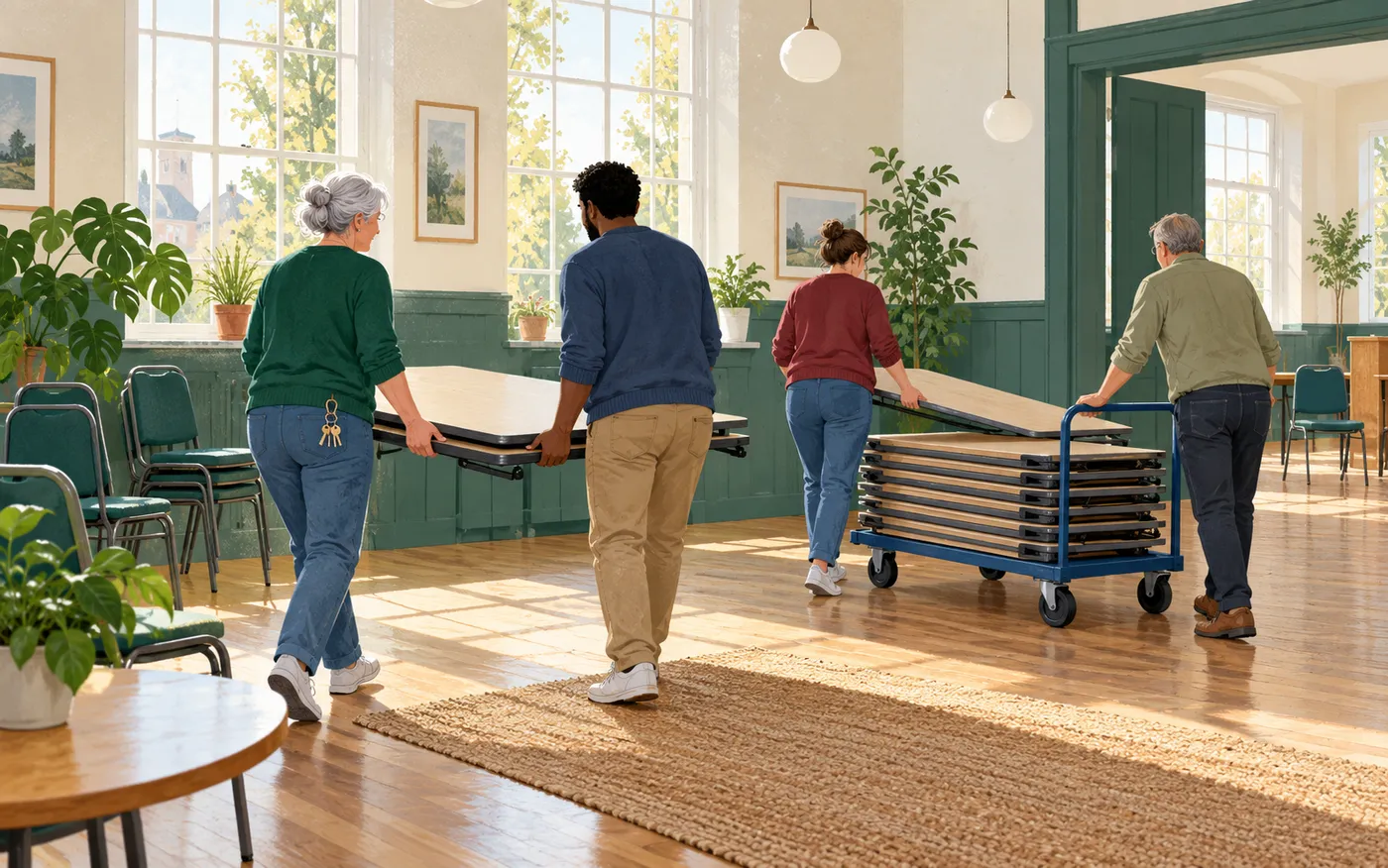
The volunteers who arrived early moved the desks.This sentence tells us that the early arrivals moved the desks.
Focus: The clause tells us which volunteers. Imagine that others arrived later.
The volunteers who arrived early moved the desks.
No commas: we mean one group of volunteers.
The volunteers, who arrived early, moved the desks.All the volunteers in this group arrived early and moved the desks.
Focus: We already know the group. The clause adds a detail about them.
The volunteers, who arrived early, moved the desks.
Two commas: the arrival time is extra information.
Try taking the clause out. In the first sentence, The volunteers moved the desks loses the detail that selects the early group. In the second, it still names the same group. Choose commas for your meaning, rather than for the length of the sentence.
Can you use which without a comma?
| Job | Example | Choice |
|---|---|---|
| Identify a thing | The trolley that Dana borrowed is here. | That is correct; no commas. |
| Identify the same thing | The trolley which Dana borrowed is here. | Which is also correct; no commas. |
| Add a detail about a known thing | The trolley, which belongs to the centre, is here. | Use which and commas; that cannot go here. |
| Identify a person | The volunteer who has the keys is outside. | Who is natural; that is also possible in a defining clause. |
| Add a detail about a named person | Dana, who has the keys, is outside. | Use who and commas; that cannot go here. |
Do you need one comma or two?
The side room, which has a screen, is ready.
The extra information sits in the middle, so it needs a comma on each side.
We met in the side room, which has a screen.
The clause comes at the end. The full stop closes the sentence, so there is no second comma.
When can you leave out who, which or that?
In a defining clause, you can leave out the relative word when another person or thing does the action: the trolley Dana borrowed. Dana borrowed the trolley. Keep the relative word when it does the action: the trolley that belongs to the centre. In a non-defining clause, keep it even when it is the object: The trolley, which Dana borrowed yesterday, is here.
Can you build eight sentences with the right commas?
Put the tiles in order. Commas stay attached to their words. The cue tells you whether the description identifies something or adds a detail. Start each sentence with the capital letter.
Tap the words in the right order. Tap a placed word to send it back.
Start with The volunteer. Identify the person with the keys.
Start with The trolley. Identify the borrowed trolley.
Start with The room. Identify the north-facing room.
Start with The organiser. Identify the person I emailed; leave out the object relative word.
Start with Dana. We know who Dana is; add the detail about the keys.
Start with This trolley. The trolley is already clear; add its owner.
Start with We chose. Add a detail after the room name.
Start with Beatrice. Add the detail about her work, then say she thanked everyone.
Which relative-clause mistakes should you avoid?
- Dana, that has the keys, is outside.Dana, who has the keys, is outside.
Use who for this extra information about Dana. Commas and that do not go together in this relative-clause pattern.
- This trolley, which belongs to the centre is heavy.This trolley, which belongs to the centre, is heavy.
The extra detail ends after centre. Close it with a second comma before the main verb is.
- This is the trolley that Dana borrowed it.This is the trolley that Dana borrowed.
That already links borrowed to the trolley. Leave out the repeated object it.
- The trolley belongs to the centre is heavy.The trolley that belongs to the centre is heavy.
Keep that or which here. The relative word is the subject of belongs.