Updated
Sorting game
In, on or at for places: at the station, in the car
Choose in, on or at for places, from rooms and transport to meeting points and addresses, with a station scene, 21 phrases to sort and common errors.
- A2
- 21 words to sort
- 3 boxes
- Tap to play
- Learn this in the A2 notebook →
In short
Use in for inside a space: in the car. Use on for a surface and many kinds of transport: on the table, on the bus. Use at for a place where you meet or do something: at the station; we usually say in a car but on a bus.
Yellow the idea to rememberBlue English to learnRed watch out
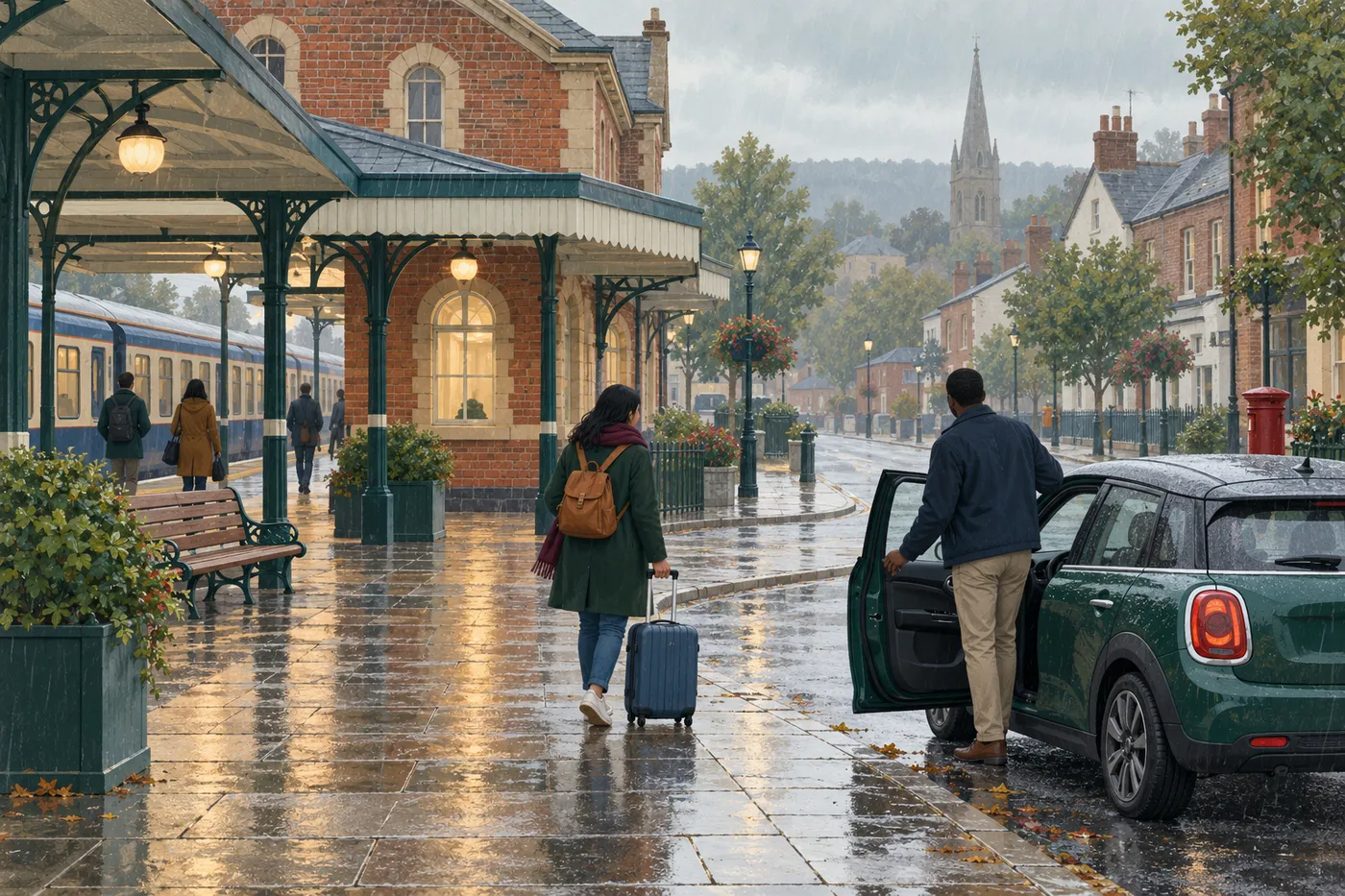
Can you choose in, on or at for these places?
Put each phrase in the correct box. Read the information in brackets. For transport, imagine a passenger on a journey.
Tap a word, then the box it belongs in.
What are the main place rules?
| Use | Pattern | Example |
|---|---|---|
| in | a country or city | I live in the UK, in Leeds. |
| in | inside a room or container | The keys are in my bag. |
| on | a surface | Your ticket is on the table. |
| on | a floor of a building | The office is on the first floor. |
| at | a meeting point | I'll meet you at the entrance. |
| at | a full address with a number | The class is at 18 Green Road. |
I'm at the station gives your general location. I'm in the station says you are inside the building. Choose the meaning you want; both sentences can be correct.
Why is it on the bus but in the car?
| Where are you? | How do you travel? |
|---|---|
| I'm on the bus. | I travel by bus. |
| I'm on the train. | I travel by train. |
| I'm on the plane. | I travel by plane. |
| I'm in the car. | I travel by car. |
| I'm in a taxi. | I travel by taxi. |
| I'm on my bike. | I travel by bike. |
Use by bus to name the way you travel. Use on the bus to say where you are during the journey. For walking, say on foot: I go to work on foot. Learn these as whole phrases.
Where is everyone at the station?
Explore the station and its forecourt
Find:
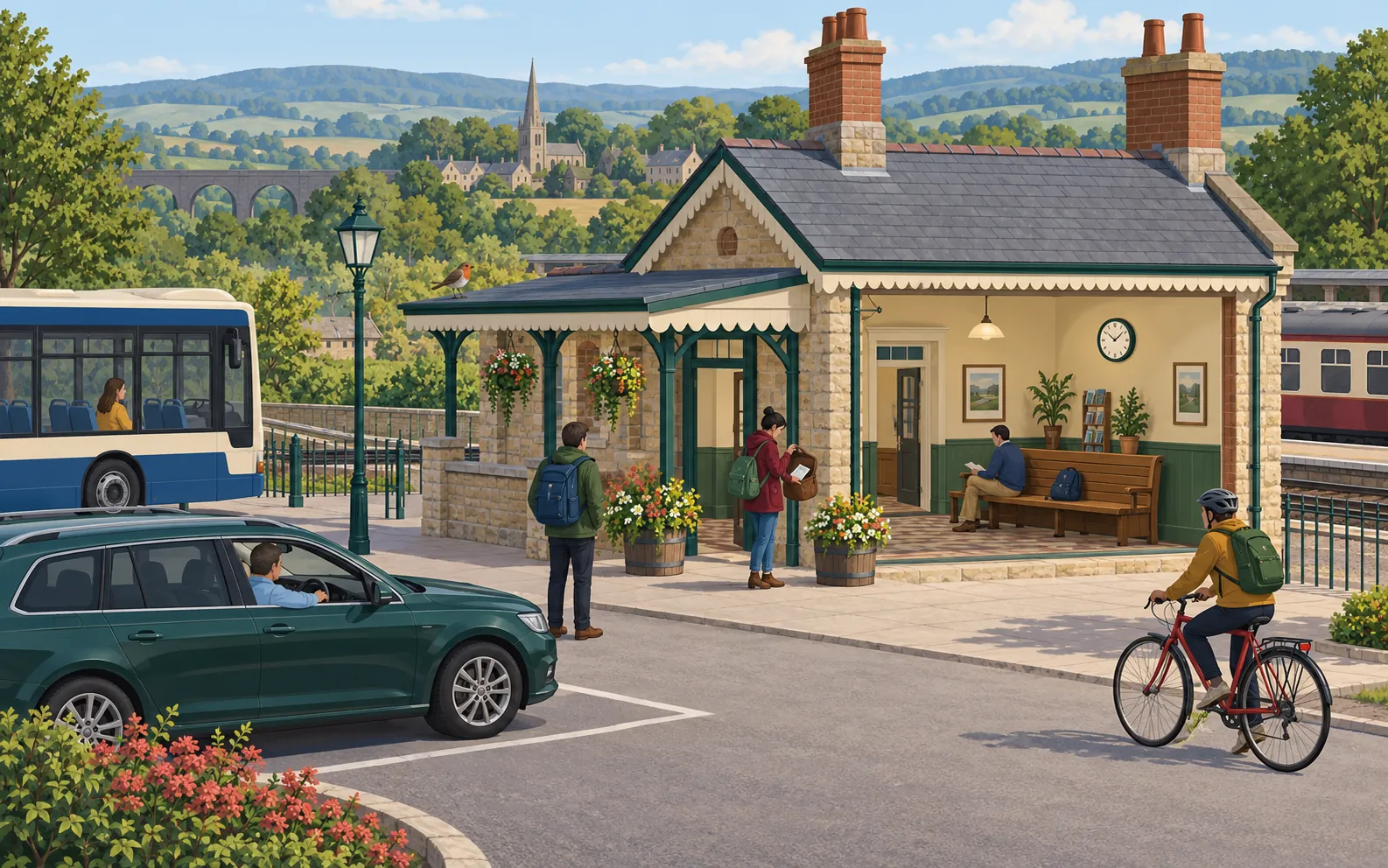
Sam is at the station. Leila is in the car outside. Jo is on the bus, and Ellis is in the waiting room. Sam sends a message: I'm at the entrance. Where are you? Leila replies: I'm in the car. I'll come over now.
Do you use in or at with an address?
The class is at 18 Green Road, in Leeds.
The first phrase gives the full address. The second gives the city.
In British English, in Green Road is also common when you give only the street. With the house number and street together, use at.
- I'm on a taxi.I'm in a taxi.
Use in for a taxi or car when you are a passenger inside it.
- She's in home.She's at home.
Learn at home as a whole phrase. Leave out the.
- The class is in 18 Green Road.The class is at 18 Green Road.
Use at for the full address with the house number.
- I go to work by the bus.I go to work by bus.
Use by bus for how you travel, with no the. Use on the bus for where you are.