Lectura

Lectura de inglés de B1 sobre huertos: vocabulario y cuestionario

Practica la lectura de inglés de B1 con un proyecto comunitario de Glasgow, resultados en presente perfecto, tarjetas de vocabulario útil y cuatro preguntas de comprensión.

¿Qué vas a practicar?

Lee cómo unos vecinos de Glasgow han convertido un espacio vacío en un huerto. El presente perfecto vincula una acción pasada con un resultado actual: They have built a path. Un resultado actual es distinto de un suceso con fecha concreta: They built it last Saturday.

Amarillo la idea para recordarAzul inglés para aprenderRojo cuidado con esto

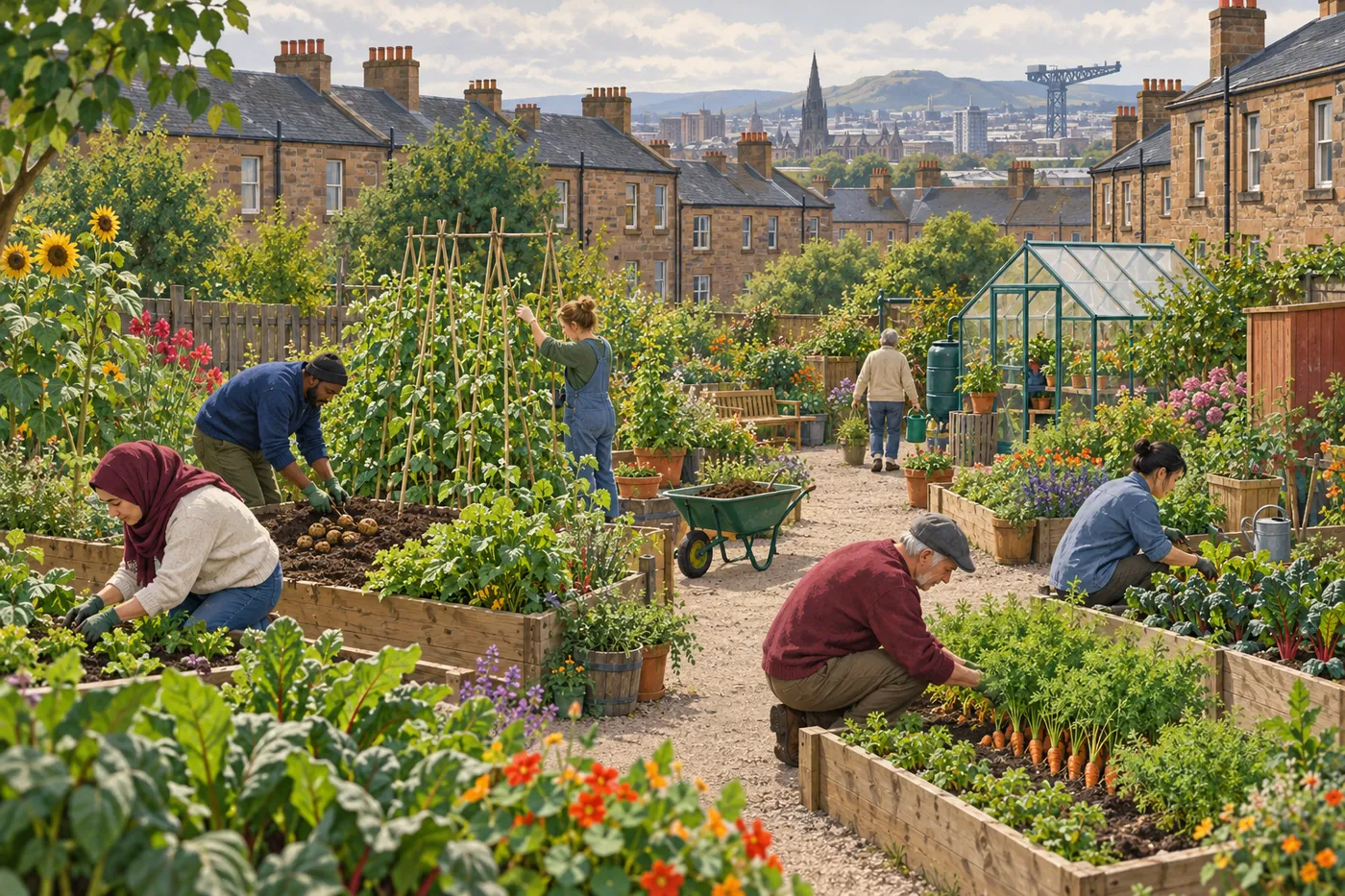
Vecinos cuidan bancales elevados en un huerto compartido de Glasgow.
Los vecinos han construido un camino (have built) y han plantado verduras juntos. Ilustración: Atelier

Lectura de B1: Glasgow

More than vegetables

When Amina moved into her flat in Glasgow, the space behind the houses was full of broken chairs and plastic bags. She could see it from her kitchen window. Last March, she asked her neighbours a simple question: "Could we grow something there?"

First, they asked the owner for permission. Then twelve people spent a Saturday clearing the ground. Since then, the group has built six raised beds1 and a wide path between them. They have planted beans, carrots and potatoes. There is also a small greenhouse2 for tomatoes.

Amina is the organiser3, but everyone has a job. Mr Reid checks the plants before breakfast. Two teenagers collect vegetable peelings for the compost bin4. Anyone can borrow tools, and a list by the gate shows who is responsible for watering each day.

The neighbours have already picked their first crop5 of beans. On Sunday, they cooked some of them together. "We haven't grown enough to feed the whole street," Amina says. "But we've learnt a lot. I've spoken to people I've lived beside for three years."

There have been problems too. Last month, heavy rain damaged the narrow entrance. The group has now made it wider and firmer, so people can bring in a wheelbarrow6 more easily. They haven't finished the shelter7 yet, so they still drink their tea indoors when it rains.

Next month, they plan to put a table near the gate with vegetables for neighbours to take. Until then, visitors are welcome on Saturday mornings. Bring a pair of gardening gloves8, Amina says. There is usually something to do, and always someone to talk to.

Con palabras más sencillas

Amina sees rubbish behind her Glasgow flat. She asks her neighbours about growing food there.

The owner agrees. The neighbours clear the ground and build places to grow vegetables.

People share the jobs. They look after the plants, collect plant waste and water the garden.

The neighbours have picked some beans and eaten together. They are also getting to know each other.

Rain causes a problem at the entrance. They improve it, but the shelter is still unfinished.

They want to share vegetables. People can visit on Saturdays and help.

¿Qué puedes encontrar en el huerto?

Vocabulario del huerto que conviene reconocer

¿Qué palabras muestran un resultado actual?

Una acción anterior y su resultado
Palabras de la lectura¿Qué es cierto ahora?
The group has built six raised beds.Los bancales están listos para cultivar alimentos.
They have already picked their first crop of beans.Tienen unas judías para comer.
The group has now made it wider and firmer.La entrada es más fácil de usar.
They haven't finished the shelter yet.La gente sigue entrando cuando llueve.
  • They have cleared the ground last March.They cleared the ground last March.

    Last March indica un periodo pasado terminado. Usa el pasado simple para esa acción con fecha concreta.

  • The group has build six beds.The group has built six beds.

    Después de has o have, usa el participio pasado. Las formas son build, built, built.

¿Cómo ha cambiado el huerto la calle?

Pregunta 1No necesitas una cuenta
¿Qué hicieron los vecinos antes de limpiar el terreno?

Elige una respuesta.

Respuesta y explicación

They got permission from the owner.. Primero pidieron permiso al propietario. Después limpiaron el espacio.

Pregunta 2No necesitas una cuenta
¿Por qué se menciona el riego en una lista junto a la puerta?

Elige una respuesta.

Respuesta y explicación

The neighbours need to know whose job it is.. La lista muestra quién se encarga de regar cada día. El trabajo se reparte.

Pregunta 3No necesitas una cuenta
¿Qué ha hecho el grupo desde que la lluvia dañó la entrada?

Elige una respuesta.

Respuesta y explicación

Made the entrance wider and firmer.. El grupo ha mejorado la entrada para que una carretilla pase más fácilmente.

Pregunta 4No necesitas una cuenta
Además de cultivar alimentos, ¿qué ha ganado Amina?

Elige una respuesta.

Respuesta y explicación

More contact with her neighbours.. Amina dice que ha hablado con personas junto a las que lleva viviendo tres años.

¿Puedes describir un cambio cerca de tu casa?

Escribe tres frases sobre un lugar compartido. Di qué ha cambiado la gente, qué está mejor ahora y qué no ha terminado todavía. Puedes usar have built, have planted y haven't finished.

Revisa tus tres frases

Una ayuda para revisarte, sin nota. Las casillas marcadas no se guardan.

Elaborado a partir de