Lecture

Lecture en anglais B1 sur le jardinage : mots et quiz

Lisez un texte en anglais B1 sur un projet collectif à Glasgow, avec les résultats au present perfect, des cartes de vocabulaire utiles et quatre questions de compréhension.

Que travaillerez-vous ?

Découvrez comment des voisins de Glasgow ont transformé un espace vide en jardin. Le present perfect relie une action passée à un résultat présent : They have built a path. Un résultat présent diffère d’un événement daté : They built it last Saturday.

Jaune l’idée à retenirBleu l’anglais à retenirRouge point de vigilance

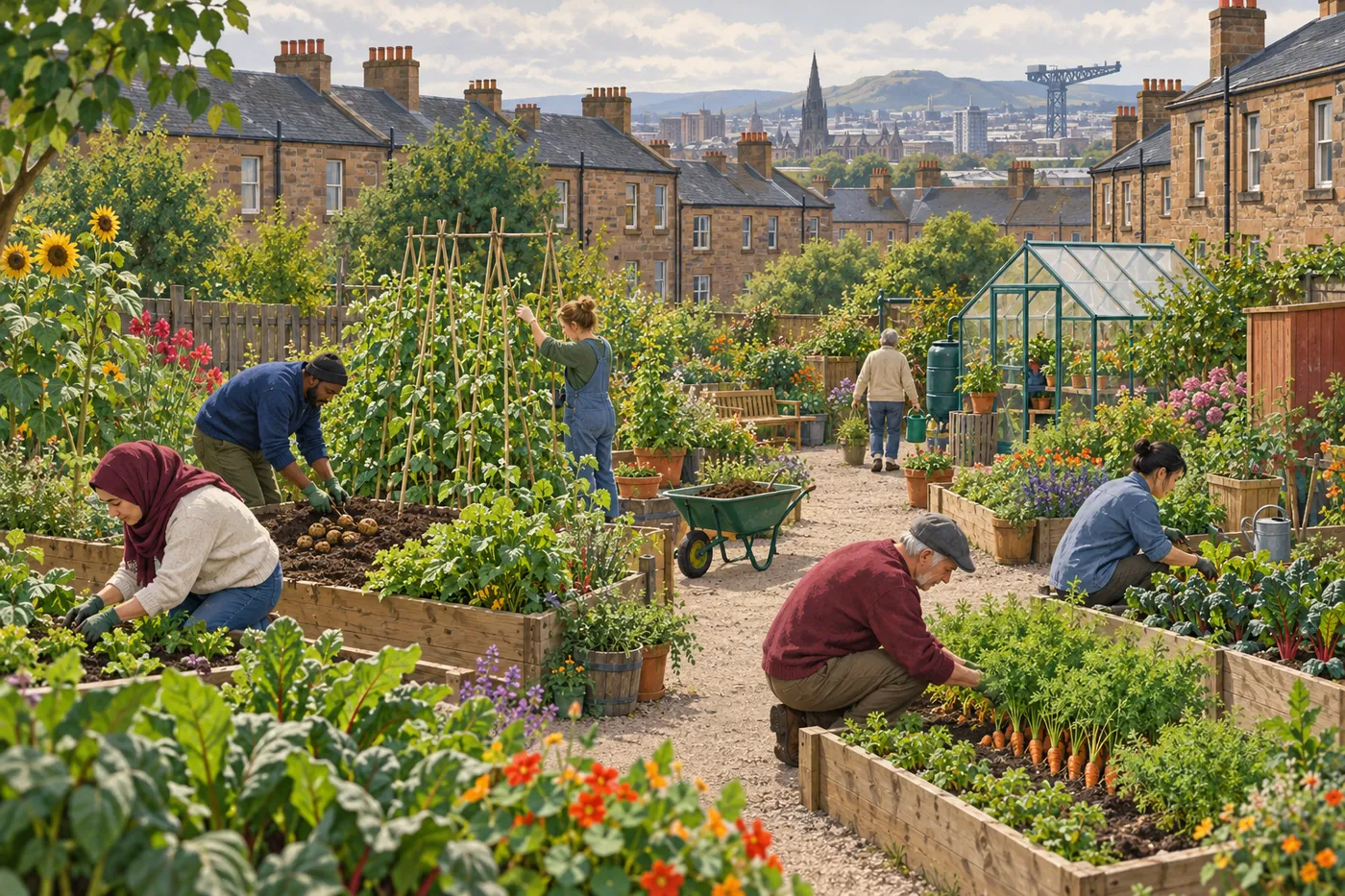
Des voisins s’occupent de bacs de culture surélevés dans un jardin partagé de Glasgow.
Les voisins ont construit un chemin — have built — et planté des légumes ensemble. Illustration : Atelier

Lecture B1 – Glasgow

More than vegetables

When Amina moved into her flat in Glasgow, the space behind the houses was full of broken chairs and plastic bags. She could see it from her kitchen window. Last March, she asked her neighbours a simple question: "Could we grow something there?"

First, they asked the owner for permission. Then twelve people spent a Saturday clearing the ground. Since then, the group has built six raised beds1 and a wide path between them. They have planted beans, carrots and potatoes. There is also a small greenhouse2 for tomatoes.

Amina is the organiser3, but everyone has a job. Mr Reid checks the plants before breakfast. Two teenagers collect vegetable peelings for the compost bin4. Anyone can borrow tools, and a list by the gate shows who is responsible for watering each day.

The neighbours have already picked their first crop5 of beans. On Sunday, they cooked some of them together. "We haven't grown enough to feed the whole street," Amina says. "But we've learnt a lot. I've spoken to people I've lived beside for three years."

There have been problems too. Last month, heavy rain damaged the narrow entrance. The group has now made it wider and firmer, so people can bring in a wheelbarrow6 more easily. They haven't finished the shelter7 yet, so they still drink their tea indoors when it rains.

Next month, they plan to put a table near the gate with vegetables for neighbours to take. Until then, visitors are welcome on Saturday mornings. Bring a pair of gardening gloves8, Amina says. There is usually something to do, and always someone to talk to.

En termes plus simples

Amina sees rubbish behind her Glasgow flat. She asks her neighbours about growing food there.

The owner agrees. The neighbours clear the ground and build places to grow vegetables.

People share the jobs. They look after the plants, collect plant waste and water the garden.

The neighbours have picked some beans and eaten together. They are also getting to know each other.

Rain causes a problem at the entrance. They improve it, but the shelter is still unfinished.

They want to share vegetables. People can visit on Saturdays and help.

Que trouve-t-on dans le jardin ?

Des mots du jardin à reconnaître

Quels mots montrent un résultat présent ?

Une action antérieure et son résultat
Mots du texteQu’est-ce qui est vrai maintenant ?
The group has built six raised beds.Les bacs sont prêts pour cultiver des aliments.
They have already picked their first crop of beans.Ils ont des haricots à manger.
The group has now made it wider and firmer.L’entrée est plus facile à utiliser.
They haven't finished the shelter yet.Les gens rentrent encore à l’intérieur quand il pleut.
  • They have cleared the ground last March.They cleared the ground last March.

    Last March indique un moment passé terminé. Utilisez le prétérit pour cette action datée.

  • The group has build six beds.The group has built six beds.

    Après has ou have, utilisez le participe passé. Les formes sont build, built, built.

Comment le jardin a-t-il changé la rue ?

Question 1Aucun compte nécessaire
Qu’ont fait les voisins avant de déblayer le terrain ?

Choisissez une seule réponse.

Réponse et explication

They got permission from the owner.. Ils ont d’abord demandé la permission au propriétaire. Ils ont ensuite déblayé l’espace.

Question 2Aucun compte nécessaire
Pourquoi une liste près du portail parle-t-elle de l’arrosage ?

Choisissez une seule réponse.

Réponse et explication

The neighbours need to know whose job it is.. La liste indique qui est responsable de l’arrosage chaque jour. Le travail est partagé.

Question 3Aucun compte nécessaire
Qu’a fait le groupe depuis que la pluie a abîmé l’entrée ?

Choisissez une seule réponse.

Réponse et explication

Made the entrance wider and firmer.. Le groupe a amélioré l’entrée pour qu’une brouette passe plus facilement.

Question 4Aucun compte nécessaire
En plus de cultiver des aliments, qu’a gagné Amina ?

Choisissez une seule réponse.

Réponse et explication

More contact with her neighbours.. Amina dit avoir parlé à des personnes dont elle est la voisine depuis trois ans.

Savez-vous décrire un changement près de chez vous ?

Écrivez trois phrases sur un lieu partagé. Dites ce que les gens ont changé, ce qui est mieux maintenant et ce qu’ils n’ont pas encore terminé. Vous pouvez utiliser have built, have planted et haven't finished.

Vérifiez vos trois phrases

Un outil pour vous relire, sans note. Les cases cochées ne sont pas enregistrées.

Établi à partir de