Actualizado el
Juego de parejas
Verbos frasales con get: get up, get on, get over
Aprende verbos frasales con get mediante significados y ejemplos cotidianos, desde levantarte hasta superar un problema, y después relaciona frases y significados.
- B1
- Parejas: 9
- Pulsa para emparejar
- Aprende esto en el cuaderno de B1 →
En pocas palabras
Con get, la palabra pequeña y la situación te ayudan a encontrar el significado: get up significa levantarse de la cama, get on a bus significa subir a él y get over an illness significa recuperarse de una enfermedad. Aprende siempre la frase completa, incluidas palabras como with u of.
Amarillo la idea para recordarAzul inglés para aprenderRojo cuidado con esto
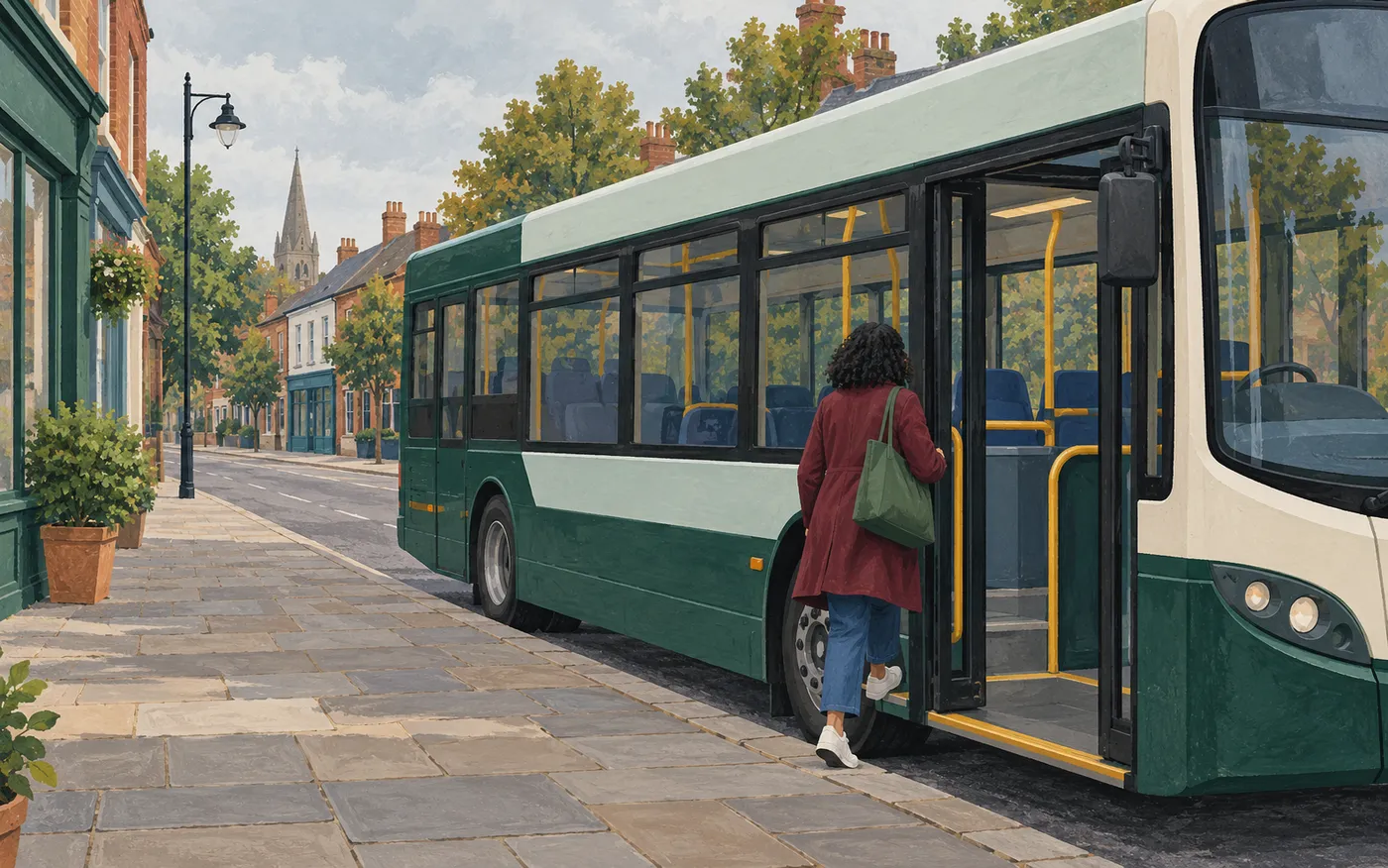
¿Cómo son las acciones get up, get on y get in?
Cuatro acciones cotidianas
Busca:
¿Qué significan los verbos frasales habituales con get?
| Expresión | Significado aquí | Ejemplo |
|---|---|---|
| get up | levantarte de la cama | I usually get up before my partner. |
| get on a bus or train | entrar o subir a él | We got on the train at York. |
| get off a bus or train | salir o bajar de él | Let's get off at the next station. |
| get in a car or taxi | entrar o subir a él | She got in the taxi and gave the driver the address. |
| get out of a car or taxi | salir o bajar de él | He got out of the car and opened the gate. |
| get back | volver | What time did you get back last night? |
| get over an illness | recuperarse | It took me a week to get over that cold. |
| get on with someone | llevarte bien con esa persona | I get on well with my new neighbour. |
| get on with something | avanzar con ello o seguir haciéndolo | How are you getting on with the booking form? |
Get on with tiene dos significados útiles. Una persona suele indicar una relación: I get on with Jo. Un trabajo o una actividad indican progreso: I'm getting on with the report. Comprueba las palabras que rodean la expresión.
¿Dónde colocas la persona o la cosa después de get?
get over itrecuperarse de algo
Objetivo: mantén over antes de la cosa o el pronombre
get over + enfermedad o problema
I've finally got over it.
Ya me he recuperado; la enfermedad ya se ha mencionado.
get on with herllevarte bien con ella
Objetivo: mantén on with antes de la persona o el pronombre
get on with + persona
I get on well with her.
Nos llevamos bien.
Las formas británicas habituales son get, got, got y getting: I get up early, I got up early yesterday, I've got up early all week. Cambia get para indicar el tiempo; conserva las palabras pequeñas de la expresión.
¿Cómo puedes usar frases con get cuando cambia un plan?
- Leah
I'm on the bus. Where should I get off?
Leah pregunta dónde bajar del autobús.
- Sam
At the library. I'll meet you outside.
Sam indica la parada y el lugar de encuentro.
- Leah
Thanks. How are you getting on with the room booking?
Leah pregunta por el progreso.
- Sam
I've sorted it out. We can get on with planning the session now.
El problema con la reserva está resuelto, así que pueden continuar.
- We got in the bus at the station.We got on the bus at the station.
Para viajar de la forma habitual, usa get on con un autobús o tren; usa get in con un coche o taxi.
- She got out the taxi.She got out of the taxi.
Conserva of en get out of cuando indiques el vehículo.
- I've get over my cold.I've got over my cold.
Después de have, usa el participio pasado got en la estructura británica que se enseña aquí.
- I get well on with my neighbour.I get on well with my neighbour.
Coloca well después de on en esta expresión sobre relaciones: get on well with someone.
¿Puedes relacionar cada frase con get con su significado?
Pulsa un elemento de la izquierda y después su pareja de la derecha.