Updated
Matching game
Phrasal verbs with get: get up, get on, get over
Learn phrasal verbs with get through everyday meanings and examples, from getting up to getting over a problem, then match phrases to meanings.
- B1
- 9 pairs
- Tap to match
- Learn this in the B1 notebook →
In short
With get, the small word and the situation help you find the meaning: get up means leave your bed, get on a bus means enter it, and get over an illness means become well again. Keep the whole phrase together when you learn it, including words such as with or of.
Yellow the idea to rememberBlue English to learnRed watch out
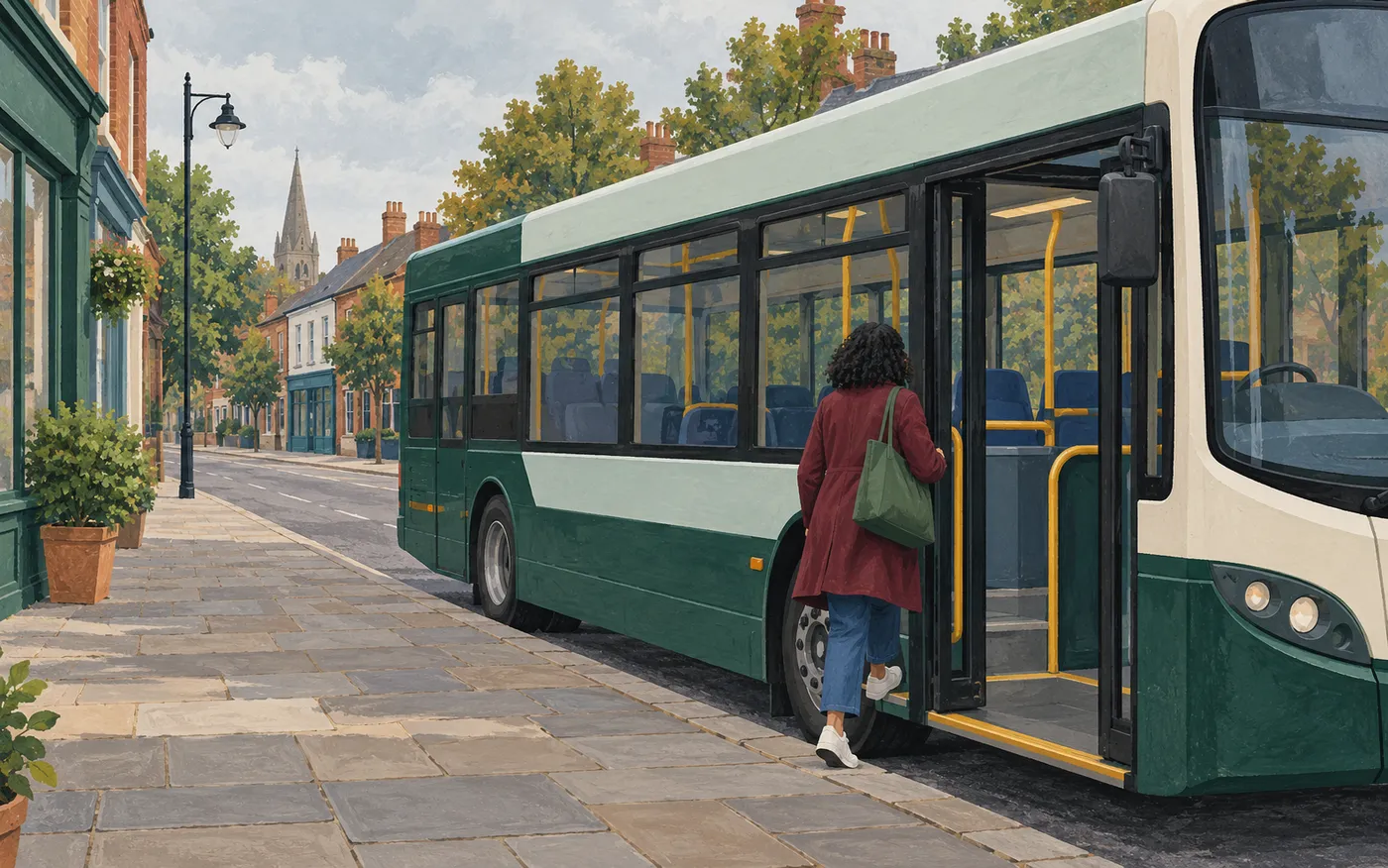
What do get up, get on and get in look like?
Four everyday actions
Find:
What do the common phrasal verbs with get mean?
| Phrase | Meaning here | Example |
|---|---|---|
| get up | leave your bed | I usually get up before my partner. |
| get on a bus or train | enter it | We got on the train at York. |
| get off a bus or train | leave it | Let's get off at the next station. |
| get in a car or taxi | enter it | She got in the taxi and gave the driver the address. |
| get out of a car or taxi | leave it | He got out of the car and opened the gate. |
| get back | return | What time did you get back last night? |
| get over an illness | become well again | It took me a week to get over that cold. |
| get on with someone | have a good relationship with them | I get on well with my new neighbour. |
| get on with something | make progress with it or continue doing it | How are you getting on with the booking form? |
Get on with has two useful meanings. A person usually points to a relationship: I get on with Jo. A job or activity points to progress: I'm getting on with the report. Check the words around the phrase.
Where do you put the person or thing after get?
get over itrecover from something
Focus: keep over before the thing or pronoun
get over + illness or problem
I've finally got over it.
I am well again; the illness has already been mentioned.
get on with herhave a good relationship with her
Focus: keep on with before the person or pronoun
get on with + person
I get on well with her.
We have a good relationship.
The usual British forms are get, got, got and getting: I get up early, I got up early yesterday, I've got up early all week. Change get to show the time; keep the small words in the phrase.
How can you use get phrases when a plan changes?
- Leah
I'm on the bus. Where should I get off?
Leah asks where to leave the bus.
- Sam
At the library. I'll meet you outside.
Sam names the stop and meeting place.
- Leah
Thanks. How are you getting on with the room booking?
Leah asks about progress.
- Sam
I've sorted it out. We can get on with planning the session now.
The booking problem is solved, so they can continue.
- We got in the bus at the station.We got on the bus at the station.
For ordinary travel, use get on a bus or train; use get in a car or taxi.
- She got out the taxi.She got out of the taxi.
Keep of in get out of when you name the vehicle.
- I've get over my cold.I've got over my cold.
After have, use the past participle got in the British pattern taught here.
- I get well on with my neighbour.I get on well with my neighbour.
Put well after on in this relationship phrase: get on well with someone.
Can you match each get phrase to its meaning?
Tap one on the left, then its partner on the right.