Lista de vocabulario

Vocabulario de transporte en inglés: palabras y cuestionario

Aprende vocabulario de transporte en inglés con tarjetas ilustradas, by bus u on foot, get on o get in, y catch, miss, drive y ride en un cuestionario de viajes.

En pocas palabras

Di by bus, by train o by car, pero on foot cuando vas andando. Usa get on y get off para un autobús o tren; usa get in y get out of para un coche o taxi. Omite the después de by cuando indiques cómo viajas: I go by bus.

Amarillo la idea para recordarAzul inglés para aprenderRojo cuidado con esto
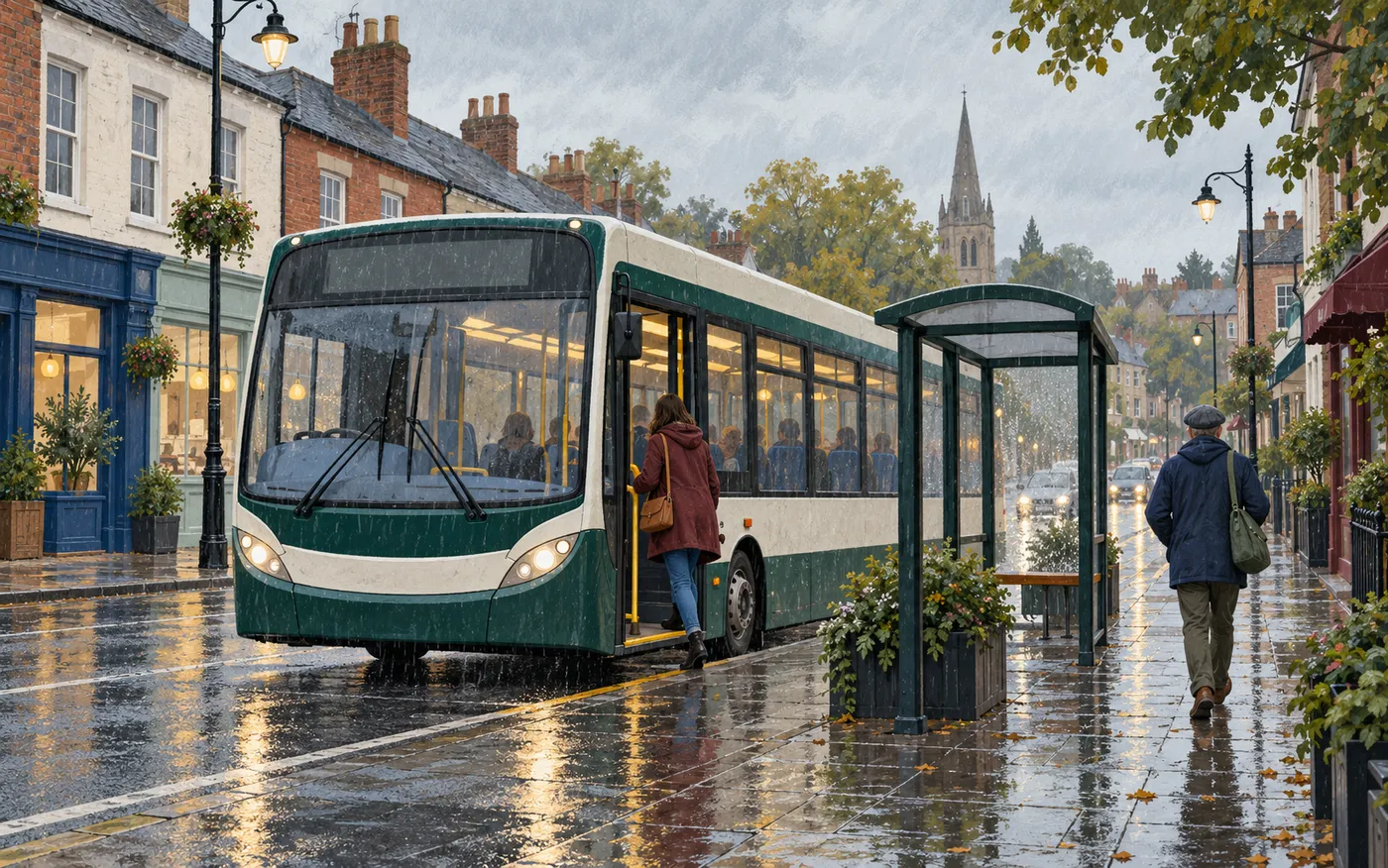
Un pasajero sube a un autobús en una calle comercial británica bajo la lluvia mientras otra persona camina.
Viaja en autobús, by bus, o ven a pie, on foot. Ilustración: Atelier

¿En qué puedes viajar?

a busvehículo grande que transporta pasajeros por las calles de una ciudadI go to work by bus.
a coachautobús cómodo para trayectos más largosWe took a coach to Bristol.
a trainvehículo que transporta personas por vías de ferrocarrilThe train leaves at ten.
a tramvehículo que circula por raíles en las callesWe can take the tram to the centre.
a carvehículo pequeño para un conductor y unos pocos pasajerosShe drives to work in her car.
a taxicoche con conductor al que pagas para que te lleve a un lugarWe took a taxi home.
a bicyclevehículo de dos ruedas que mueves con las piernasI ride my bicycle to college.
a ferrybarco que transporta personas o vehículos por el aguaWe crossed the river by ferry.

¿Qué ves o llevas en un viaje?

a bus stoplugar donde esperas un autobúsThe bus stop is outside the shop.
a stationlugar donde paran los trenes para los pasajerosMeet me outside the station.
a platformzona junto a una vía donde esperas un trenOur train leaves from platform three.
a ticketpase de papel o electrónico para un viajeKeep your ticket until you leave the station.
a timetablelista de las horas de llegada y salida de autobuses o trenesCheck the timetable before you go.
a suitcasebolsa grande para viajar, a menudo con ruedasMy suitcase is quite heavy.
luggagebolsas y maletas que llevas al viajarPut your luggage under the seat.
a passengerpersona que viaja en un vehículo sin conducirloA passenger asked the driver for help.

¿Qué verbos y expresiones necesitas para viajar?

go by busviajar en autobúsI usually go by bus.
go on footir andando a un lugarThe hotel is near, so we can go on foot.
get onsubir a un autobús, tren, tranvía o transbordadorGet on the bus here.
get offbajar de un autobús, tren, tranvía o transbordadorGet off at the next stop.
get inentrar en un coche o taxiGet in the taxi, please.
get out ofsalir de un coche o taxiWe got out of the car outside the hotel.
catchllegar a tiempo y viajar en un autobús o trenWe need to catch the nine o'clock train.
missllegar demasiado tarde para coger un autobús o trenHurry, or we will miss the bus.

¿Puedes nombrar estos vehículos?

Ocho formas de viajar

¿Qué necesitas para el viaje?

En la parada, en la estación y en tu bolsa

¿Se dice by bus u on the bus?

La forma de viajar y el vehículo en el que estás
Forma de viajarDónde estás
I go to work by bus.I am on the bus now.
We travel by train.We are on the train to Leeds.
She goes by car.She is in the car.
He goes by taxi.He is in a taxi.
I go on foot.I am walking to the station.
They travel by plane.They are on the plane.

By bus responde a How do you get there? On the bus indica dónde estás. También puedes decir I take the bus to work o I catch the bus to work. En inglés británico, la palabra habitual es transport; en inglés estadounidense se oye a menudo transportation.

¿Cuándo se usan get on, get off, get in y get out of?

Entrar y salir
VehículoEntrarSalir
bus, coach, train, tram, plane, ferryGet on the train.Get off the train.
car, taxiGet in the taxi.Get out of the taxi.
bicycle, motorbikeGet on your bicycle.Get off your bicycle.

La forma de pasado de get es got: We got on at the station and got off in York. Con un coche, di We got in the car at home and got out of it at the hotel. Conserva of cuando indiques el vehículo después de get out.

¿Se dice drive a car o ride a bicycle?

¿Quién controla el vehículo?
VerboEjemploSignificado
driveI drive to work.Yo conduzco el coche.
rideShe rides her bicycle to college.Ella va en bicicleta.
takeWe take the bus.Viajamos como pasajeros.
walkHe walks to the station.Él va a pie.
wait forWe wait for the next train.Nos quedamos hasta que llegue.
Un cambio de planes ante la estación
  1. Jo

    Where are you? I'm outside the station.

    Jo indica el lugar de encuentro.

  2. Tú

    I'm still on the bus. I got on the wrong bus.

    Explicas el problema.

  3. Jo

    Get off at the next stop. Can you walk here?

    Jo propone bajar del autobús.

  4. Tú

    Yes, I can come on foot. I'll be there in ten minutes.

    Indicas una nueva hora de llegada.

  • I go to work by the bus.I go to work by bus.

    Usa by + transport word para indicar cómo viajas: by bus, by train, by car.

  • We went by foot.We went on foot.

    La expresión para ir andando es on foot. También puedes decir We walked.

  • We got off the taxi at the hotel.We got out of the taxi at the hotel.

    Para un coche o taxi, usa get out of. La forma de pasado de get es got.

  • I am waiting the bus.I am waiting for the bus.

    Usa wait for antes de la persona o cosa que esperas.

Pregunta 1No necesitas una cuenta
Elige la oración correcta sobre ir andando.

Elige una respuesta.

Respuesta y explicación

We went on foot.. Usa on foot para decir que fuiste andando a un lugar.

Pregunta 2No necesitas una cuenta
Estás saliendo de un taxi. ¿Qué dices?

Elige una respuesta.

Respuesta y explicación

I need to get out of the taxi here.. Usa get out of + the vehicle para salir de un coche o taxi.

Pregunta 3No necesitas una cuenta
El tren salió antes de que llegaras. ¿Qué ocurrió?

Elige una respuesta.

Respuesta y explicación

You missed the train.. La expresión missed the train significa que perdiste el tren: llegaste demasiado tarde para viajar en él.

Pregunta 4No necesitas una cuenta
Elige la forma correcta de describir tu trayecto habitual.

Elige una respuesta.

Respuesta y explicación

I go to college by train.. Usa by train para indicar cómo viajas, sin artículo después de by.

Pregunta 5No necesitas una cuenta
Eres pasajero de un autobús. ¿Qué oración encaja?

Elige una respuesta.

Respuesta y explicación

I take the bus to work.. I take the bus significa que viajo en él. I drive the bus significa que soy quien lo conduce.

Elaborado a partir de