Reading

B2 English reading about beavers: nature and quiz

Try B2 English reading about beavers returning to Britain, wildlife benefits and farmers' concerns, with environment vocabulary and five questions.

In short

Beavers have returned to parts of Britain through reintroduction projects. Their changes to rivers can help wildlife and create problems for nearby landowners. Read this B2 feature to compare both sides; can reduce flood risk does not mean will stop every flood.

Yellow the idea to rememberBlue English to learnRed watch out

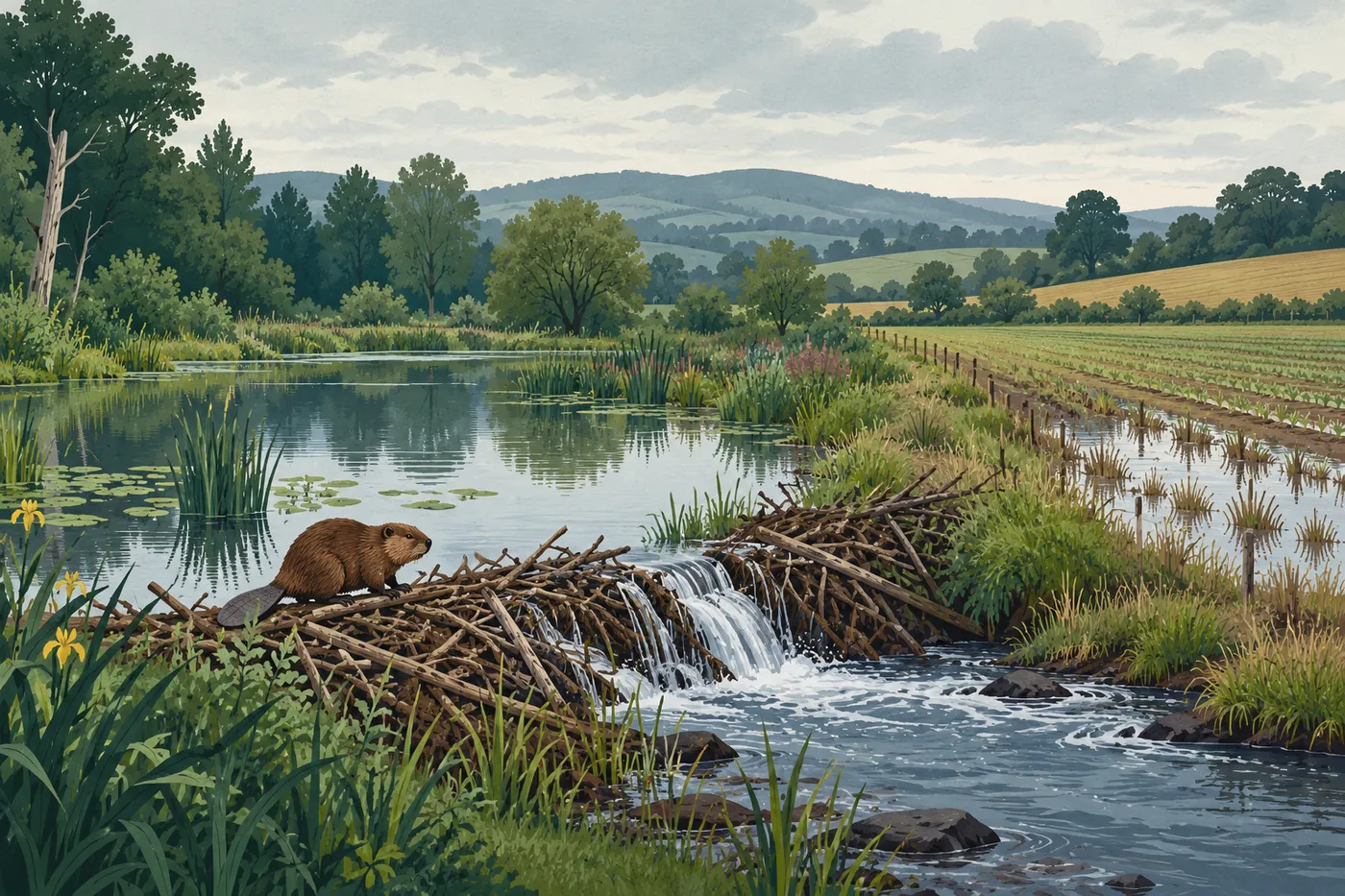
A beaver sits on its dam beside a still pool and a partly flooded field.
The dam creates a wetland, but nearby fields may be affected downstream. Illustration: Atelier

B2 news feature - wildlife, water and the people nearby

What happens when beavers return?

How did the return begin?

A beaver dam can turn a narrow stream into a wide, quiet pool. For some people, that is a sign of nature recovering. For someone whose field is filling with water, it raises a different question: who will deal with the damage?

Britain lost its beavers centuries ago through hunting. A trial brought them back to Knapdale in Scotland in May 2009. In England, the River Otter Beaver Trial in Devon began under licence in 2015. After the five-year trial, the government announced in 2020 that the animals could remain. On 28 February 2025, it announced a wider approach to licensed wild releases in England.

What are the benefits and the costs?

Supporters describe beavers as ecosystem engineers1 because their activities change the places where other species live. Dams hold back water and create wetlands2. According to the government's account of the River Otter trial, the animals created wildlife habitat and reduced flood risk for homes downstream3. NatureScot's reports on Knapdale also recorded new wetland habitat and more visitors.

However, these changes bring trade-offs4. Water held behind a dam may spread onto nearby farmland. Trees can be damaged, and crops may be lost. At Knapdale, the reports recorded flooding that affected land used for woodland management and part of a forest track. A benefit for the wider area can therefore mean a cost for a particular landowner5.

What needs to happen next?

These concerns make monitoring6 and practical support part of the story. Tree guards can protect individual trees. Project teams also need to work with people who manage nearby land and respond when problems appear.

The central question is how to weigh up7 benefits and costs in each place. A successful trial does not necessarily8 show that every river will respond in the same way. A balanced decision needs evidence about wildlife, water and the people who live beside it.

In simpler words

A dam changes a stream. Some people welcome the change. Others worry about flooded land.

Beavers disappeared from Britain because of hunting. A Scottish trial started in 2009. An English trial in Devon started in 2015, and the animals were allowed to stay in 2020. A wider approach to wild releases in England was announced in February 2025.

Beavers change places where other animals and plants live. Official reports describe new wet areas for wildlife, lower flood risk for homes further along the River Otter and more visitors at Knapdale.

Higher water can also flood nearby land. Beavers can damage trees and crops. At Knapdale, flooding affected woodland management land and a forest track. Different people experience different effects.

Projects need regular checks and help for people nearby. Guards can protect trees. Teams need to respond to local problems.

Each place needs its own careful decision. Good results from one trial are useful evidence, but other places may have different results.

Which things help you understand a beaver's habitat?

Beavers, water and nearby land

How can a dam reduce one flood risk and increase another?

Follow the water and name the place
Place or groupPossible benefitPossible problem
Homes downstreamWater held back upstream can reduce flood risk.A trial's result is not a promise for every river.
Land beside a damNew wet areas can provide wildlife habitat.Higher water can spread into a field.
People managing the projectMonitoring can show what changes.Responding to damage takes time and resources.

The words downstream and nearby name different places. Slower water moving downstream can help homes there, while higher water beside a dam may flood a field. Check who benefits, who pays and where the effect happens.

Which words keep the feature's claims accurate?

Keep the strength of a claim
Wording in the featureWhat it tells you
According to the government's account...The writer names the source of the finding.
may spread onto nearby farmlandThis is a possible effect, rather than an effect at every site.
does not necessarily showThe first fact does not automatically prove the next claim.
  • The trial proves that beavers will stop all floods.The trial found that beavers reduced flood risk in that area.

    Do not turn a local finding into a promise for every place. Keep the location and the strength of the evidence.

  • Farmers are concerned of damage.Farmers are concerned about damage.

    Use concerned about before the thing someone worries about.

Can you separate the evidence from the conclusion?

Question 1No account needed
Which event happened in 2020, according to the feature?

Choose one answer.

Answer and explanation

The River Otter beavers were allowed to remain.. The trial began in 2015. In 2020, the government announced that its beavers could remain.

Question 2No account needed
How can one dam produce effects that different people judge differently?

Choose one answer.

Answer and explanation

It can create wetland while higher water floods nearby land.. The same rise in water can create wildlife habitat and cause trouble for a nearby landowner.

Question 3No account needed
Why does the feature name the government's account of the River Otter trial?

Choose one answer.

Answer and explanation

To identify where the reported findings come from. According to names the source of the findings. This helps readers see what the claim is based on.

Question 4No account needed
What does 'not necessarily' mean in the final paragraph?

Choose one answer.

Answer and explanation

The result at one site does not automatically establish the result elsewhere.. Not necessarily limits the conclusion. The result elsewhere remains a question to investigate.

Question 5No account needed
Which sentence best sums up the feature?

Choose one answer.

Answer and explanation

Reintroduction can bring benefits, and local costs need attention.. The feature recognises wildlife and water benefits alongside practical costs for people nearby.

How can you write a balanced summary of the feature?

Write three sentences: one benefit, one concern and one point that needs checking at a new site. Name the source of one finding. Use can or may where the text describes a possible effect.

Built from