Lectura

Lectura en inglés B2 sobre castores: naturaleza y cuestionario

Prueba esta lectura en inglés B2 sobre el regreso de los castores a Britain, sus beneficios para la fauna y la preocupación del sector agrícola, con vocabulario ambiental y cinco preguntas.

En pocas palabras

Los castores han regresado a algunas zonas de Britain mediante proyectos de reintroducción. Los cambios que provocan en los ríos pueden ayudar a la fauna y crear problemas a quienes poseen terrenos cercanos. Lee este reportaje B2 para comparar ambas perspectivas; can reduce flood risk no significa will stop every flood.

Amarillo la idea para recordarAzul inglés para aprenderRojo cuidado con esto

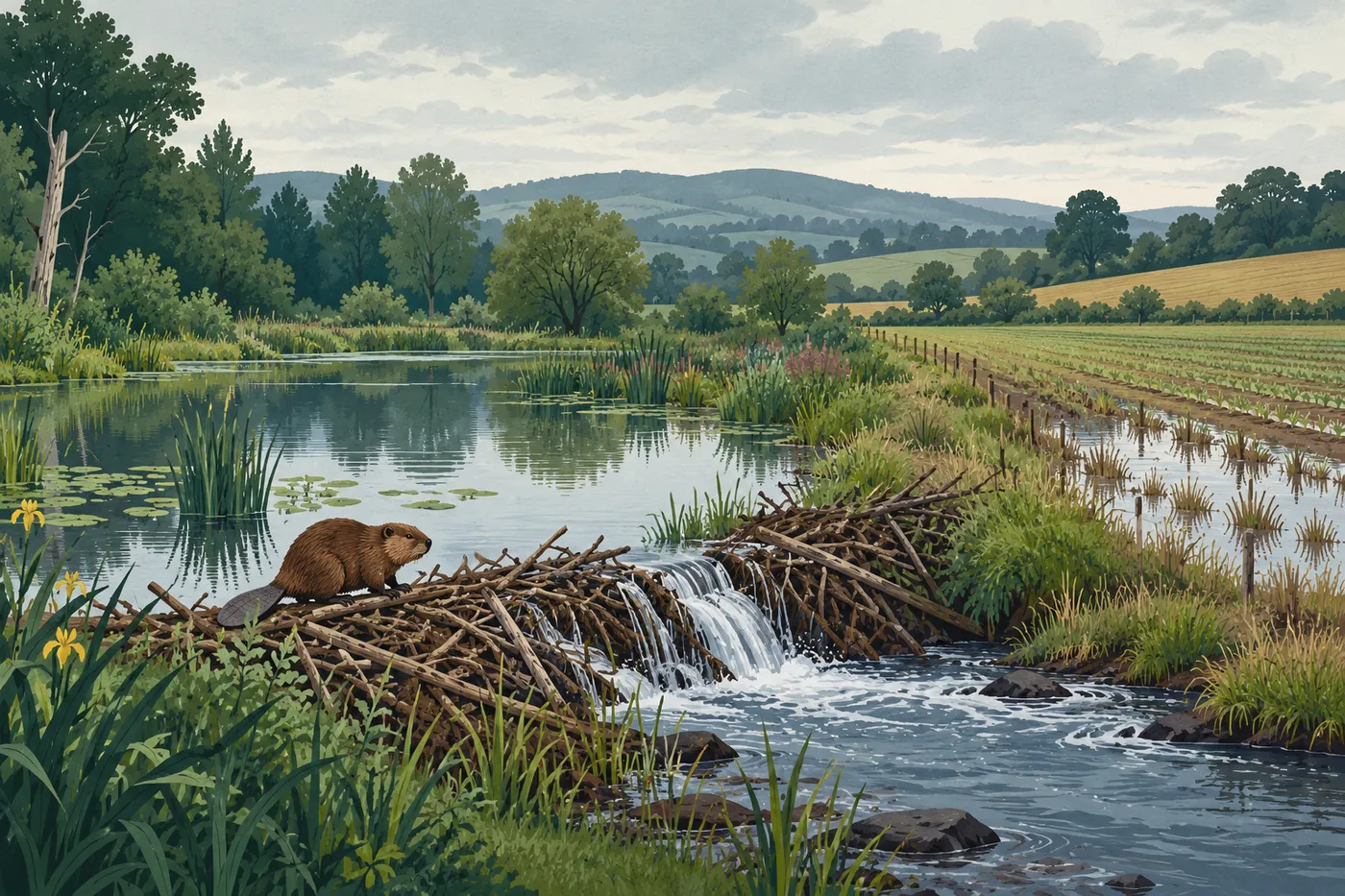
Un castor está sobre su presa junto a una poza tranquila y un campo parcialmente inundado.
La presa crea un humedal, pero los campos cercanos pueden verse afectados aguas abajo, o downstream. Ilustración: Atelier

Reportaje B2: fauna, agua y las personas del entorno

What happens when beavers return?

How did the return begin?

A beaver dam can turn a narrow stream into a wide, quiet pool. For some people, that is a sign of nature recovering. For someone whose field is filling with water, it raises a different question: who will deal with the damage?

Britain lost its beavers centuries ago through hunting. A trial brought them back to Knapdale in Scotland in May 2009. In England, the River Otter Beaver Trial in Devon began under licence in 2015. After the five-year trial, the government announced in 2020 that the animals could remain. On 28 February 2025, it announced a wider approach to licensed wild releases in England.

What are the benefits and the costs?

Supporters describe beavers as ecosystem engineers1 because their activities change the places where other species live. Dams hold back water and create wetlands2. According to the government's account of the River Otter trial, the animals created wildlife habitat and reduced flood risk for homes downstream3. NatureScot's reports on Knapdale also recorded new wetland habitat and more visitors.

However, these changes bring trade-offs4. Water held behind a dam may spread onto nearby farmland. Trees can be damaged, and crops may be lost. At Knapdale, the reports recorded flooding that affected land used for woodland management and part of a forest track. A benefit for the wider area can therefore mean a cost for a particular landowner5.

What needs to happen next?

These concerns make monitoring6 and practical support part of the story. Tree guards can protect individual trees. Project teams also need to work with people who manage nearby land and respond when problems appear.

The central question is how to weigh up7 benefits and costs in each place. A successful trial does not necessarily8 show that every river will respond in the same way. A balanced decision needs evidence about wildlife, water and the people who live beside it.

Con palabras más sencillas

A dam changes a stream. Some people welcome the change. Others worry about flooded land.

Beavers disappeared from Britain because of hunting. A Scottish trial started in 2009. An English trial in Devon started in 2015, and the animals were allowed to stay in 2020. A wider approach to wild releases in England was announced in February 2025.

Beavers change places where other animals and plants live. Official reports describe new wet areas for wildlife, lower flood risk for homes further along the River Otter and more visitors at Knapdale.

Higher water can also flood nearby land. Beavers can damage trees and crops. At Knapdale, flooding affected woodland management land and a forest track. Different people experience different effects.

Projects need regular checks and help for people nearby. Guards can protect trees. Teams need to respond to local problems.

Each place needs its own careful decision. Good results from one trial are useful evidence, but other places may have different results.

¿Qué elementos te ayudan a entender el hábitat de un castor?

Castores, agua y terrenos cercanos

¿Cómo puede una presa reducir un riesgo de inundación y aumentar otro?

Sigue el agua e identifica el lugar
Lugar o grupoPosible beneficioPosible problema
Viviendas aguas abajoEl agua retenida aguas arriba puede reducir el riesgo de inundación.El resultado de una prueba no es una promesa para todos los ríos.
Terrenos junto a una presaLas nuevas zonas húmedas pueden proporcionar hábitats para la fauna.El nivel más alto del agua puede inundar un campo.
Personas que gestionan el proyectoEl seguimiento puede mostrar qué cambia.Responder a los daños requiere tiempo y recursos.

Las palabras downstream y nearby indican lugares distintos. Un flujo de agua más lento aguas abajo puede beneficiar a las viviendas de allí, mientras que el nivel más alto junto a una presa puede inundar un campo. Comprueba quién se beneficia, quién asume el coste y dónde se produce el efecto.

¿Qué palabras mantienen la precisión de las afirmaciones del reportaje?

Conserva el grado de certeza de una afirmación
Expresión del reportajeQué indica
According to the government's account...Quien escribe identifica la fuente del hallazgo.
may spread onto nearby farmlandEs un efecto posible, no un efecto que se produzca en todos los lugares.
does not necessarily showEl primer hecho no demuestra automáticamente la afirmación siguiente.
  • The trial proves that beavers will stop all floods.The trial found that beavers reduced flood risk in that area.

    No conviertas un hallazgo local en una promesa para todos los lugares. Conserva el lugar y el grado de certeza de las pruebas.

  • Farmers are concerned of damage.Farmers are concerned about damage.

    Usa concerned about delante de aquello que preocupa a alguien.

¿Puedes separar las pruebas de la conclusión?

Pregunta 1No necesitas una cuenta
¿Qué ocurrió en 2020, según el reportaje?

Elige una respuesta.

Respuesta y explicación

The River Otter beavers were allowed to remain.. La prueba comenzó en 2015. En 2020, el gobierno anunció que sus castores podían quedarse.

Pregunta 2No necesitas una cuenta
¿Cómo puede una misma presa producir efectos que distintas personas valoren de forma diferente?

Elige una respuesta.

Respuesta y explicación

It can create wetland while higher water floods nearby land.. La misma subida del agua puede crear un hábitat para la fauna y causar problemas a quien posee un terreno cercano.

Pregunta 3No necesitas una cuenta
¿Por qué menciona el reportaje la información del gobierno sobre la prueba del River Otter?

Elige una respuesta.

Respuesta y explicación

To identify where the reported findings come from. According to identifica la fuente de los hallazgos. Así, quienes leen pueden ver en qué se basa la afirmación.

Pregunta 4No necesitas una cuenta
¿Qué significa not necessarily en el último párrafo?

Elige una respuesta.

Respuesta y explicación

The result at one site does not automatically establish the result elsewhere.. Not necessarily limita la conclusión. El resultado en otros lugares sigue siendo una cuestión por investigar.

Pregunta 5No necesitas una cuenta
¿Qué oración resume mejor el reportaje?

Elige una respuesta.

Respuesta y explicación

Reintroduction can bring benefits, and local costs need attention.. El reportaje reconoce beneficios para la fauna y el agua, junto con costes prácticos para las personas del entorno.

¿Cómo puedes escribir un resumen equilibrado del reportaje?

Escribe tres oraciones: un beneficio, una preocupación y un aspecto que habría que comprobar en un lugar nuevo. Nombra la fuente de un hallazgo. Usa can o may donde el texto describa un efecto posible.

Elaborado a partir de