Lectura

Biografía en inglés B1: Mary Seacole, lectura y preguntas

Lee una biografía en inglés B1 de Mary Seacole, desde Jamaica hasta la guerra de Crimea, con fechas, práctica del pasado simple y del pasado perfecto y cuatro preguntas.

En pocas palabras

Mary Seacole fue una enfermera y empresaria nacida en Jamaica que ayudó a soldados durante la guerra de Crimea. En esta biografía, el pasado simple cuenta los acontecimientos principales; had learned indica lo que ocurrió antes. Una fecha por sí sola no significa que necesites el pasado perfecto.

Amarillo la idea para recordarAzul inglés para aprenderRojo cuidado con esto

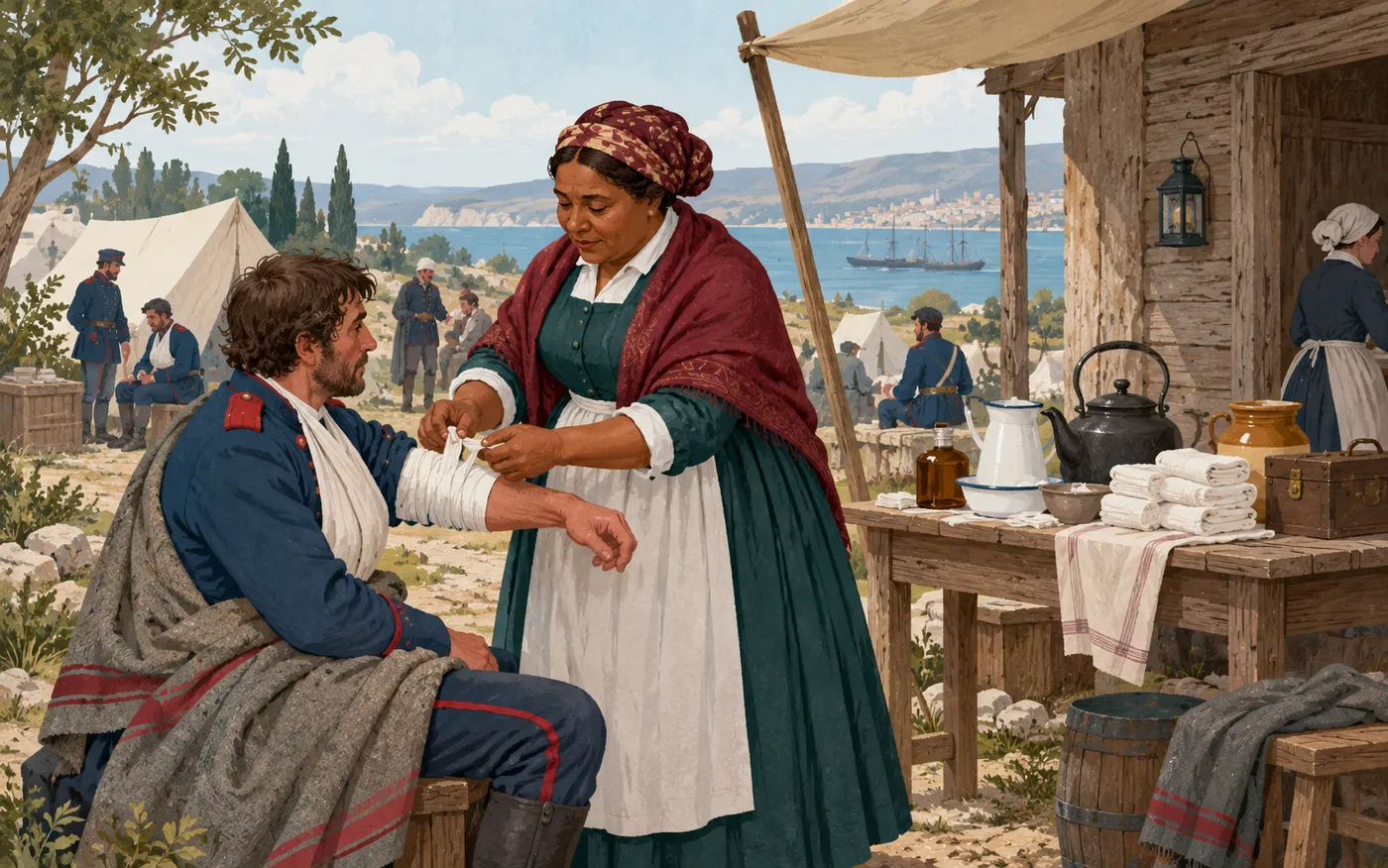
Mary Seacole atiende a un soldado en un puesto de asistencia de la guerra de Crimea.
Mary helped soldiers: ayudó a soldados con cuidados y suministros durante la guerra de Crimea. Ilustración: Atelier

Biografía B1: lee para identificar fechas y acontecimientos anteriores

Who was Mary Seacole?

How did she learn to care for people?

Mary Seacole was born in Kingston, Jamaica, in 1805. Her mother ran a boarding house1 and cared for people who were ill. Mary watched her mother work and learned how to use traditional Jamaican medicines. Her father was a Scottish soldier.

As an adult, Mary travelled and ran businesses. In 1850, she cared for people in Jamaica during a cholera outbreak2. She later helped cholera patients in Panama too. By the time she travelled to the Crimea, she had already gained years of experience.

What did she do during the war?

In 1854, Mary went to Britain because she wanted to help in the Crimean War. She tried to join the nurses going there, but her applications were turned down3. She then arranged her own journey.

In 1855, Mary and her business partner, Thomas Day, opened the British Hotel near Balaklava. Soldiers could buy food and supplies4 there. Mary also provided medicine and cared for the wounded5, sometimes close to the fighting. Many soldiers called her 'Mother Seacole'.

What happened after the war?

When the war ended in 1856, Mary faced serious money problems. She had bought supplies that she could no longer sell. People in Britain later raised money6 to help her.

In 1857, she published an autobiography7, Wonderful Adventures of Mrs Seacole in Many Lands. It told readers about her travels and work. She died in London in 1881. Her story brings together nursing, business and the experiences of a woman who crossed oceans to care for8 others.

Con palabras más sencillas

Mary was born in Jamaica in 1805. Her mother gave people rooms and meals and helped people who were ill. Mary learned from her. Her father came from Scotland.

Mary travelled and ran businesses. She helped people with cholera in Jamaica and Panama before she went to the Crimea.

She went to Britain in 1854 and asked to join the nurses travelling to the war. They did not accept her, so she made her own travel plans.

In 1855, Mary and Thomas Day opened the British Hotel. Soldiers bought things there. Mary also helped people who were ill or hurt.

After the war ended in 1856, Mary had money problems. People collected money to help her.

She wrote a book about her life in 1857. She died in London in 1881.

¿Puedes ordenar los acontecimientos de su vida?

Lee las fechas y después prueba «Ponlo en orden»

  1. 1805
    Mary was born in Jamaica.Su vida comenzó en Kingston.
  2. 1850
    She cared for cholera patients in Jamaica.Adquirió experiencia antes de la guerra de Crimea.
  3. 1854
    She travelled to Britain.Quería ayudar durante la guerra.
  4. 1855
    She and Thomas Day opened the British Hotel.Gestionaban un negocio cerca de Balaklava.
  5. 1856
    The war ended, and Mary faced money problems.Le quedaban suministros por vender y facturas por pagar.
  6. 1857
    She published her autobiography.Los lectores podían conocer su vida contada por ella misma.
  7. 1881
    She died in London.Este es el último año de la biografía.

¿Qué objetos te ayudan a entender la biografía?

Objetos y palabras de la lectura

¿Cuándo usas el pasado perfecto en una biografía?

La acción anterior y el acontecimiento pasado posterior
FraseOrden
By the time she travelled to the Crimea, she had already gained years of experience.Primero: la experiencia. Después: el viaje.
She had bought supplies that she could no longer sell.Primero: la compra. Después: la dificultad para vender.
She published her autobiography in 1857.Un acontecimiento principal en un periodo ya terminado.

Usa had + participio pasado para mirar más atrás: had gained, had bought. Usa in antes de un año: in 1857. Una vez que el orden está claro, puedes seguir con el pasado simple.

  • She had wrote a book.She had written a book.

    Después de had, usa el participio pasado written. El pasado simple es wrote.

  • She was born on 1805.She was born in 1805.

    Usa in antes de un año. Usa on antes de una fecha completa o un día.

¿Qué recuerdas de Mary Seacole?

Pregunta 1No necesitas una cuenta
¿Quién enseñó primero a Mary a cuidar de personas enfermas?

Elige una respuesta.

Respuesta y explicación

Her mother. Mary observó cómo su madre cuidaba a las personas y aprendió a usar remedios tradicionales jamaicanos.

Pregunta 2No necesitas una cuenta
¿Qué descripción del British Hotel coincide con la lectura?

Elige una respuesta.

Respuesta y explicación

A business where soldiers could buy food and supplies. Mary y Thomas Day gestionaban el British Hotel cerca de Balaklava. Mary también prestaba cuidados allí.

Pregunta 3No necesitas una cuenta
En «She had bought supplies that she could no longer sell», ¿qué ocurrió primero?

Elige una respuesta.

Respuesta y explicación

She bought the supplies.. Had bought sitúa la compra antes del problema posterior para vender los suministros.

Pregunta 4No necesitas una cuenta
¿Qué frase indica correctamente la fecha de su libro?

Elige una respuesta.

Respuesta y explicación

She published her autobiography in 1857.. Usa el pasado simple published para este acontecimiento terminado e in antes del año.

Elaborado a partir de