Lecture

Biographie en anglais B1 : Mary Seacole, lecture et quiz

Lisez une biographie en anglais B1 de Mary Seacole, de la Jamaïque à la guerre de Crimée, avec des dates, un travail sur le prétérit et le past perfect et quatre questions.

L’essentiel

Mary Seacole était une infirmière et femme d’affaires née en Jamaïque, qui a aidé les soldats pendant la guerre de Crimée. Dans cette biographie, le prétérit raconte les événements principaux ; had learned indique ce qui s’est passé auparavant. Une date ne suffit pas à imposer le past perfect.

Jaune l’idée à retenirBleu l’anglais à retenirRouge point de vigilance

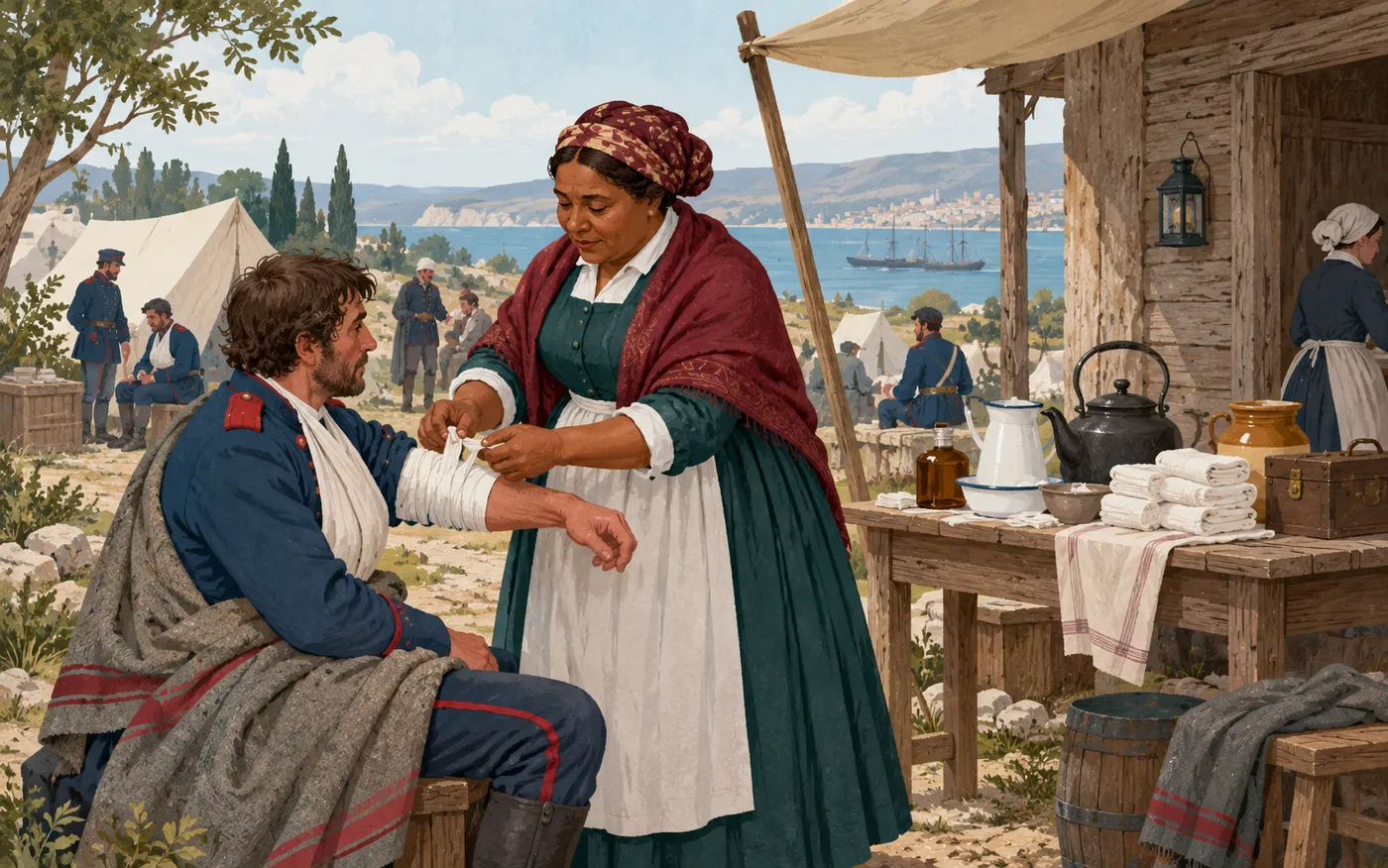
Mary Seacole soigne un soldat dans un poste de soins pendant la guerre de Crimée.
Mary a aidé les soldats, helped soldiers, en leur apportant des soins et des fournitures pendant la guerre de Crimée. Illustration : Atelier

Biographie B1 – repérez les dates et les événements antérieurs

Who was Mary Seacole?

How did she learn to care for people?

Mary Seacole was born in Kingston, Jamaica, in 1805. Her mother ran a boarding house1 and cared for people who were ill. Mary watched her mother work and learned how to use traditional Jamaican medicines. Her father was a Scottish soldier.

As an adult, Mary travelled and ran businesses. In 1850, she cared for people in Jamaica during a cholera outbreak2. She later helped cholera patients in Panama too. By the time she travelled to the Crimea, she had already gained years of experience.

What did she do during the war?

In 1854, Mary went to Britain because she wanted to help in the Crimean War. She tried to join the nurses going there, but her applications were turned down3. She then arranged her own journey.

In 1855, Mary and her business partner, Thomas Day, opened the British Hotel near Balaklava. Soldiers could buy food and supplies4 there. Mary also provided medicine and cared for the wounded5, sometimes close to the fighting. Many soldiers called her 'Mother Seacole'.

What happened after the war?

When the war ended in 1856, Mary faced serious money problems. She had bought supplies that she could no longer sell. People in Britain later raised money6 to help her.

In 1857, she published an autobiography7, Wonderful Adventures of Mrs Seacole in Many Lands. It told readers about her travels and work. She died in London in 1881. Her story brings together nursing, business and the experiences of a woman who crossed oceans to care for8 others.

En termes plus simples

Mary was born in Jamaica in 1805. Her mother gave people rooms and meals and helped people who were ill. Mary learned from her. Her father came from Scotland.

Mary travelled and ran businesses. She helped people with cholera in Jamaica and Panama before she went to the Crimea.

She went to Britain in 1854 and asked to join the nurses travelling to the war. They did not accept her, so she made her own travel plans.

In 1855, Mary and Thomas Day opened the British Hotel. Soldiers bought things there. Mary also helped people who were ill or hurt.

After the war ended in 1856, Mary had money problems. People collected money to help her.

She wrote a book about her life in 1857. She died in London in 1881.

Pouvez-vous remettre les événements de sa vie dans l’ordre ?

Lisez les dates, puis essayez « Remettez dans l’ordre »

  1. 1805
    Mary was born in Jamaica.Sa vie a commencé à Kingston.
  2. 1850
    She cared for cholera patients in Jamaica.Elle a acquis de l’expérience avant la guerre de Crimée.
  3. 1854
    She travelled to Britain.Elle souhaitait aider pendant la guerre.
  4. 1855
    She and Thomas Day opened the British Hotel.Ils dirigeaient une entreprise près de Balaklava.
  5. 1856
    The war ended, and Mary faced money problems.Il lui restait des fournitures à vendre et des factures à payer.
  6. 1857
    She published her autobiography.Les lecteurs pouvaient découvrir sa vie à travers ses propres mots.
  7. 1881
    She died in London.C’est la dernière année mentionnée dans la biographie.

Quels objets vous aident à comprendre la biographie ?

Objets et mots du texte

Quand employer le past perfect dans une biographie ?

L’action antérieure et l’événement passé ultérieur
PhraseOrdre
By the time she travelled to the Crimea, she had already gained years of experience.D’abord : l’expérience. Ensuite : le voyage.
She had bought supplies that she could no longer sell.D’abord : l’achat. Ensuite : la difficulté à vendre.
She published her autobiography in 1857.Un événement principal situé dans une période terminée.

Employez had + le participe passé pour remonter plus loin dans le passé : had gained, had bought. Employez in avant une année : in 1857. Une fois l’ordre clair, vous pouvez poursuivre au prétérit.

  • She had wrote a book.She had written a book.

    Après had, employez le participe passé written. Le prétérit est wrote.

  • She was born on 1805.She was born in 1805.

    Employez in avant une année. Employez on avant une date complète ou un jour.

Que retenez-vous de Mary Seacole ?

Question 1Aucun compte nécessaire
Qui a d’abord appris à Mary à prendre soin des malades ?

Choisissez une seule réponse.

Réponse et explication

Her mother. Mary regardait sa mère soigner des personnes et a appris à utiliser les remèdes traditionnels jamaïcains.

Question 2Aucun compte nécessaire
Quelle description du British Hotel correspond au texte ?

Choisissez une seule réponse.

Réponse et explication

A business where soldiers could buy food and supplies. Mary et Thomas Day dirigeaient le British Hotel près de Balaklava. Mary y apportait aussi des soins.

Question 3Aucun compte nécessaire
Dans She had bought supplies that she could no longer sell, qu’est-ce qui s’est produit en premier ?

Choisissez une seule réponse.

Réponse et explication

She bought the supplies.. Had bought situe l’achat avant le problème ultérieur de vente des fournitures.

Question 4Aucun compte nécessaire
Quelle phrase indique correctement la date de son livre ?

Choisissez une seule réponse.

Réponse et explication

She published her autobiography in 1857.. Employez le prétérit published pour cet événement terminé, et in avant l’année.

Établi à partir de