पढ़ना

शहरों पर C1 अंग्रेज़ी पठन: विचार और प्रश्नोत्तरी

रोज़मर्रा की सड़कों पर एक विचार स्तंभ के साथ C1 अंग्रेज़ी पढ़ें: आलंकारिक प्रश्न, विरोध, दूसरे पक्ष की बात स्वीकारना और तर्क परखने वाले प्रश्न।

संक्षेप में

यह C1 विचार स्तंभ ऐसी सड़कों के पक्ष में तर्क देता है जहाँ लोगों के पास पार करने, बैठने और मिलने का समय हो। लेखक का दृष्टिकोण और उसे प्रभावशाली बनाने वाली भाषा, दोनों पहचानें। concession में दूसरे दृष्टिकोण की उचित बात स्वीकार की जाती है; आकर्षक चित्र यह साबित नहीं करता कि योजना सफल होगी।

पीला याद रखने योग्य मुख्य बातनीला सीखने योग्य अंग्रेज़ीलाल सावधानी

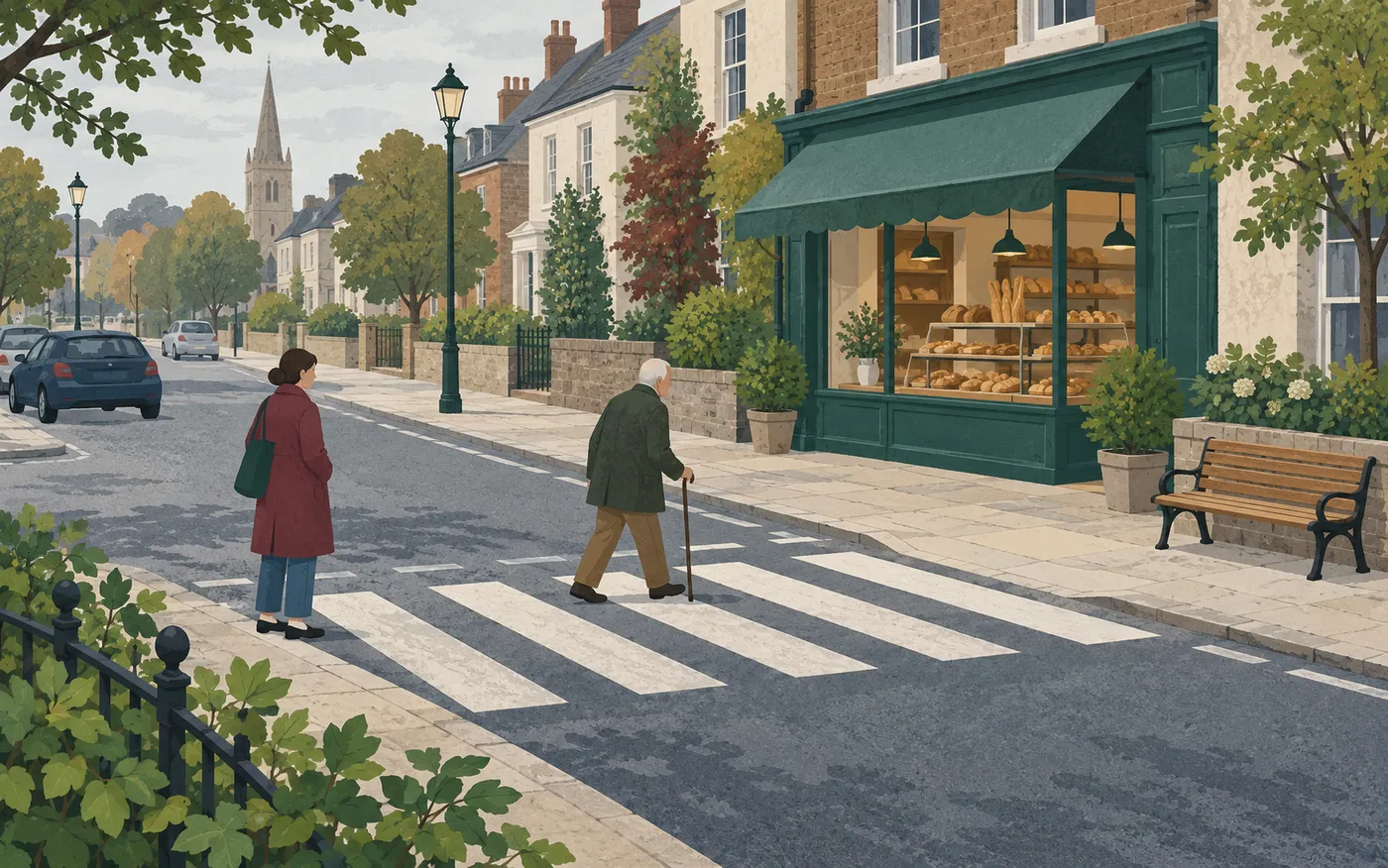
ब्रिटेन का शांत सड़क पार करने का स्थान, जहाँ एक व्यक्ति छड़ी लेकर चलता है और पास में बेंच है।
सड़क लोगों को पार करने, बैठने और कुछ देर ठहरने (linger) का समय दे सकती है। चित्र: Atelier

विचार | मुख्य दावे और उसकी सीमाओं को समझने के लिए पढ़ें

The case for slower cities

At the crossing near my flat, the green figure seems permanently in a hurry. A man with a walking stick starts across; a driver taps the steering wheel. Nobody says anything. The street has already set the pace1.

We have become very good at asking how quickly traffic can move through a place. I would like us to ask a different question: how easily can someone live there? A street is a route, certainly. It is also the space outside a front door, the queue at the bakery, the place where a child learns to ride a bicycle. Why should the first purpose trump2 all the others?

The case for a slower city begins with these ordinary uses. I want crossings that allow an unhurried walk, benches where stopping is welcome and pavements wide enough for two people to talk without blocking everyone else. These are modest ambitions. Their absence, however, tells a forceful story about whose time matters.

Of course, some journeys must be quick. An ambulance needs access; a care worker may have several visits to make; a shop needs deliveries. Any proposal that brushes aside3 these needs deserves to fail. Nor should walking become a test of civic virtue. A person who needs a vehicle should not have to argue for the right to reach their own door.

But accepting those needs does not mean accepting every street as it is. We can protect essential access while questioning how much space we give to vehicles passing through. We can ask when deliveries are needed, where stopping places belong and how a bus passenger reaches the pavement. The useful argument concerns design and trade-offs4, not which group deserves to lose.

Picture a square with a bench in the sun. It is a compelling5 image, and an easy one to put on a campaign leaflet. It also leaves questions unanswered. Can a wheelchair user reach the bench? Where will the delivery van stop? Will traffic simply move to the next street? A drawing cannot settle6 those questions. A carefully designed trial, followed by a review of who benefits and who struggles, would be a better start.

Slower, then, should describe a choice about public space, not a demand that everyone move at the same speed. The point is to give people room to linger7 without making essential journeys harder. Before we celebrate another minute saved at the wheel, let us ask what happens when we arrive. Can we cross? Can we sit? Can we stay? These are everyday freedoms worth taking seriously8.

लेखक सड़क की किन विशेषताओं पर आपका ध्यान खींचना चाहता है?

तर्क की शुरुआत ठोस चीज़ों से होती है

स्तंभ अपने तर्क को प्रभावशाली कैसे बनाता है?

शैलीगत साधन का नाम बताएँ, फिर उसका प्रभाव समझाएँ
स्तंभ के शब्दशैलीगत साधनपाठक पर प्रभाव
The street has already set the pace.मानवीकरण: किसी चीज़ को मनुष्य जैसी क्षमता देनासड़क मानो तय करती है कि किसे जल्दी करनी चाहिए।
Why should the first purpose trump all the others?आलंकारिक प्रश्न: कोई बात स्थापित करने के लिए पूछा गया प्रश्नयह पाठक को यातायात को दी गई प्राथमिकता पर सवाल उठाने के लिए प्रेरित करता है।
Of course, some journeys must be quick.दूसरे पक्ष की उचित बात स्वीकारनासड़कें कैसे बदल सकती हैं, यह पूछने से पहले यह तात्कालिक यात्रा की ज़रूरत स्वीकार करता है।
We can protect ... We can ask ...समानांतर संरचना: वाक्य के ढाँचे को दोहरानायह कई व्यावहारिक कामों को एक ही दृष्टिकोण के हिस्से के रूप में रखता है।
Can we cross? Can we sit? Can we stay?तीन छोटे समानांतर प्रश्नअंत की लय सड़क के साधारण उपयोग याद रखने में मदद करती है।

लेखक रोज़ सड़क इस्तेमाल करने वालों को प्रमुखता देता है (foregrounds): पहले उनकी ज़रूरतों पर ध्यान जाता है। डिलीवरी वैन बाद में आती है, जब दूसरे पक्ष की बात स्वीकारी जाती है और परीक्षण के प्रश्न उठते हैं। अलग-अलग शब्दों के साथ क्रम और चयन भी तर्क को आकार देते हैं।

क्या आप दावे, दूसरे पक्ष की स्वीकृत बात और प्रमाण को अलग पहचान सकते हैं?

प्रश्न 1खाते की ज़रूरत नहीं
कौन-सा कथन मुख्य तर्क को सबसे अच्छी तरह व्यक्त करता है?

एक उत्तर चुनें।

उत्तर और व्याख्या

Public space should support everyday uses while protecting essential access.. अंतिम अनुच्छेद ठहरने की जगह को आवश्यक यात्राओं की पहुँच से जोड़ता है। तर्क केवल रफ़्तार कम करने तक सीमित नहीं है।

प्रश्न 2खाते की ज़रूरत नहीं
लेखक एम्बुलेंस, देखभालकर्मी और दुकानों की डिलीवरी का ज़िक्र क्यों करता है?

एक उत्तर चुनें।

उत्तर और व्याख्या

To accept important needs that a street plan must address. इन उदाहरणों से दूसरे पक्ष की उचित बात स्वीकारी जाती है। संभावित डिज़ाइन बदलावों पर लौटने से पहले लेखक जायज़ ज़रूरतें स्वीकार करता है।

प्रश्न 3खाते की ज़रूरत नहीं
धूप वाली बेंच के चित्र की क्या भूमिका है?

एक उत्तर चुनें।

उत्तर और व्याख्या

It shows an appealing vision that still leaves practical questions.. लेखक चित्र को आकर्षक कहता है, फिर पहुँच, डिलीवरी और पास के यातायात के प्रश्न उठाता है। उसका आकर्षण प्रमाण से अलग है।

प्रश्न 4खाते की ज़रूरत नहीं
अंतिम तीन प्रश्नों का क्या प्रभाव है?

एक उत्तर चुनें।

उत्तर और व्याख्या

They make the writer's everyday priorities memorable.. दोहराया गया छोटा ढाँचा पार करने, बैठने और ठहरने को महत्त्व देता है; ये लेखक के दृष्टिकोण के केंद्र में हैं।

प्रश्न 5खाते की ज़रूरत नहीं
स्तंभ किस निष्कर्ष का समर्थन करता है?

एक उत्तर चुनें।

उत्तर और व्याख्या

The writer proposes a trial and review to test a design.. परीक्षण प्रस्तावित अगला कदम है। स्तंभ पूछता है कि उसमें क्या जाँचना चाहिए; वह किसी पूरे हो चुके परीक्षण के परिणाम नहीं बताता।

दूसरे पक्ष की उचित बात स्वीकारते हुए आप स्तंभ का उत्तर कैसे दे सकते हैं?

किसी परिचित सड़क में अपने इच्छित बदलाव पर 100–130 शब्द लिखें। एक ठोस विशेषता बताएँ। एक उचित चिंता स्वीकारें, फिर समझाएँ कि आपका प्रस्ताव उसे कैसे संबोधित कर सकता है। अंत में ऐसा प्रश्न रखें जिसे परीक्षण में जाँचना चाहिए।

Although delivery vehicles need access, a trial could test a separate loading area.

पहला हिस्सा ज़रूरत स्वीकारता है; दूसरा संभावित समाधान देता है।

although + उपवाक्य रखें। मुख्य उपवाक्य से पहले but न जोड़ें।

अपने उत्तर का संतुलन जाँचें

यह अपनी जाँच में मदद करता है, अंक नहीं देता। लगाए गए निशान सहेजे नहीं जाते।

आधारित पाठ्यक्रम