观点|找出主要主张及其适用范围
The case for slower cities
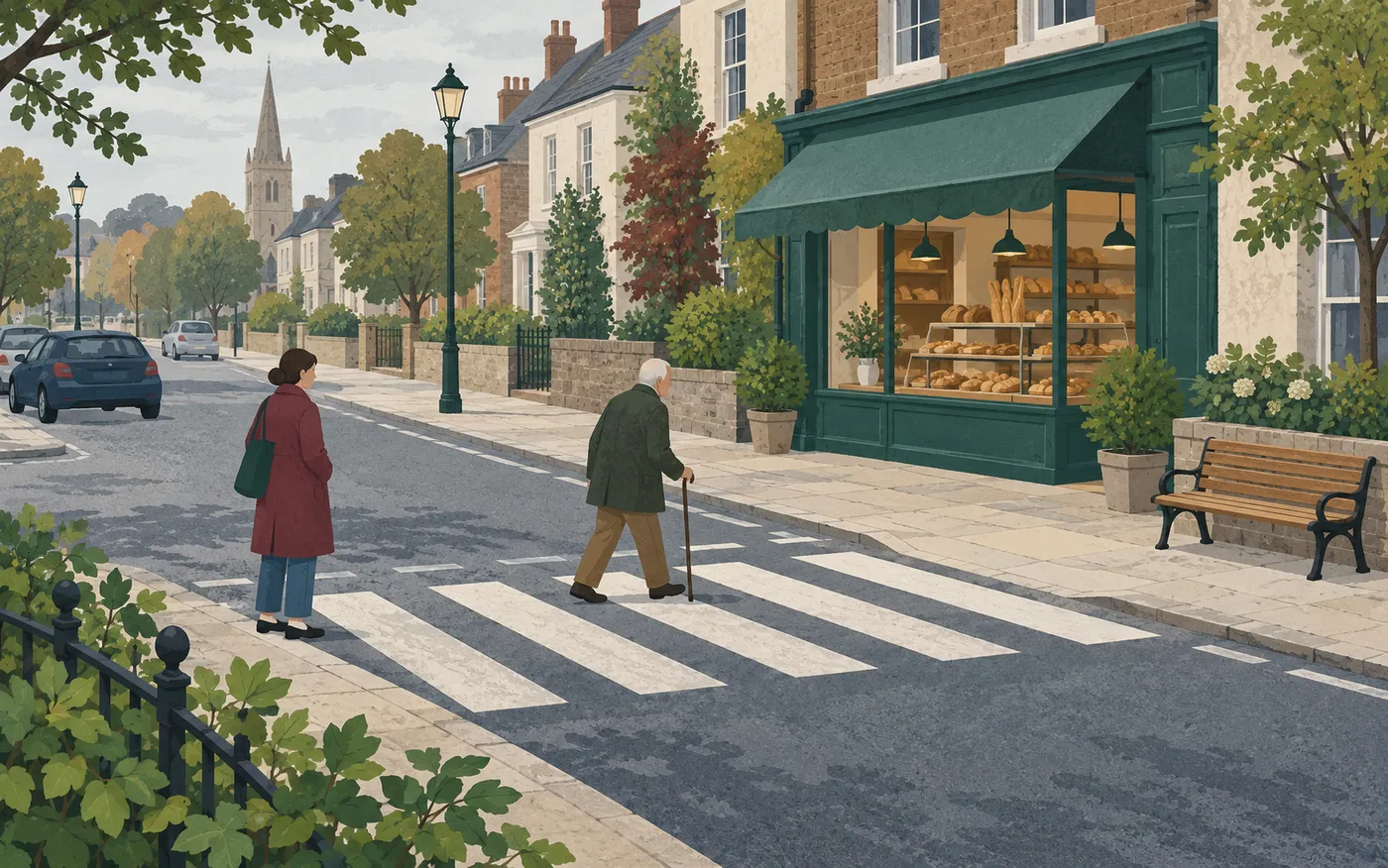
At the crossing near my flat, the green figure seems permanently in a hurry. A man with a walking stick starts across; a driver taps the steering wheel. Nobody says anything. The street has already set the pace1.
We have become very good at asking how quickly traffic can move through a place. I would like us to ask a different question: how easily can someone live there? A street is a route, certainly. It is also the space outside a front door, the queue at the bakery, the place where a child learns to ride a bicycle. Why should the first purpose trump2 all the others?
The case for a slower city begins with these ordinary uses. I want crossings that allow an unhurried walk, benches where stopping is welcome and pavements wide enough for two people to talk without blocking everyone else. These are modest ambitions. Their absence, however, tells a forceful story about whose time matters.
Of course, some journeys must be quick. An ambulance needs access; a care worker may have several visits to make; a shop needs deliveries. Any proposal that brushes aside3 these needs deserves to fail. Nor should walking become a test of civic virtue. A person who needs a vehicle should not have to argue for the right to reach their own door.
But accepting those needs does not mean accepting every street as it is. We can protect essential access while questioning how much space we give to vehicles passing through. We can ask when deliveries are needed, where stopping places belong and how a bus passenger reaches the pavement. The useful argument concerns design and trade-offs4, not which group deserves to lose.
Picture a square with a bench in the sun. It is a compelling5 image, and an easy one to put on a campaign leaflet. It also leaves questions unanswered. Can a wheelchair user reach the bench? Where will the delivery van stop? Will traffic simply move to the next street? A drawing cannot settle6 those questions. A carefully designed trial, followed by a review of who benefits and who struggles, would be a better start.
Slower, then, should describe a choice about public space, not a demand that everyone move at the same speed. The point is to give people room to linger7 without making essential journeys harder. Before we celebrate another minute saved at the wheel, let us ask what happens when we arrive. Can we cross? Can we sit? Can we stay? These are everyday freedoms worth taking seriously8.