पढ़ना

नींद पर B2 अंग्रेज़ी पठन: विज्ञान और प्रश्नोत्तरी

नींद की अवस्थाओं, याददाश्त और शरीर की घड़ी पर B2 अंग्रेज़ी पढ़ें: आठ अर्थ, कर्मवाच्य रूप, कारण-परिणाम के संबंध और पठन प्रश्न।

हमें नींद क्यों चाहिए?

नींद याददाश्त, स्पष्ट सोच और शारीरिक स्वास्थ्य में मदद करती है; सोते समय भी मस्तिष्क सक्रिय रहता है। यह B2 पाठ प्रक्रिया को पहले रखने के लिए is recorded जैसे कर्मवाच्य रूप और कारण व परिणाम जोड़ने के लिए because या as a result इस्तेमाल करता है। नींद केवल मस्तिष्क की गतिविधि में विराम नहीं है।

पीला याद रखने योग्य मुख्य बातनीला सीखने योग्य अंग्रेज़ीलाल सावधानी

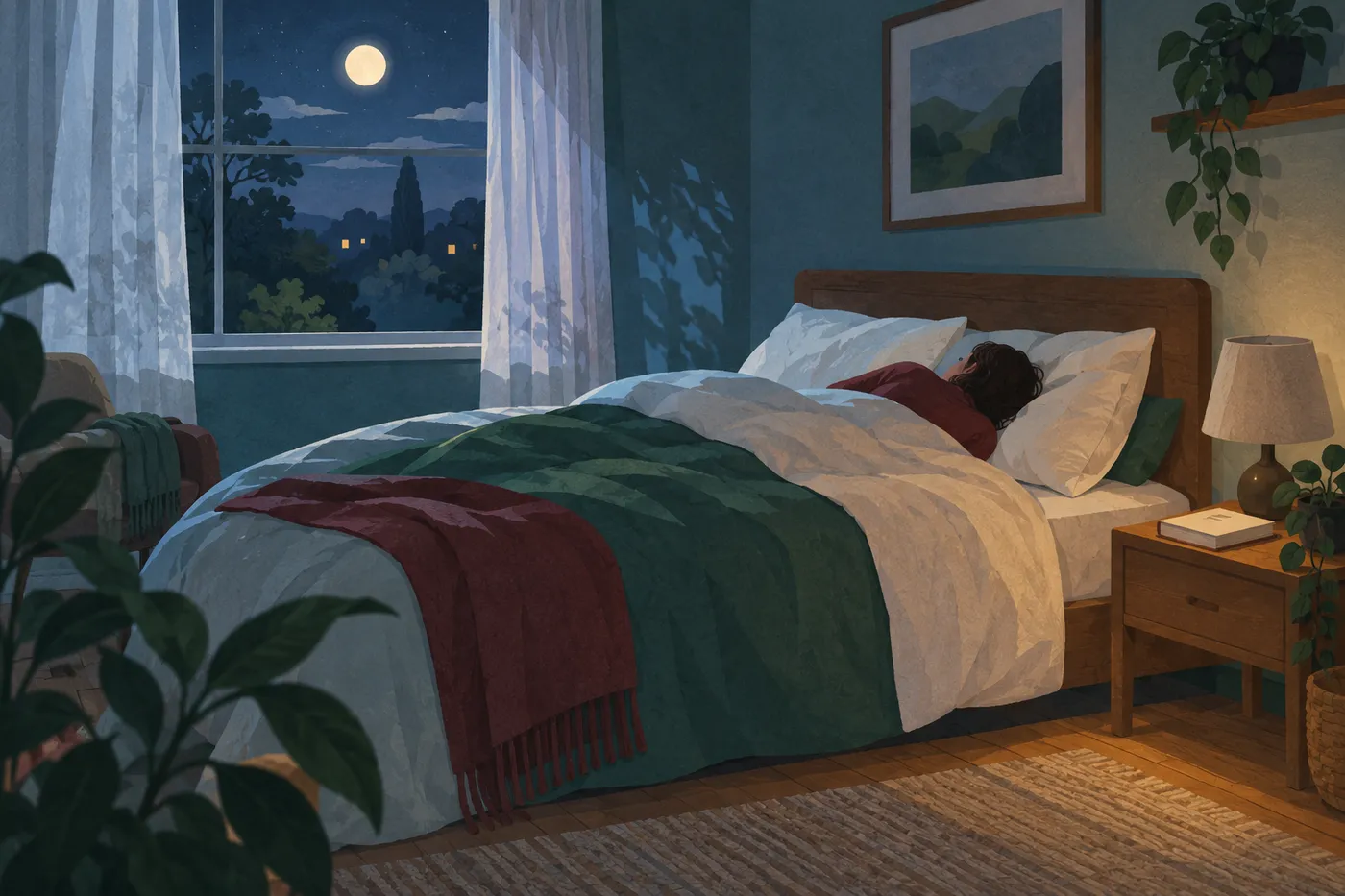
रात में शांत शयनकक्ष में एक व्यक्ति रज़ाई के नीचे सोता है।
while we sleep यानी हमारे सोते समय होने वाला सक्रिय काम शांत शयनकक्ष में छिपा रहता है। चित्र: Atelier

Why we need sleep

What happens while we sleep?

At the end of a long day, closing your eyes can feel like switching off a machine. Yet inside your head, activity continues. Sleep helps us learn and form long-term memories1. It also supports physical health. The quiet bedroom hides a changing pattern of work.

Sleep is divided into non-REM sleep and REM sleep. REM stands for rapid eye movement2. During non-REM sleep, we pass through stages that include deep sleep. During REM sleep, the brain is highly active and the eyes move quickly beneath closed lids. These different phases are repeated in cycles3 through the night.

How do scientists study sleep?

Brain activity is recorded using sensors4. These measurements help researchers identify the stages. Instead of asking only whether someone slept, scientists can ask how their sleep was organised. Two people may spend the same number of hours in bed but have different patterns of sleep.

What controls when we feel sleepy?

Our need for sleep builds while we are awake. At the same time, the body follows a roughly 24-hour rhythm5, often called the body clock. Light signals received through the eyes help keep this clock in line with day and night.

Bright light late in the evening can affect that timing. As a result, we may feel alert6 when we expect to feel sleepy. This helps explain why the time on a clock and the feeling in our bodies do not always agree.

How does sleep affect the next day?

Sleep supports learning, while too little good-quality sleep can make it harder to concentrate7. Because attention is reduced, tasks that normally feel simple may take more effort. Reading the same sentence again and again can be a familiar sign of that difficulty.

Think of sleep as part of learning, rather than time taken away from it. A page of notes records what you studied; the next day's recall8 shows what you can bring back to mind. The hours between the two are far from empty.

सरल शब्दों में

Sleep may look like a time when the brain stops, but the brain is active. Sleep helps learning, memory and physical health.

We move through different types and stages of sleep during the night. REM sleep includes quick eye movements and high brain activity.

Researchers use measuring devices to identify sleep stages. The number of hours in bed tells only part of the story.

The longer we stay awake, the more we need sleep. Our bodies also follow a daily pattern. Light helps keep this pattern connected to day and night.

Bright evening light can change when we feel ready to sleep. We may still feel awake at bedtime.

Too little good sleep can make it hard to pay attention. Ordinary tasks can then feel harder.

Sleep is part of the learning process. What happens overnight matters as well as what we write in our notes.

पाठ में 'Brain activity is recorded' क्यों कहा गया है?

Researchers record brain activity.वाक्य काम करने वाले लोगों से शुरू होता है।

ध्यान दें: काम कौन करता है?

Researchers record brain activity using sensors.
शोधकर्ता रिकॉर्ड करते हैं।

Brain activity is recorded using sensors.वाक्य उस चीज़ से शुरू होता है जिसे मापा जाता है।

ध्यान दें: मस्तिष्क की गतिविधि के साथ क्या होता है?

कर्ता + am / is / are + भूतकृदंत

Brain activity is recorded using sensors.
रिकॉर्ड किए जाने पर मुख्य ध्यान है।

वाच्य बदलते समय वही समय और अर्थ रखें
कर्तृवाच्यकर्मवाच्य
Sensors record brain activity.Brain activity is recorded by sensors.
Researchers recorded eye movements last night.Eye movements were recorded last night.
Researchers can measure sleep patterns.Sleep patterns can be measured.

कारण को उसके परिणाम से कैसे जोड़ें?

संबंध दिखाने के तीन तरीके
ढाँचाउदाहरण
because + कारणTasks may take more effort because attention is reduced.
कारण + so + परिणामAttention is reduced, so tasks may take more effort.
कारण। As a result, + परिणामAttention is reduced. As a result, tasks may take more effort.

Because कारण शुरू करता है; so परिणाम शुरू करता है। क्रम बदलता है, लेकिन संबंध वही रहता है। एक ही संबंध के लिए because ... so से बचें: ऊपर के दोनों ढाँचों में से एक चुनें।

नींद के शोध की बात करने में कौन-सी वस्तुएँ मदद करती हैं?

नींद और मापन

क्या आप विज्ञान और भाषा समझ सकते हैं?

प्रश्न 1खाते की ज़रूरत नहीं
कौन-सा कथन पाठ से मेल खाता है?

एक उत्तर चुनें।

उत्तर और व्याख्या

Different sleep phases repeat through the night.. पाठ में non-REM और REM नींद का वर्णन है। अवस्थाएँ एक जैसी बनी रहने के बजाय बार-बार दोहराए जाने वाले चक्रों में आती हैं।

प्रश्न 2खाते की ज़रूरत नहीं
नींद के शोधकर्ताओं के लिए सेंसर उपयोगी क्यों हैं?

एक उत्तर चुनें।

उत्तर और व्याख्या

They provide measurements that help identify sleep stages.. सेंसर गतिविधि रिकॉर्ड करते हैं। शोधकर्ता मापों से अवस्थाएँ पहचानते और नींद के ढाँचों की तुलना करते हैं।

प्रश्न 3खाते की ज़रूरत नहीं
'Attention is reduced, so tasks may take more effort' में 'so' के बाद क्या आता है?

एक उत्तर चुनें।

उत्तर और व्याख्या

The possible effect.. So परिणाम शुरू करता है: कामों में अधिक प्रयास लग सकता है। इससे पहले बताया कारण ध्यान का कम होना है।

प्रश्न 4खाते की ज़रूरत नहीं
'Researchers can measure sleep patterns' का सही कर्मवाच्य कौन-सा वाक्य है?

एक उत्तर चुनें।

उत्तर और व्याख्या

Sleep patterns can be measured.. can + be + past participle रखें। measure का भूतकृदंत measured है।

आधारित पाठ्यक्रम