C1 단편
The inheritance
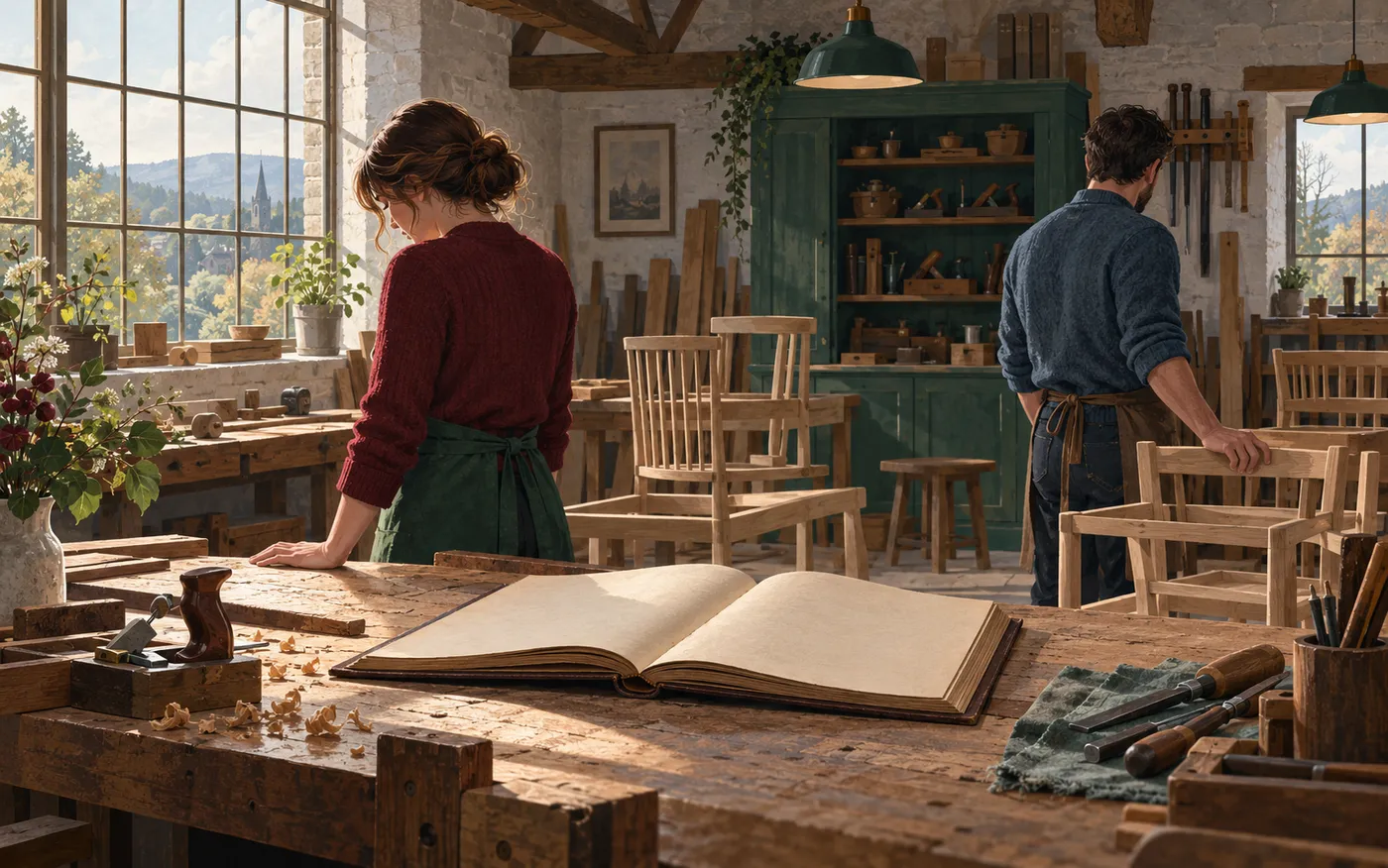
When my father died, my brother Tom inherited the workshop. I received a brown envelope containing a ledger. The distinction seemed brutally neat1: Tom got the building, the tools and the business; I got a book of figures. I placed it in my bag before Tom could see my face.
I had spent fifteen years in London, where I managed budgets for a theatre. Tom had stayed in the town and learned to repair furniture. At family meals, my father used to say that both his children worked with their hands. I had always assumed this was a joke about my typing.
A week later, I returned to collect a photograph. The workshop smelled of glue and damp coats. Tom was taking stock2 beside a cabinet whose drawers refused to close. 'You could sell the place,' I said. He ran his thumb along a split in the wood. 'I've thought about it.' I mistook his exhaustion for indifference3.
That evening, I opened the ledger, expecting unpaid bills. There were dates, names and objects: a dining chair, a sewing box, a kitchen stool. In the column headed 'Charge', my father had written things such as 'lift to hospital' and 'tomatoes, September'. Beside Mrs Aziz's table was a single word: 'Nothing'.
I turned the pages. Payments in money appeared often enough, but the book was also a record of favours returned4 and promises kept. Halfway through, I found my own name. 'Maya: six Saturdays, summer 2002. Sanded chairs. Earned her train fare.' I remembered the money. I had forgotten the chairs.
On Saturday, I found Tom alone. He had been working since seven, clearing a backlog5 of repairs our father had accepted. 'People keep asking when he said their things would be ready,' he said. 'I don't know what he promised.' For the first time, the workshop looked less like a prize than a room full of unfinished business6.
I put the ledger on the bench. Tom opened it carefully, keeping his dusty fingers off the page. We found the sewing box and a date in November. There was no price, but there was a telephone number. 'You always liked that sort of thing,' he said. I nearly asked whether he meant figures or finding people. Instead, I rang the number.
The woman who answered had stopped expecting the box. She could collect it next week. Tom nodded when I told him, then pushed a chair towards me. Its seat needed sanding. I took off my coat. We had not settled the question7 of what was fair, or said how long I would stay. But when Tom asked whether I wanted gloves, I said, 'Yes, please.' He handed them over without ceremony8.
쉬운 말로
Maya receives her father's account book. Her brother Tom receives his workshop. She thinks he has been given everything valuable.
Maya works with budgets in London. Tom stayed near their father and repairs furniture. She remembers their father making a comment about their work.
Maya visits the workshop. Tom seems tired, but she thinks he does not care very much.
Maya reads the book. Some customers paid with help or food. One customer paid nothing.
The book records relationships as well as money. Maya discovers a note about furniture she helped repair as a young woman.
Tom is trying to finish their father's repairs. Maya begins to see the work and responsibility he has inherited.
Maya helps Tom find a customer's contact details. She calls the customer instead of questioning Tom's comment.
They start working together. They still have questions about fairness and the future, but Maya accepts his offer of gloves.