Mixed conditionals: if I had studied, I would be
Learn mixed conditionals linking past events with present results and present situations with past results, with examples, common errors and a quiz.
In short
Use a mixed conditional when the imagined condition and result refer to different times: If I had studied medicine, I would be a doctor now. The study belongs to the past; the job belongs to now. Choose the result form by its time, not by the tense after if.
Yellow the idea to rememberBlue English to learnRed watch out
How do you connect a past choice with a result now?
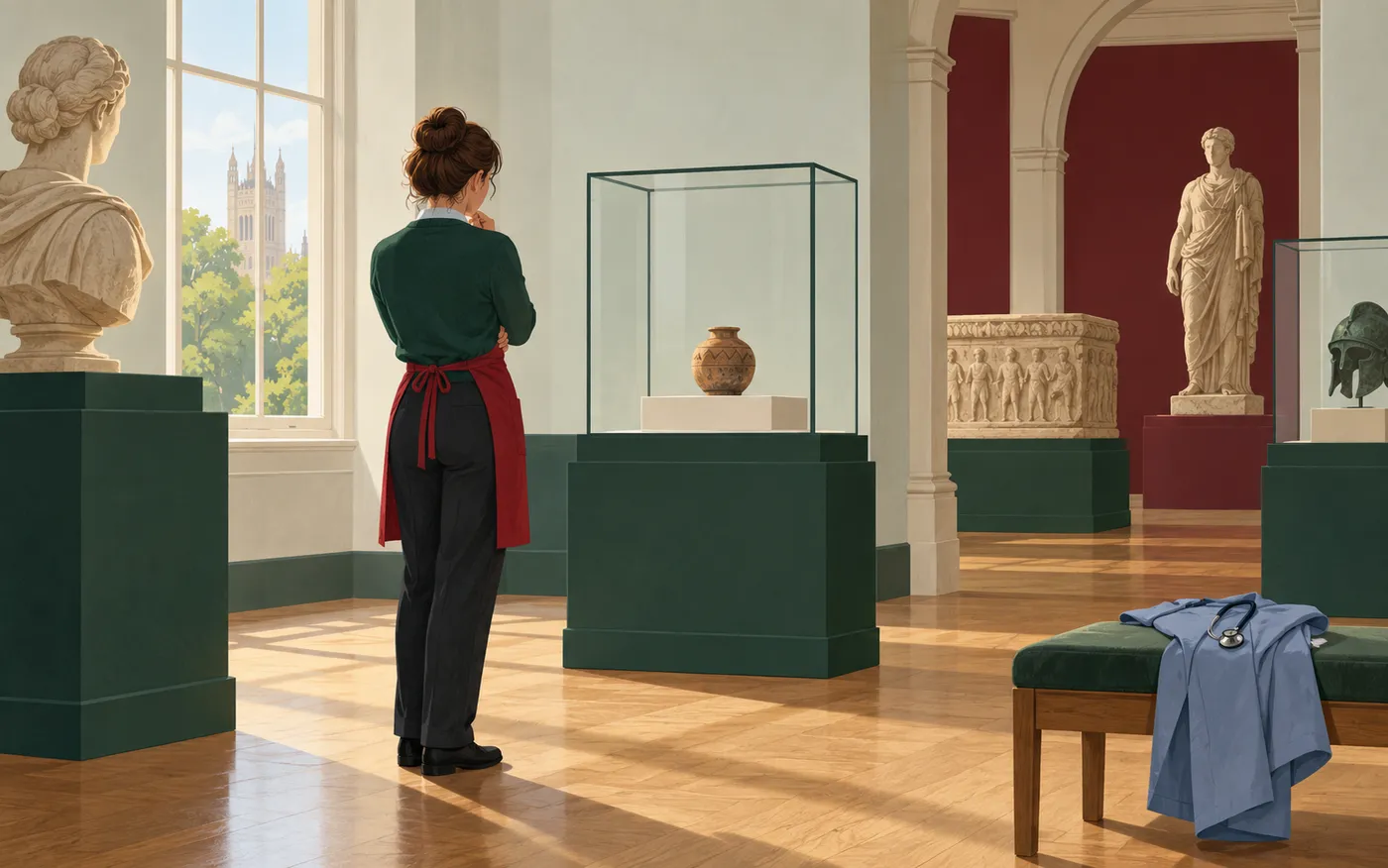
Imagine this: you chose history at university. Today you work in a museum. You imagine a different choice and a different job now. Use if + had + past participle for the earlier choice and would + base verb for its result now.
If I had studied medicine, I would be a doctor now.
I studied something else. I am imagining a different job today.
| Actual situation | Imagined past condition | Imagined result now |
|---|---|---|
| We bought large equipment. The room is crowded. | If we had bought smaller equipment, | we would have more space now. |
| I stayed up late. I am tired now. | If I had gone to bed earlier, | I would feel less tired now. |
| She missed the train. She is still waiting. | If she had caught the train, | she would be at home now. |
In would have more space, have means possess. It is the base verb after would. In would have had more space, have had makes a past result. Look at what follows would have: a noun such as space, or a past participle such as had.
Can a present situation explain a different past result?
Yes. Think of a skill or situation that was true then and is still true now. You cannot drive, so you took the bus yesterday. Imagine having the skill: If I could drive, I would have driven there yesterday. The condition is a lasting situation; the result belongs to yesterday.
Past condition, present resultChange an earlier event; imagine now.
Focus: An earlier choice affects today's situation.
if + had + past participle, would + base verb
If I had saved more money, I would own a car now.
I did not save enough. I do not own a car.
Lasting condition, past resultChange a lasting situation; imagine an earlier event.
Focus: A skill or personal situation explains what happened earlier.
if + past form, would have + past participle
If I knew her number, I would have called her yesterday.
I did not know her number yesterday, and I still do not know it.
With be, were works for every person in this imagined condition: If I were more confident, I would have spoken at the meeting. Was is also common with I, he and she in everyday speech. The speaker means they lacked confidence at the meeting and still lack it.
How is a mixed conditional different from the third conditional?
| Sentence | Result time |
|---|---|
| If I had studied harder, I would have passed the exam. | Past: the exam result |
| If I had studied harder, I would be at university now. | Present: where I am now |
| If I had studied harder, I would be taking my final exams now. | Present: an activity in progress |
Name the two times before choosing the forms. Now and yesterday help, but the meaning also matters. In If I had more time, I would study, had means an imagined situation now. In If I had studied, had helps form the past perfect.
What do mixed conditionals sound like in conversation?
- Nadia
We bought the big tables last year. There's hardly any space left.
The purchase is past; the problem is present.
- Tom
If we'd bought smaller ones, we'd have more room now.
Here, the first we'd means we had; the second means we would.
- Nadia
And if I were better at planning, I'd have measured the room first.
She imagines a different lasting ability and a different past action.
Which mixed conditional mistakes should you avoid?
- If I would have studied medicine, I would be a doctor now.If I had studied medicine, I would be a doctor now.
Keep would out of this ordinary if-clause. Use had studied for the imagined past choice.
- If she had took the earlier train, she would be here now.If she had taken the earlier train, she would be here now.
Use the past participle after had: take - took - taken.
- If I knew his address, I would have wrote to him last week.If I knew his address, I would have written to him last week.
The letter belongs to last week. Use would have plus the past participle written.
Can you choose a result for the right time?
1 · Write the full forms; use the time clue
- If I had brought my coat, I warmer now. (be; imagined result now)
- If we had left earlier, we at the airport now. (wait; imagined activity in progress now)
- If I spoke Italian, I the announcement yesterday. (understand; imagined past result)
- If she the receipt, she could return the dress now. (keep; imagined past condition)