Read to find out how an everyday meal connects past and present.
The great British chippy
What do you order at a chippy?
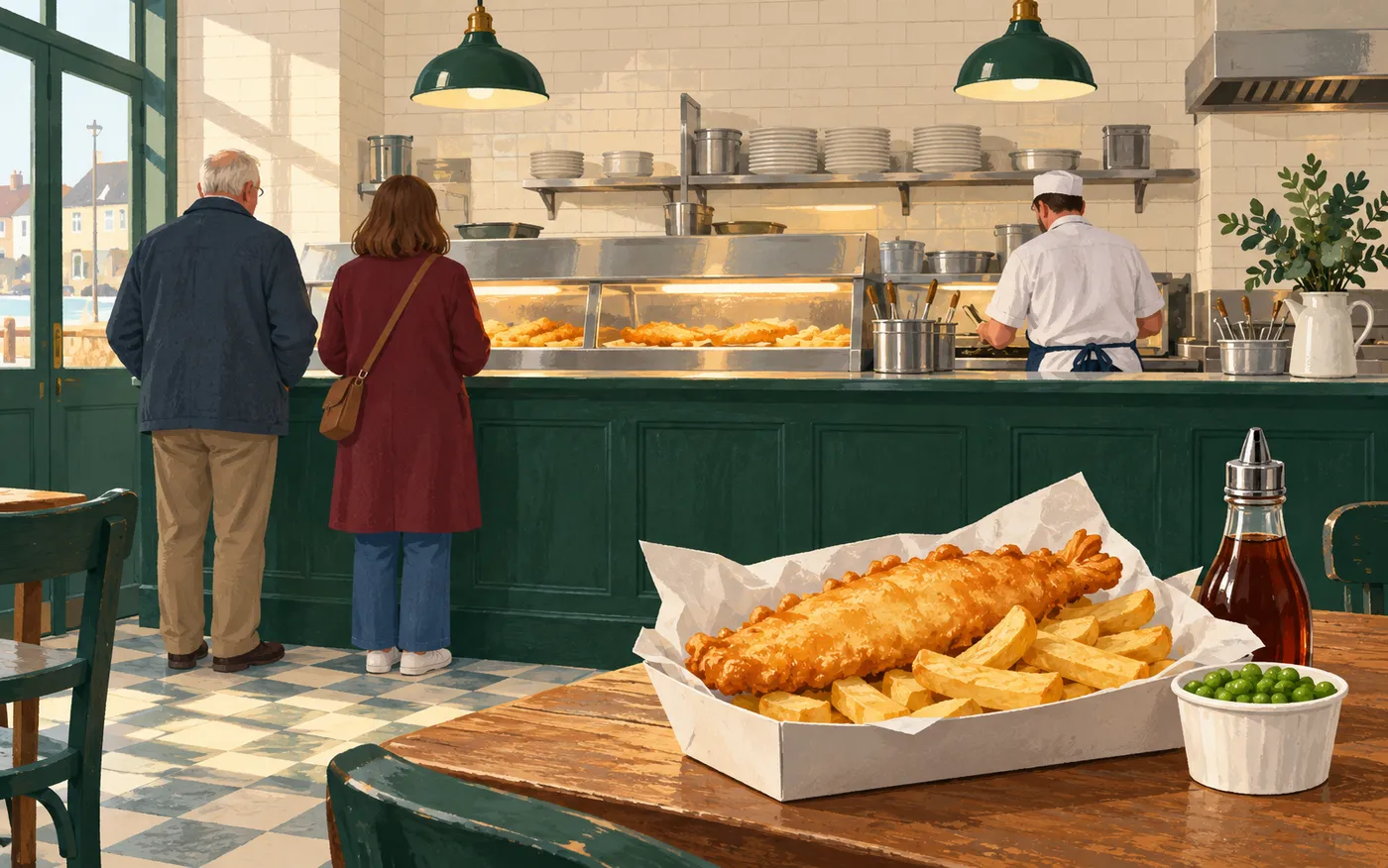
Push open the door of a chippy1 and the first question is often simple: which fish would you like? Cod is a familiar choice, but haddock2 is another. The fish is covered in batter3 and fried, then served with thick chips. You can order a large portion4 to share or choose a smaller meal. The person who serves you may ask, 'Salt and vinegar?'
How did fish and chips become popular?
The meal brings together several histories. Fried fish was already popular in nineteenth-century London, where Jewish cooks and sellers helped shape the trade. In 1860, Joseph Malin, a Jewish migrant, opened a fish and chip shop in Bethnal Green. His shop is part of the story of how the two foods became a meal.
Changes in fishing and cold storage also helped. More fish reached the market, and it stayed fresh for longer. The shops that sold these meals became familiar places to buy hot food. A customer could leave work, stop at the counter5 and carry dinner home.
What changes, and what stays familiar?
The wrapping has a history too. Shops once used old newspapers to wrap portions. A paper packet or box is still part of the takeaway6 experience: you carry it carefully and hope the chips stay hot until you get home.
Running a chippy means balancing price and quality. Fish, cooking oil and energy all cost money. An owner whose bills rise has to think carefully about prices while keeping meals affordable7. Customers have choices too: extra peas or curry sauce, a meal to share, or a smaller portion. Each person in the queue8 is deciding what to have for dinner. The meal connects a long history with a very ordinary evening.
In simpler words
At a fish and chip shop, you choose your fish and the size of your meal. The fish is crisp on the outside, and the chips are thick. You can add salt and vinegar.
Fried fish was popular in London in the nineteenth century. Jewish cooks and sellers were part of this history. Joseph Malin opened a shop selling fish and chips in 1860.
Better ways of catching and storing fish helped shops get enough fresh fish. People could buy a hot meal to take home.
Shops used newspapers to wrap food in the past. Customers still carry their meals home in packets or boxes.
Shop owners need to cover their costs and keep prices low enough for customers. People choose their food and how much to buy.