पढ़ना

फ़िश ऐंड चिप्स पर B1 अंग्रेज़ी पठन: खाने की प्रश्नोत्तरी

दुकान के इतिहास और बदलती आदतों के साथ फ़िश ऐंड चिप्स पर B1 अंग्रेज़ी पढ़ें: आठ अर्थ, खाने के कार्ड, संबंधवाचक उपवाक्य और चार प्रश्न।

संक्षेप में

chippy, मछली और तले आलू बेचने वाली दुकान का अनौपचारिक ब्रिटिश नाम है। यह B1 लेख उसके खाने, इतिहास और बदलती आदतों को देखता है; ब्रिटिश chips तले आलू के मोटे टुकड़े हैं, जबकि crisps पैकेट में बिकने वाले पतले, कुरकुरे टुकड़े हैं।

पीला याद रखने योग्य मुख्य बातनीला सीखने योग्य अंग्रेज़ीलाल सावधानी

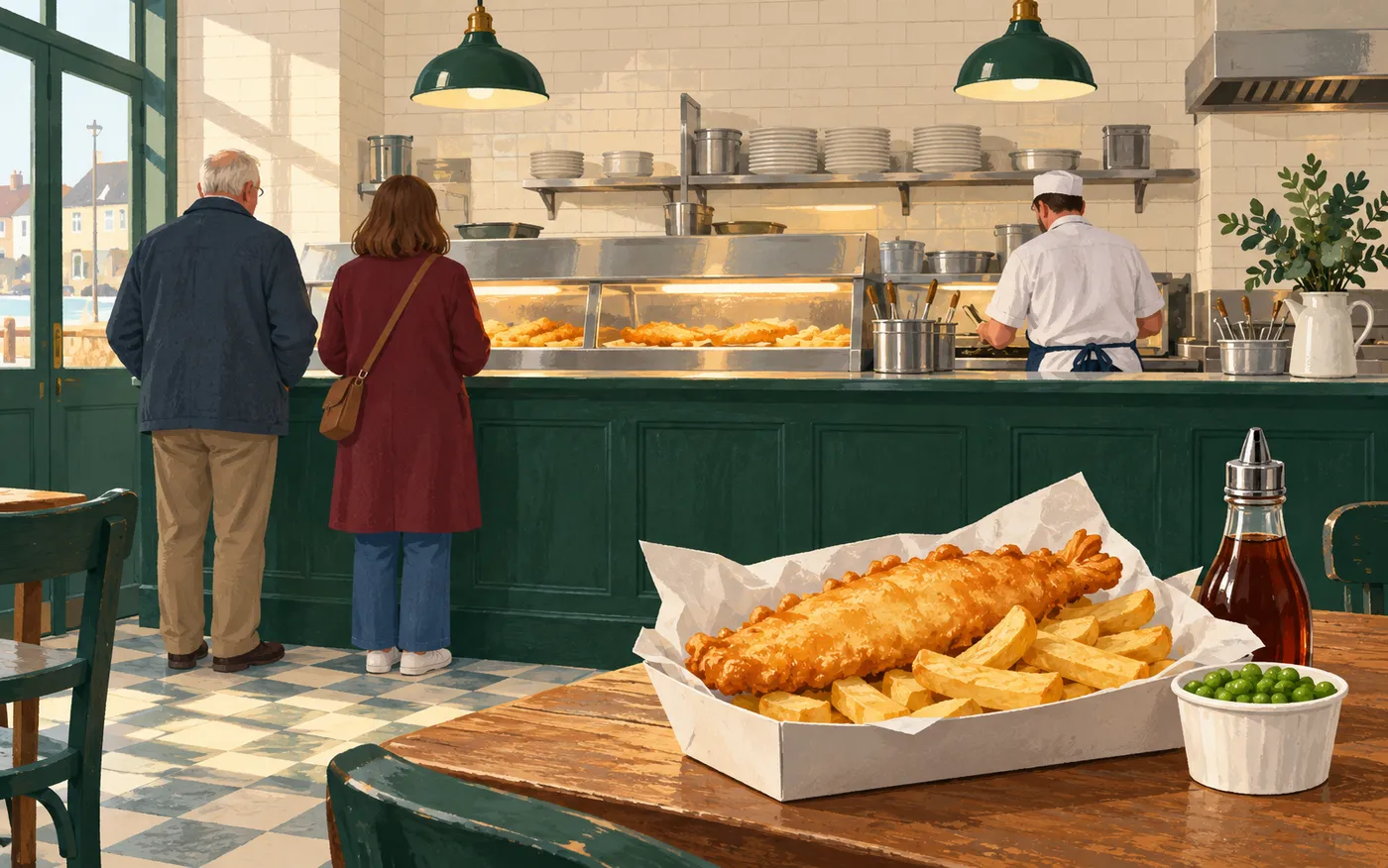
ब्रिटेन की टेकअवे दुकान के काउंटर पर फ़िश ऐंड चिप्स का भोजन रखा है।
A chippy में घोल में लपेटकर तली मछली मोटे तले आलू के साथ परोसी जाती है। चित्र: Atelier

पढ़ें कि रोज़मर्रा का भोजन अतीत और वर्तमान को कैसे जोड़ता है।

The great British chippy

What do you order at a chippy?

Push open the door of a chippy1 and the first question is often simple: which fish would you like? Cod is a familiar choice, but haddock2 is another. The fish is covered in batter3 and fried, then served with thick chips. You can order a large portion4 to share or choose a smaller meal. The person who serves you may ask, 'Salt and vinegar?'

How did fish and chips become popular?

The meal brings together several histories. Fried fish was already popular in nineteenth-century London, where Jewish cooks and sellers helped shape the trade. In 1860, Joseph Malin, a Jewish migrant, opened a fish and chip shop in Bethnal Green. His shop is part of the story of how the two foods became a meal.

Changes in fishing and cold storage also helped. More fish reached the market, and it stayed fresh for longer. The shops that sold these meals became familiar places to buy hot food. A customer could leave work, stop at the counter5 and carry dinner home.

What changes, and what stays familiar?

The wrapping has a history too. Shops once used old newspapers to wrap portions. A paper packet or box is still part of the takeaway6 experience: you carry it carefully and hope the chips stay hot until you get home.

Running a chippy means balancing price and quality. Fish, cooking oil and energy all cost money. An owner whose bills rise has to think carefully about prices while keeping meals affordable7. Customers have choices too: extra peas or curry sauce, a meal to share, or a smaller portion. Each person in the queue8 is deciding what to have for dinner. The meal connects a long history with a very ordinary evening.

सरल शब्दों में

At a fish and chip shop, you choose your fish and the size of your meal. The fish is crisp on the outside, and the chips are thick. You can add salt and vinegar.

Fried fish was popular in London in the nineteenth century. Jewish cooks and sellers were part of this history. Joseph Malin opened a shop selling fish and chips in 1860.

Better ways of catching and storing fish helped shops get enough fresh fish. People could buy a hot meal to take home.

Shops used newspapers to wrap food in the past. Customers still carry their meals home in packets or boxes.

Shop owners need to cover their costs and keep prices low enough for customers. People choose their food and how much to buy.

फ़िश ऐंड चिप्स के भोजन में क्या दिख सकता है?

छह चीज़ें जिनका आप ऑर्डर दे सकते हैं या इस्तेमाल कर सकते हैं

संबंधवाचक उपवाक्य दुकान और उसके लोगों का वर्णन कैसे करते हैं?

उपवाक्य किसी संज्ञा के बारे में जानकारी जोड़ता है
उदाहरणउपवाक्य किस शब्द का वर्णन करता है?
The person who serves you may ask, 'Salt and vinegar?'व्यक्ति (Person): who serves you बताता है कि कौन-सा व्यक्ति।
The shops that sold these meals became familiar places to buy hot food.दुकानें (Shops): that sold these meals बताता है कि कौन-सी दुकानें।
An owner whose bills rise has to think carefully about prices.मालिक (Owner): whose bills rise बिलों को उस मालिक से जोड़ता है।
This is the shop where we buy our chips.दुकान (Shop): where we buy our chips बताता है कि कौन-सी जगह।
  • This is the fish that I ordered it.This is the fish that I ordered.

    That पहले ही मछली के लिए है। अतिरिक्त it हटा दें। आप This is the fish I ordered भी कह सकते हैं।

  • The owner who's bills rise has to think carefully.The owner whose bills rise has to think carefully.

    मालिक का बिलों से संबंध बताने के लिए whose रखें। Who's का अर्थ who is या who has है।

अपनी पसंदीदा खाने की दुकान का वर्णन कैसे करेंगे?

60–80 शब्द लिखें

  • खाने का नाम बताएँ और समझाएँ कि लोग उसका ऑर्डर कैसे देते हैं।
  • व्यक्ति के लिए who वाला एक वाक्य और चीज़ के लिए that या which वाला एक वाक्य शामिल करें।
  • किसी एक बदलाव को समझाएँ, जैसे मेन्यू, दाम या पैकेजिंग में बदलाव।
प्रश्न 1खाते की ज़रूरत नहीं
इस लेख में chippy शब्द का क्या अर्थ है?

एक उत्तर चुनें।

उत्तर और व्याख्या

A fish and chip shop.. Chippy मछली और तले आलू बेचने वाली दुकान का अनौपचारिक ब्रिटिश नाम है।

प्रश्न 2खाते की ज़रूरत नहीं
कौन-सा कथन पाठ के इतिहास से मेल खाता है?

एक उत्तर चुनें।

उत्तर और व्याख्या

Joseph Malin opened a shop in Bethnal Green in 1860.. लेख Malin की 1860 की दुकान को इस भोजन के व्यापक इतिहास का एक हिस्सा बताता है।

प्रश्न 3खाते की ज़रूरत नहीं
बेहतर शीत भंडारण ने व्यापार में कैसे मदद की?

एक उत्तर चुनें।

उत्तर और व्याख्या

It kept fish fresh for longer.. मछली लंबे समय तक ताज़ा रहने से दुकानों तक उसकी आपूर्ति में मदद मिली।

प्रश्न 4खाते की ज़रूरत नहीं
बढ़ते बिल chippy के मालिक के लिए क्यों महत्त्वपूर्ण हैं?

एक उत्तर चुनें।

उत्तर और व्याख्या

They can make it harder to keep meals affordable.. मालिक को ख़र्च पूरे करने हैं और साथ ही दाम इतने कम रखने हैं कि ग्राहक भुगतान कर सकें।

आधारित पाठ्यक्रम