Graded story

B2 English short story: the house on Marine Parade

Read a B2 English short story about siblings clearing their late father's seaside house, with narrative tenses, unspoken feelings and questions on regret.

In short

Follow what happened, what was happening and what had happened earlier. In this story, she opened moves events forward, Daniel was sorting gives the background and she had come looks further back; a character's first impression may be wrong.

Yellow the idea to rememberBlue English to learnRed watch out

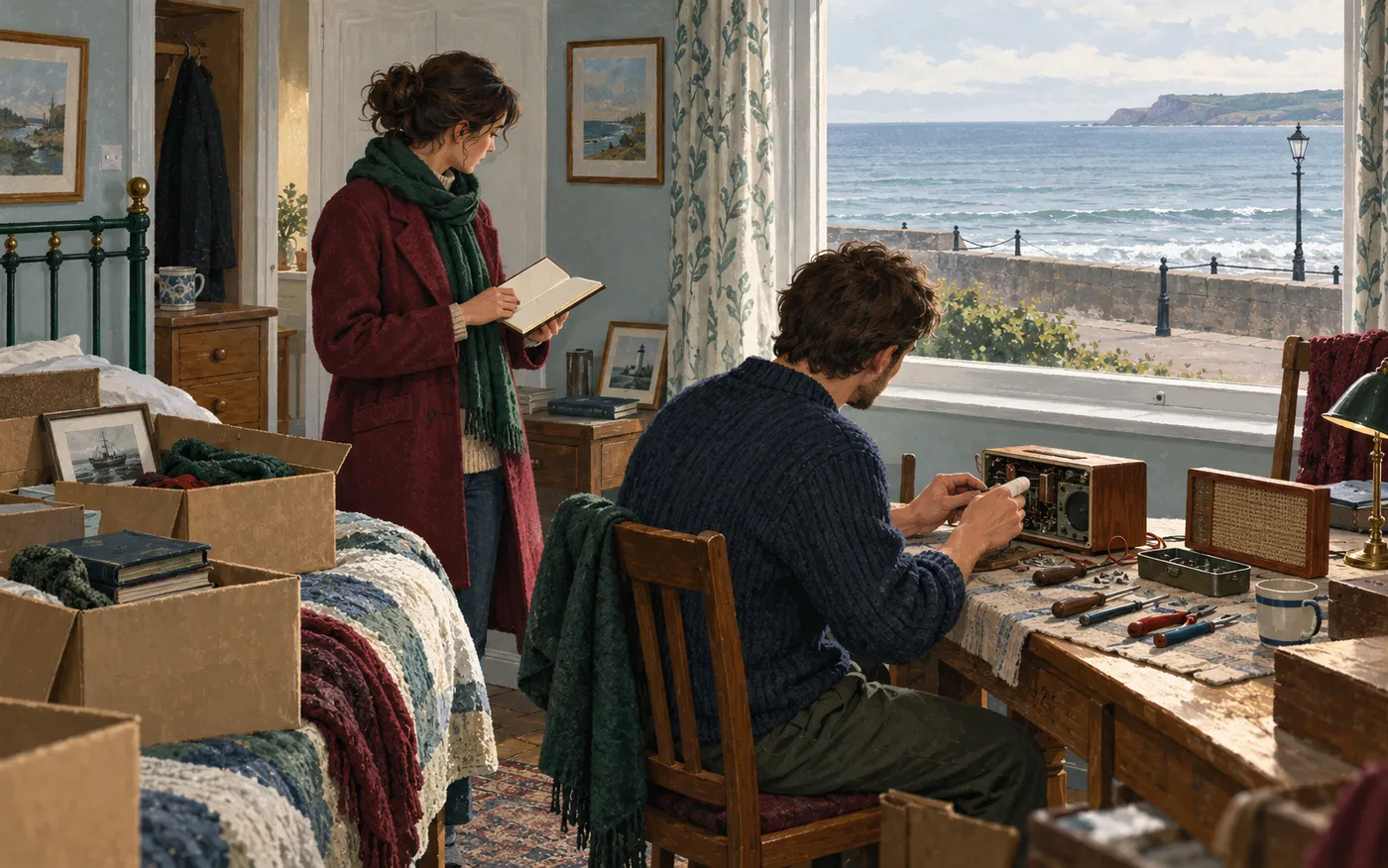
A sister holds a blank notebook while her brother repairs a radio beside the seaside window.
If only Anna had asked her brother how he felt. Illustration: Atelier

B2 short story

The house on Marine Parade

By eleven, Anna had filled three boxes and spoken six words to her brother. Outside, waves were breaking against the sea wall1. Inside, Daniel was sorting their father's tools into neat rows. Their father had died in March; now the house on Marine Parade was almost ready to sell.

'You can leave those,' Anna said. 'The charity shop won't want a broken radio.' Daniel kept turning a tiny screw. She had come down from Leeds for the weekend and wanted to finish before the last train. He had lived ten minutes away for years. She took it for granted2 that he wanted the whole job over as quickly as she did.

In the hall, Anna opened a drawer and found a small notebook. Her father had recorded high tide3 every day. Between the times were other entries: Anna rang. Daniel brought soup. No walk today. She turned a page. Anna might come Sunday. Underneath, in smaller writing: Train cancelled.

She remembered that Sunday. The trains had been running, but she had been tired. She had called it a travel problem because that sounded easier to explain. If only she had told him the truth. Now she was holding a record of the excuse4 she had expected him to forget.

Daniel appeared in the doorway. 'He always wrote things down,' he said. 'It helped when he couldn't get out.' Anna looked at his hands. A plaster5 covered a cut on one finger. She had noticed the tidy tools; she hadn't asked about the months of shopping, meals and hospital visits.

'I should have come more often.' He gave a small shrug6. 'I wish you'd rung me sometimes. Not just Dad.'

Anna put the notebook beside the radio. The kettle had already been packed away7. 'Is the cafe on the corner still open?' she asked.

'Till four.'

'We've got time, then.' She reached for her coat. Daniel set down the screwdriver and, for once, left a job unfinished8.

In simpler words

Anna and Daniel are clearing their father's house after his death. Anna is packing boxes while Daniel sorts tools.

Anna wants to finish quickly. She believes Daniel feels the same, but she has not asked him.

She finds their father's notebook. It includes the times of the tides and short notes about his children.

One entry reminds Anna of a visit she cancelled. She said there was a train problem, but she was really tired. She regrets giving that reason.

Daniel explains why their father kept notes. Anna begins to think about all the care Daniel gave him.

Anna says she should have visited more. Daniel says he wanted her to call him too.

Anna suggests going to a nearby cafe because the kettle is in a box.

Daniel tells her when the cafe closes.

They decide to go together. Daniel stops working although he has not finished the radio.

What objects help you understand the story?

Notice what Anna and Daniel handle

How do the past tenses guide you through the story?

Events, background and earlier actions
PatternWords from the storyWhat the reader learns
Past simpleAnna opened a drawer.This action moves the story forward.
Past continuousDaniel was sorting their father's tools.This activity was already happening in the opening scene.
Past perfectTheir father had died in March.His death came before the day they cleared the house.
Past perfect negativeShe hadn't asked about the months of shopping, meals and hospital visits.Before this moment, Anna had not asked about Daniel's work.

How do you express regret about the past?

If only she had told him the truth.She wishes she had been honest with her father.

Focus: a strong wish to change a past action

if only + subject + had + past participle

I should have come more often.Anna thinks visiting more would have been the right thing to do.

Focus: judging your own past choice

should have + past participle

I wish you'd rung me sometimes.Daniel wanted Anna to call him as well as their father.

Focus: wishing that another person's past behaviour had been different

wish + subject + had + past participle

In I wish you'd rung me, you'd means you had. The forms are ring - rang - rung: use rung after had, not rang. The last scene shows a small present choice: Anna makes time for Daniel.

What changes between Anna and Daniel?

Question 1No account needed
What does Anna assume about Daniel at first?

Choose one answer.

Answer and explanation

He wants to finish clearing the house as quickly as she does.. Anna takes it for granted that Daniel shares her wish to finish quickly. She has not asked him.

Question 2No account needed
What does the notebook make Anna remember?

Choose one answer.

Answer and explanation

She once blamed a cancelled visit on train trouble, although she was tired.. The entry about a cancelled train reminds Anna of the excuse she gave for missing a visit.

Question 3No account needed
What does Daniel's wish suggest he has missed?

Choose one answer.

Answer and explanation

Direct contact with his sister.. He says he wishes she had rung him, not just their father. He wanted her attention too.

Question 4No account needed
What is the strongest reading of the final scene?

Choose one answer.

Answer and explanation

The siblings choose to spend some time together.. Anna suggests the cafe and Daniel leaves the radio unfinished. They give their relationship some time.

Built from