Updated
Myth or fact
Christmas in Britain: useful words and familiar traditions
Explore Christmas in Britain through 16 useful words, common traditions and everyday greetings, with picture cards and a myth-or-fact activity.
- B1
- 5 claims
- True or false?
- Learn this in the B1 notebook →
In short
Christmas in Britain combines religious observance, family customs and public seasonal events, with Christmas Day on 25 December. People celebrate in different ways, and some do not celebrate. A common tradition is not a rule for every household.
Yellow the idea to rememberBlue English to learnRed watch out
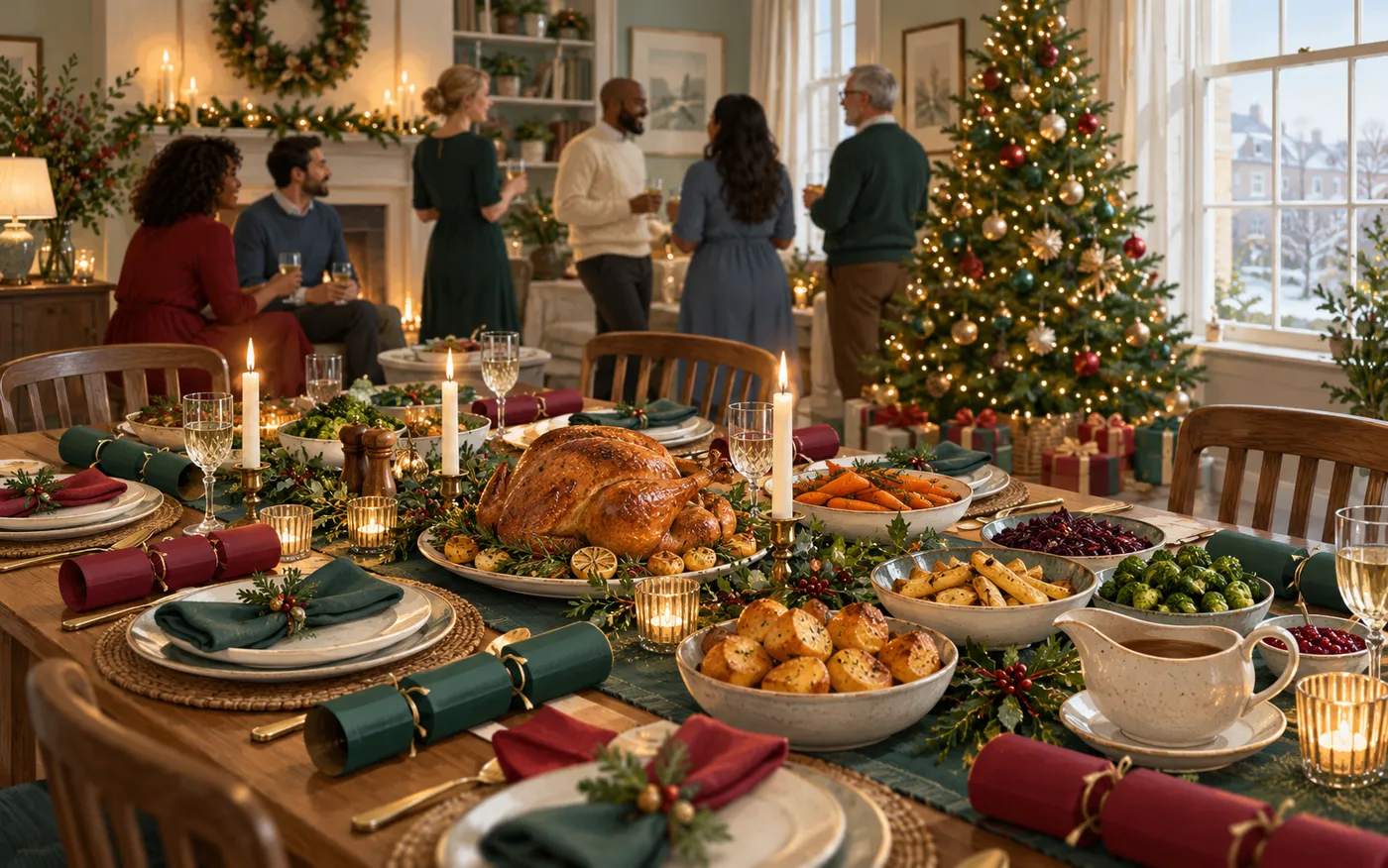
Which Christmas words will you hear?
Seasonal things to recognise
Find:
| Word or phrase | Meaning |
|---|---|
| Christmas Eve | 24 December, the day before Christmas Day. |
| Christmas Day | 25 December. |
| Boxing Day | 26 December; the name is not about the sport. |
| Advent calendar | A calendar with small doors opened on the days leading up to Christmas. |
| carol | A traditional Christmas song, often religious. |
| nativity play | A performance about the birth of Jesus. |
| panto | Short for pantomime: a family theatre show with comedy and audience participation. |
| fairy lights | Small decorative electric lights. |
| tinsel | Shiny strips used as decoration. |
| trimmings | The extra foods served with a main dish. |
| Christmas pudding | A rich sweet pudding usually containing dried fruit. |
| Brussels sprouts | Small green vegetables often served with a Christmas meal. |
A Christmas dinner may include turkey or another main dish, roast potatoes, vegetables and gravy. Vegetarian and other alternatives are common choices too. All the trimmings means the accompanying foods, rather than decorations on the table. A mince pie usually has a sweet dried-fruit filling called mincemeat, despite the name.
Which ideas are true, and which are too broad?
True or false? Decide before you see the verdict.
Every British household eats turkey on Christmas Day.
FalseMeals differ between families, and many people choose other food or do not celebrate.
Christmas Eve comes before Christmas Day.
TrueChristmas Eve is 24 December; Christmas Day is 25 December.
A mince pie usually has a sweet dried-fruit filling.
TrueModern Christmas mince pies commonly contain mincemeat made with dried fruit.
Boxing Day is named as a day when everyone watches boxing.
FalseThe name is connected with Christmas boxes and gifts, rather than a rule about sport.
A pantomime audience may be invited to join in.
TrueAudience responses are a familiar feature of this kind of seasonal theatre.
What greetings can you use?
Happy Christmas and Merry Christmas are both natural in Britain. Have a lovely break is useful when you do not know what someone celebrates. For a colleague, try Enjoy the holidays. See you in January. If someone offers food, No, thank you, but it looks lovely is a polite refusal; a reason is optional.
Have a lovely break.
A friendly seasonal greeting when you do not know what someone celebrates.