C1 short story
Inheritance tax
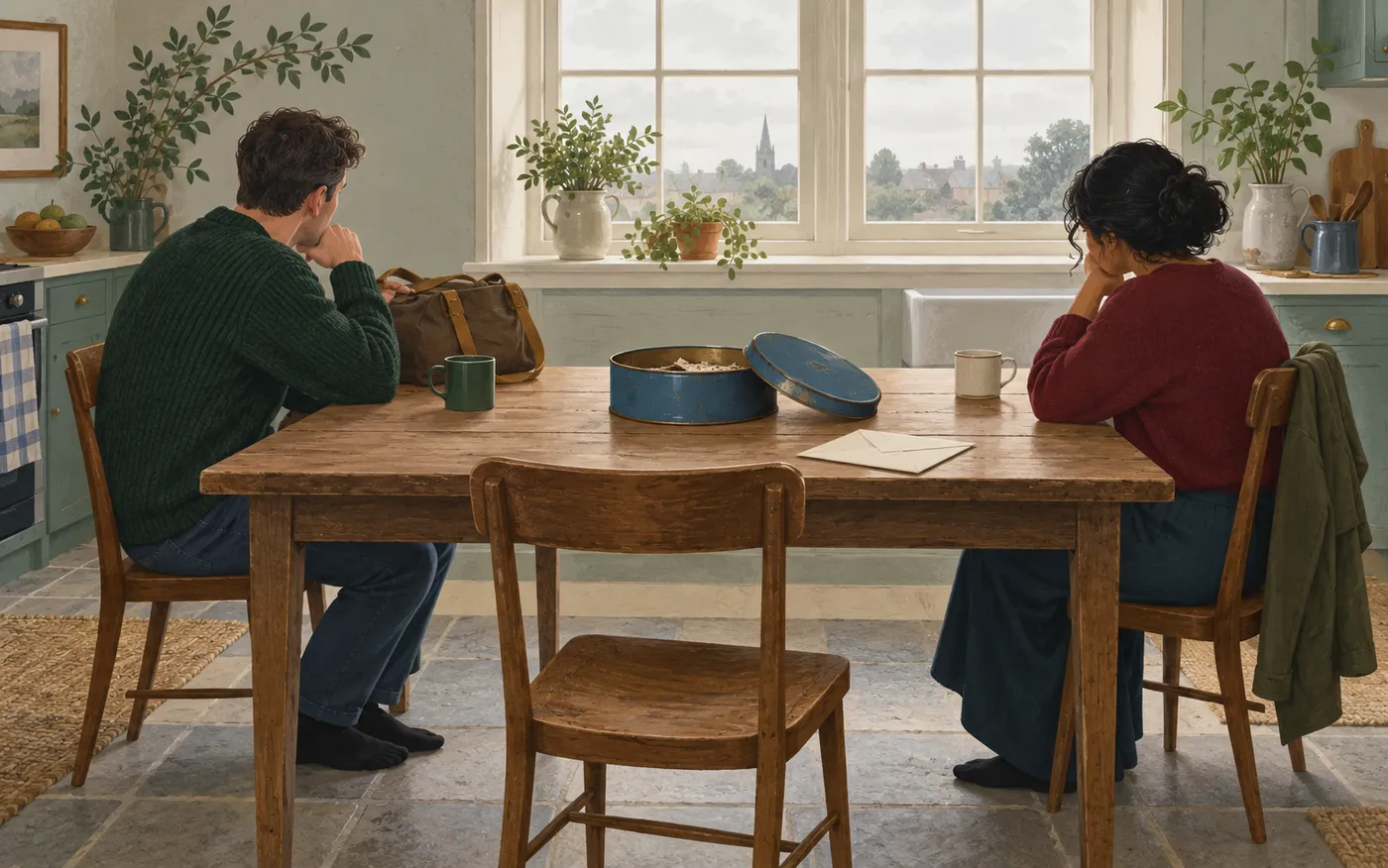
The will divided the money from the house equally between us. Our mother had also left me her blue cake tin. I read that sentence twice, as though the tin might tip the balance1. Across the table, Adam folded the solicitor's letter into smaller and smaller rectangles.
'Half each,' I said. 'That's fair.'
'She was very fair on paper.'
I looked towards the window. The garden needed cutting. I had already pictured the money becoming a deposit on a flat; Adam's tone made the rooms in that flat feel smaller.
'You wanted her to leave you the house?'
'I wanted her to mention Tuesday.'
For the last year, Tuesday had been the day Adam drove her to hospital. He had swapped shifts, learnt which entrance stayed open late and kept a clean jumper in the car. I had telephoned on Sundays. I had also paid for the stairlift, a fact I was keeping in reserve2.
'I couldn't just leave my job,' I said.
'I know.' He smoothed a fold with his thumbnail. 'Neither could I.'
The cake tin sat between us. Its lid had never fitted properly. Mum used to press it down with both hands, then accuse whoever opened it of bending the metal. I remembered this with sudden affection and almost said that we had both had the same mother.
Adam pushed his chair back. 'You can take your tin.'
I took exception to3 the word 'your'. Then I noticed that I had been holding the handle of my bag throughout the conversation.
'Do you want it?'
'It's a tin, Ruth.'
He took it to the sink anyway. Inside lay a folded tea towel and three paper cases. He lifted them out, rinsed the tin and dried it carefully. I had expected anger to be less methodical4.
'I rang every week,' I said.
'You did.'
There was no reproach5 in his voice that I could point to. That was becoming the difficulty. I wanted a charge I could answer, preferably one with a receipt.
'The stairlift cost quite a lot.'
He put the dry tin on the table. 'I'm not sending you a bill6.'
I finally let go of my bag. 'Tell me about Tuesday.'
'Which one?'
I had meant the appointment. He meant the year. We stood with that difference between us until Adam pulled out a chair. I sat down, leaving the letter where it was7. The tin stayed open. For once, neither of us tried to make the lid fit8.
In simpler words
Their mother has left Ruth and Adam equal shares of the money from her house. Ruth also receives a cake tin. Adam keeps folding the solicitor's letter.
Ruth says the division is fair.
Adam suggests that fairness in a document is different from fairness in life.
Ruth has already imagined using her share to buy a flat. Adam's reaction makes her uncomfortable.
Ruth asks if he wanted to receive the house.
Adam wanted their mother to recognise his Tuesday visits.
For a year, he took her to hospital and changed his working hours. Ruth called every Sunday and paid for a stairlift. She is ready to use that payment in her defence.
Ruth says she had to keep working.
Adam reminds her that he had to work too.
Ruth remembers their mother's awkward cake tin fondly. She almost claims that they had the same experience of their mother.
Adam tells Ruth she can take the tin.
Ruth dislikes his choice of words. She then notices that she seems ready to leave.
She offers him the tin.
He says it is just a tin.
Despite saying that, Adam washes and dries it with care. Ruth finds his calm actions harder to understand than anger.
Ruth reminds him of her calls.
He agrees that she called.
She cannot find a clear accusation to argue against. She wants the disagreement to be about money because she can produce evidence of what she paid.
Ruth mentions the stairlift's price.
Adam says he is not asking her for money.
Ruth puts down her bag and asks him to talk about Tuesday.
He asks which Tuesday she means.
Ruth thought of one appointment; Adam is thinking of a whole year of care. He offers her a chair, and she stays. They begin to listen, but the disagreement is still open.