Lectura

Lectura de inglés de C2: un fragmento literario y preguntas

Practica la lectura de inglés de C2 con The spare key, un fragmento de 398 palabras, ocho notas de vocabulario y cinco preguntas sobre la distancia narrativa, los objetos recurrentes y el final.

En pocas palabras

Para leer con atención un texto literario en inglés, sigue tanto lo que ocurre como la forma en que lo presenta quien narra. Un objeto recurrente puede conectar las acciones con un cambio de actitud. Aquí, la llave de repuesto (spare key) vincula el acceso, el control y la vacilación; la explicación que da la voz narradora de los sentimientos de Mara no es el relato de la propia Mara.

Amarillo la idea para recordarAzul inglés para aprenderRojo cuidado con esto

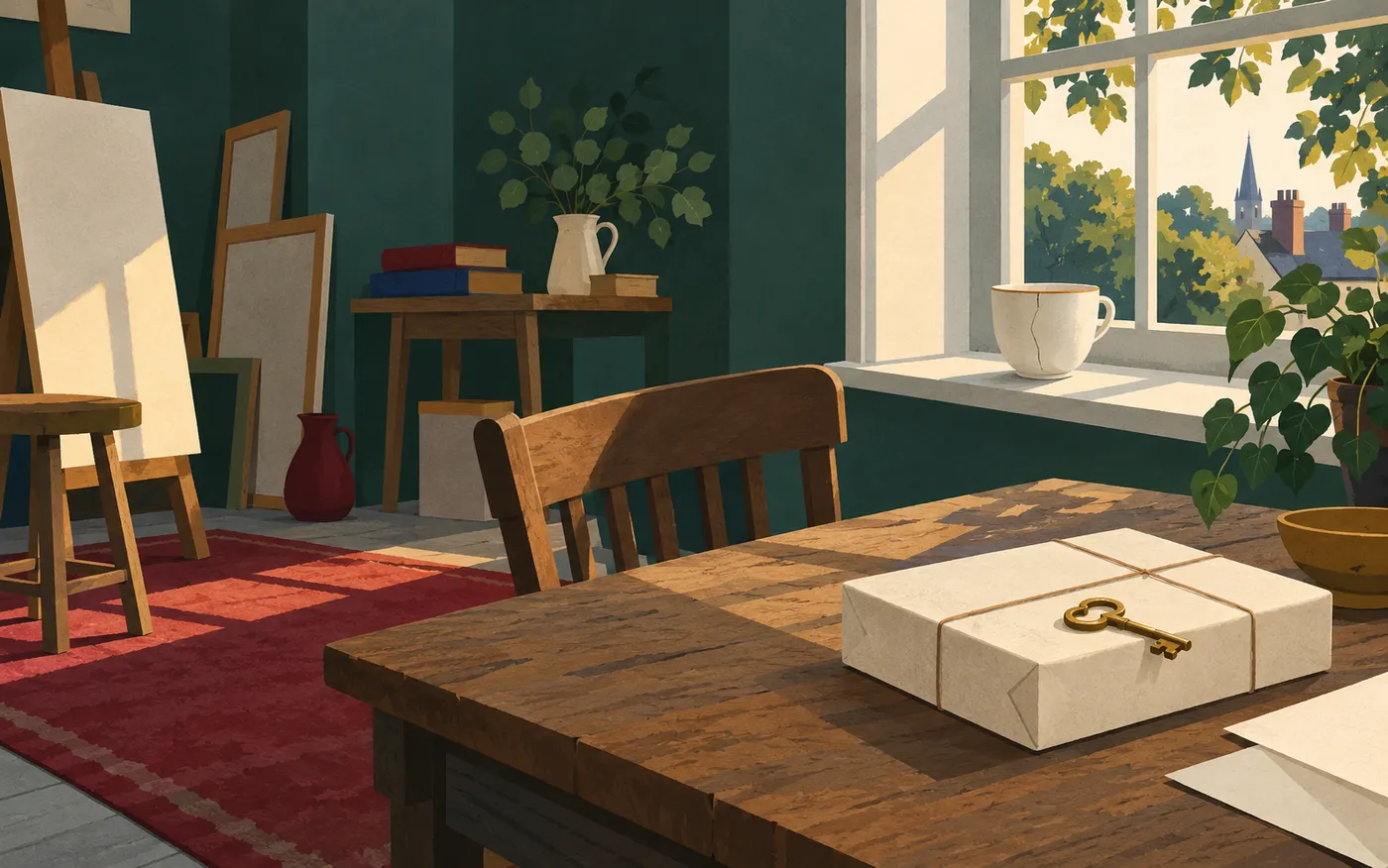
Una llave de latón descansa sobre un paquete sin texto junto a una taza agrietada en un alféizar.
La llave de repuesto y la taza agrietada muestran cómo la voz narradora se replantea el progreso (progress). Ilustración: Atelier

Lee el fragmento una vez para seguir los sucesos. En una segunda lectura, fíjate en adónde se mueve la llave y en cuándo la voz narradora empieza a cuestionar la palabra progress. Las notas numeradas explican ocho palabras y expresiones.

Cuaderno de C2, módulo 92

The spare key

I called it progress because progress fitted on the label1. The room had been called the back room for thirty years, which sounded less like a purpose than an apology. We were turning it into a studio. I had ordered the new sign, the sort with letters that stand slightly away from the wall and cast shadows of their own. When the parcel arrived, I put the spare key on top of it so that nobody would open the box by mistake.

Mara came on Thursday to collect the cups. There were seven, though I had written six in the inventory2. One had a crack so fine3 that you had to know where it was before you could see it. She held that one against the light, and I explained that we had bought matching mugs for the studio. "Of course you have," she said. I decided she was pleased that we had thought of everything. It was convenient to decide that before she had finished speaking.

The spare key moved from the parcel to the windowsill4, from the windowsill to a drawer, and from the drawer to my pocket. Whenever someone asked where a thing belonged, I found myself touching it. I could answer questions about shelves and sockets. I knew which cupboard would become which cupboard. It had not occurred to me that a room might contain arrangements5 that were not furniture, or that an inventory could be exact and still leave something out.

At closing time, Mara asked whether Thursday afternoons would continue. I told her the studio timetable was still being finalised6. This was true in the narrow, dependable7 way that a locked drawer is closed. The timetable had no empty box marked Thursday afternoons. I called it progress. I did not ask who had to leave. When she put the cracked cup back on the shelf, the small sound seemed to require an answer, though it was not a question.

After she left, I took out the spare key. It was the same length as before and no heavier. I could have left it on the desk. Instead, I wrote "keep" on an unused label and looped8 it through the ring. I am not sure whom that instruction was for. The new sign was still in its box. For the first time that week, I did not open something merely because I could.

Con palabras más sencillas

The narrator is changing an old back room into a studio and calls this progress. A new sign arrives in a parcel. The narrator puts a spare key on the parcel to stop anyone opening it by mistake.

Mara comes for the cups. The narrator has counted them incorrectly. One cup has a thin crack. Mara's short reply about the new mugs is unclear, but the narrator chooses to hear it as praise.

The narrator keeps moving the key closer, finally putting it in a pocket. Questions about objects are easy to answer. Questions about the activities and relationships in the room have received less thought.

Mara asks about the future of Thursday afternoons. The narrator says the timetable is unfinished, although it leaves no space for them. The sound of her putting the cup down makes the narrator feel a response is needed.

The narrator labels the key with the word keep, but is unsure who should follow that instruction. The sign stays in its box. The narrator pauses instead of using the key simply because it is available.

¿Qué objetos debes seguir mientras lees?

Cuatro detalles concretos del fragmento

¿Cómo revela la voz narradora más de lo que pretende?

Observa las palabras y después su efecto
DetalleLo que sugiere
It was convenient to decide that before she had finished speaking.La voz narradora acepta demasiado pronto una interpretación cómoda de la reacción de Mara.
from the parcel to the windowsill ... to my pocketEl movimiento repetido pone la llave bajo el control personal de quien narra.
true in the narrow, dependable way that a locked drawer is closedLa afirmación puede ser exacta y aun así dejar fuera la verdadera preocupación de Mara.
I did not ask who had to leave.Una confesión breve y directa interrumpe las explicaciones anteriores, llenas de seguridad.

La distancia narrativa (Narrative distance) es la separación entre quien cuenta la historia y la versión de esa persona que participa en los sucesos. Aquí, la voz narradora mira atrás y percibe cómo antes evitaba ciertas cuestiones. Palabras como convenient nos ayudan a ver esa separación.

I called it progress because progress fitted on the label.

La voz narradora elige una denominación sencilla antes de explorar el coste del cambio.

Más adelante, la misma frase I called it progress vuelve junto a I did not ask who had to leave. La repetición cambia cómo interpretamos la primera frase.

La llave es un motivo recurrente (motif): un detalle que reaparece y gana significado. Primero señala una caja que los demás deben dejar cerrada y después queda en el bolsillo de quien narra. Al final, keep podría referirse a la llave, a los usos anteriores de la sala o a algo que quien narra aún no sabe nombrar. Respalda una interpretación con un detalle y después contrástala con el final.

¿Qué puedes inferir del fragmento?

Pregunta 1No necesitas una cuenta
¿Por qué la respuesta a Mara hace que cuestionemos el relato?

Elige una respuesta.

Respuesta y explicación

The narrator decides she is pleased before she has finished speaking.. La voz narradora califica la decisión de convenient. Esa confesión revela el deseo de evitar una respuesta menos cómoda.

Pregunta 2No necesitas una cuenta
¿Qué sugiere con más fuerza el movimiento de la llave hacia el bolsillo de quien narra?

Elige una respuesta.

Respuesta y explicación

Growing personal control over access and decisions.. Quien narra toca continuamente la llave cuando le preguntan dónde va cada cosa. Su movimiento hacia el bolsillo vincula el acceso con el control personal.

Pregunta 3No necesitas una cuenta
¿Qué efecto tiene comparar la afirmación sobre el horario con un cajón cerrado con llave?

Elige una respuesta.

Respuesta y explicación

It makes a technically true answer feel closed and unhelpful.. Es cierto que el horario no está terminado, pero no deja espacio para los jueves por la tarde. La imagen del cierre revela lo que evita la respuesta.

Pregunta 4No necesitas una cuenta
¿Qué interpretación del último párrafo tiene más respaldo?

Elige una respuesta.

Respuesta y explicación

The narrator begins to hesitate, but the practical problem remains open.. La voz narradora se detiene y cuestiona el significado de la etiqueta. El texto no da ninguna decisión sobre el horario, así que el cambio es un comienzo.

Pregunta 5No necesitas una cuenta
¿Qué afirmación describe mejor el «Of course you have» de Mara?

Elige una respuesta.

Respuesta y explicación

The words alone leave room for more than one attitude.. La respuesta breve podría transmitir actitudes diferentes. La interpretación cómoda de quien narra nos da motivos para cuestionarla.

¿Cómo puedes escribir una respuesta breve de análisis detallado?

Construye una respuesta en tres frases

  • Expón una interpretación de la actitud de la voz narradora hacia la sala.
  • Cita una frase breve y explica cómo sus palabras respaldan esa interpretación.
  • Usa el final para precisar tu idea: explica qué ha cambiado y qué sigue sin resolverse.

Elaborado a partir de