Reading

C2 English reading: a literary extract and questions

Try C2 English reading with The spare key, a 398-word extract, eight glosses and five questions on narrative distance, repeated objects and the ending.

In short

To read literary English closely, follow both what happens and how the narrator presents it. A repeated object can connect actions to a change in attitude. Here, the spare key links access, control and hesitation; the narrator's explanation of Mara's feelings is not Mara's own account.

Yellow the idea to rememberBlue English to learnRed watch out

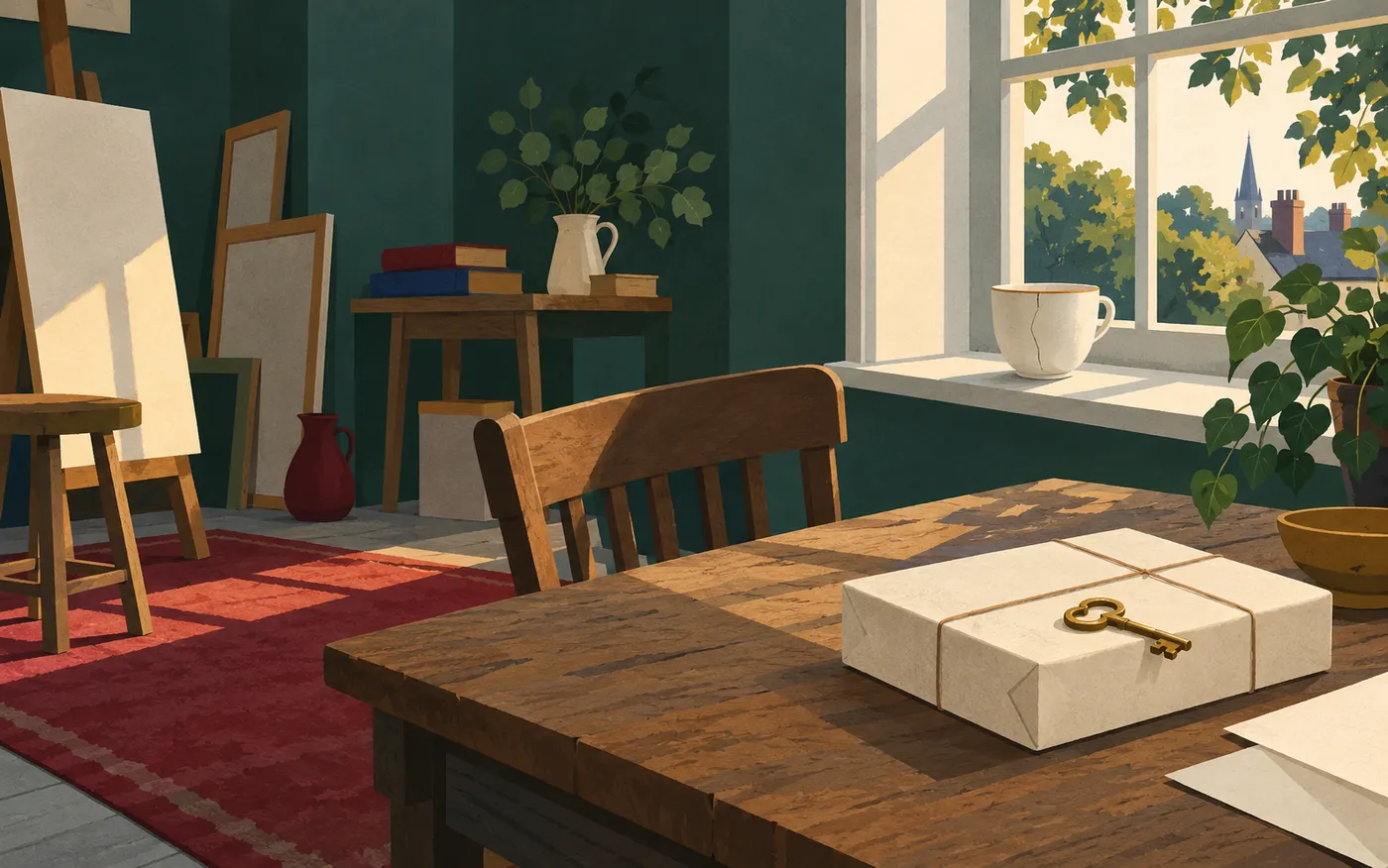
A brass key rests on a blank parcel beside a cracked cup on a windowsill.
The spare key and cracked cup show how the narrator rethinks progress. Illustration: Atelier

Read the extract once for the events. On a second reading, notice where the key moves and when the narrator begins to question the word progress. The numbered glosses explain eight words and phrases.

C2 notebook, module 92

The spare key

I called it progress because progress fitted on the label1. The room had been called the back room for thirty years, which sounded less like a purpose than an apology. We were turning it into a studio. I had ordered the new sign, the sort with letters that stand slightly away from the wall and cast shadows of their own. When the parcel arrived, I put the spare key on top of it so that nobody would open the box by mistake.

Mara came on Thursday to collect the cups. There were seven, though I had written six in the inventory2. One had a crack so fine3 that you had to know where it was before you could see it. She held that one against the light, and I explained that we had bought matching mugs for the studio. "Of course you have," she said. I decided she was pleased that we had thought of everything. It was convenient to decide that before she had finished speaking.

The spare key moved from the parcel to the windowsill4, from the windowsill to a drawer, and from the drawer to my pocket. Whenever someone asked where a thing belonged, I found myself touching it. I could answer questions about shelves and sockets. I knew which cupboard would become which cupboard. It had not occurred to me that a room might contain arrangements5 that were not furniture, or that an inventory could be exact and still leave something out.

At closing time, Mara asked whether Thursday afternoons would continue. I told her the studio timetable was still being finalised6. This was true in the narrow, dependable7 way that a locked drawer is closed. The timetable had no empty box marked Thursday afternoons. I called it progress. I did not ask who had to leave. When she put the cracked cup back on the shelf, the small sound seemed to require an answer, though it was not a question.

After she left, I took out the spare key. It was the same length as before and no heavier. I could have left it on the desk. Instead, I wrote "keep" on an unused label and looped8 it through the ring. I am not sure whom that instruction was for. The new sign was still in its box. For the first time that week, I did not open something merely because I could.

In simpler words

The narrator is changing an old back room into a studio and calls this progress. A new sign arrives in a parcel. The narrator puts a spare key on the parcel to stop anyone opening it by mistake.

Mara comes for the cups. The narrator has counted them incorrectly. One cup has a thin crack. Mara's short reply about the new mugs is unclear, but the narrator chooses to hear it as praise.

The narrator keeps moving the key closer, finally putting it in a pocket. Questions about objects are easy to answer. Questions about the activities and relationships in the room have received less thought.

Mara asks about the future of Thursday afternoons. The narrator says the timetable is unfinished, although it leaves no space for them. The sound of her putting the cup down makes the narrator feel a response is needed.

The narrator labels the key with the word keep, but is unsure who should follow that instruction. The sign stays in its box. The narrator pauses instead of using the key simply because it is available.

Which objects should you follow as you read?

Four concrete details in the extract

How does the narrator reveal more than intended?

Look at the wording, then its effect
DetailWhat it suggests
It was convenient to decide that before she had finished speaking.The narrator accepts a comfortable reading of Mara's reaction too quickly.
from the parcel to the windowsill ... to my pocketThe repeated movement brings the key under the narrator's personal control.
true in the narrow, dependable way that a locked drawer is closedThe statement may be accurate while still shutting out Mara's real concern.
I did not ask who had to leave.A short, direct admission interrupts the narrator's earlier confident explanations.

Narrative distance is the gap between the person telling the story and the version of that person taking part in the events. Here, the narrator looks back and notices earlier acts of avoidance. Words such as convenient help us see that gap.

I called it progress because progress fitted on the label.

The narrator chooses a tidy name before exploring what the change costs.

Later, the same phrase I called it progress returns beside I did not ask who had to leave. The repetition changes how we hear the first sentence.

The key is a motif: a detail that returns and gains meaning. It first marks a box that others should leave closed, then sits in the narrator's pocket. At the end, keep could concern the key, the room's earlier uses or something the narrator cannot yet name. Support a reading with a detail, then test it against the ending.

What can you infer from the extract?

Question 1No account needed
Why does the narrator's response to Mara make us question the account?

Choose one answer.

Answer and explanation

The narrator decides she is pleased before she has finished speaking.. The narrator calls the decision convenient. That admission exposes a wish to avoid hearing a less comfortable response.

Question 2No account needed
What does the key's movement towards the narrator's pocket most strongly suggest?

Choose one answer.

Answer and explanation

Growing personal control over access and decisions.. The narrator keeps touching the key when people ask where things belong. Its movement towards the pocket connects access with personal control.

Question 3No account needed
What is the effect of comparing the timetable statement to a locked drawer?

Choose one answer.

Answer and explanation

It makes a technically true answer feel closed and unhelpful.. The unfinished timetable is real, but it has no space for Thursday afternoons. The image of closure exposes what the answer avoids.

Question 4No account needed
Which reading of the final paragraph has the strongest support?

Choose one answer.

Answer and explanation

The narrator begins to hesitate, but the practical problem remains open.. The narrator pauses and questions the label's meaning. The text gives no decision about the timetable, so the change is a beginning.

Question 5No account needed
Which statement best describes Mara's 'Of course you have'?

Choose one answer.

Answer and explanation

The words alone leave room for more than one attitude.. The short reply could carry different attitudes. The narrator's convenient interpretation gives us a reason to question it.

How can you write a short close-reading response?

Build a response in three sentences

  • State one reading of the narrator's attitude towards the room.
  • Quote a short phrase and explain how its wording supports that reading.
  • Use the ending to refine your point: explain what has changed and what remains unresolved.

Built from