C2 学习手册,第 92 模块
The spare key
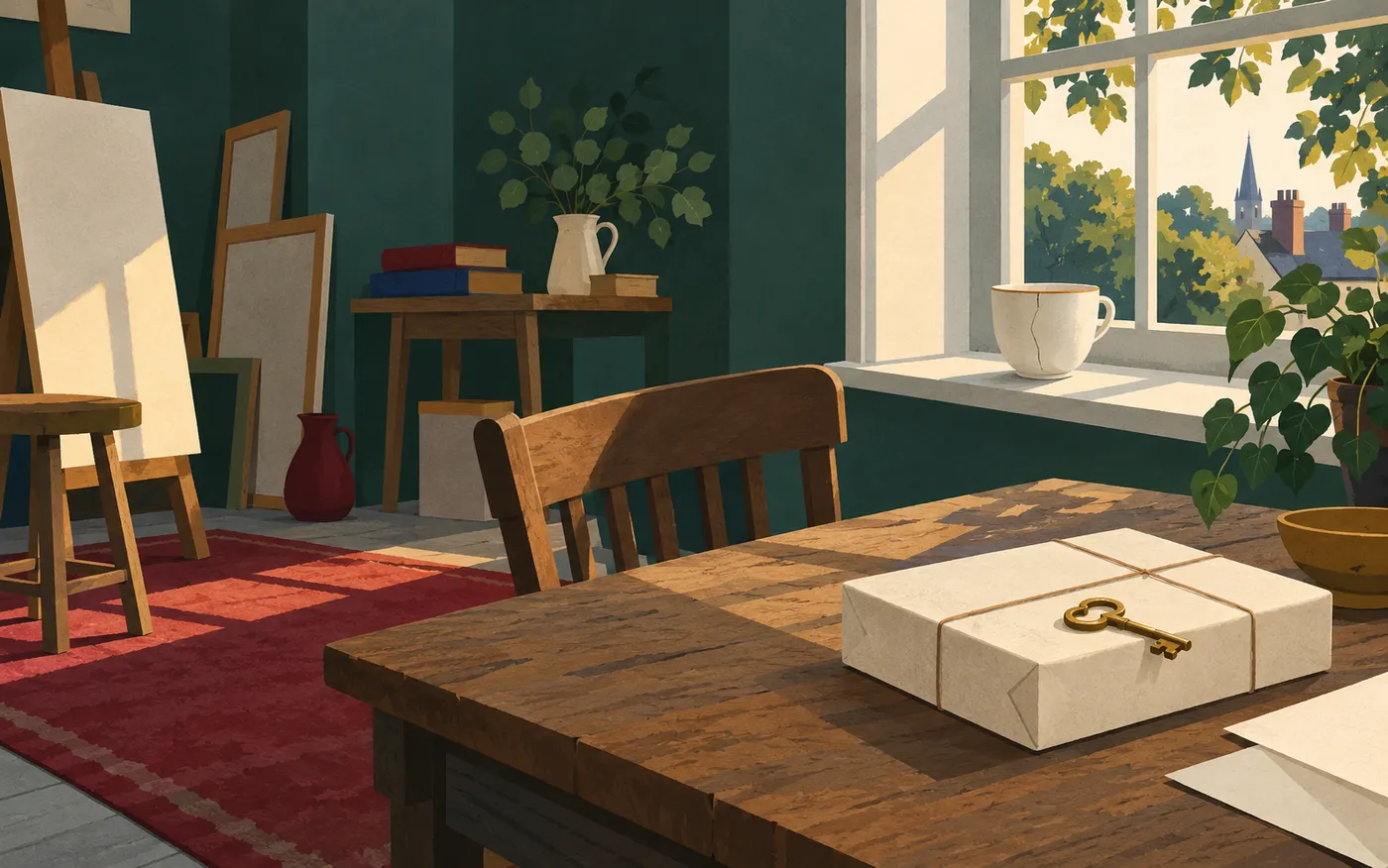
I called it progress because progress fitted on the label1. The room had been called the back room for thirty years, which sounded less like a purpose than an apology. We were turning it into a studio. I had ordered the new sign, the sort with letters that stand slightly away from the wall and cast shadows of their own. When the parcel arrived, I put the spare key on top of it so that nobody would open the box by mistake.
Mara came on Thursday to collect the cups. There were seven, though I had written six in the inventory2. One had a crack so fine3 that you had to know where it was before you could see it. She held that one against the light, and I explained that we had bought matching mugs for the studio. "Of course you have," she said. I decided she was pleased that we had thought of everything. It was convenient to decide that before she had finished speaking.
The spare key moved from the parcel to the windowsill4, from the windowsill to a drawer, and from the drawer to my pocket. Whenever someone asked where a thing belonged, I found myself touching it. I could answer questions about shelves and sockets. I knew which cupboard would become which cupboard. It had not occurred to me that a room might contain arrangements5 that were not furniture, or that an inventory could be exact and still leave something out.
At closing time, Mara asked whether Thursday afternoons would continue. I told her the studio timetable was still being finalised6. This was true in the narrow, dependable7 way that a locked drawer is closed. The timetable had no empty box marked Thursday afternoons. I called it progress. I did not ask who had to leave. When she put the cracked cup back on the shelf, the small sound seemed to require an answer, though it was not a question.
After she left, I took out the spare key. It was the same length as before and no heavier. I could have left it on the desk. Instead, I wrote "keep" on an unused label and looped8 it through the ring. I am not sure whom that instruction was for. The new sign was still in its box. For the first time that week, I did not open something merely because I could.
换个简单的说法
The narrator is changing an old back room into a studio and calls this progress. A new sign arrives in a parcel. The narrator puts a spare key on the parcel to stop anyone opening it by mistake.
Mara comes for the cups. The narrator has counted them incorrectly. One cup has a thin crack. Mara's short reply about the new mugs is unclear, but the narrator chooses to hear it as praise.
The narrator keeps moving the key closer, finally putting it in a pocket. Questions about objects are easy to answer. Questions about the activities and relationships in the room have received less thought.
Mara asks about the future of Thursday afternoons. The narrator says the timetable is unfinished, although it leaves no space for them. The sound of her putting the cup down makes the narrator feel a response is needed.
The narrator labels the key with the word keep, but is unsure who should follow that instruction. The sign stays in its box. The narrator pauses instead of using the key simply because it is available.