दो बहनें, एक पूर्वाभ्यास
Second fiddle
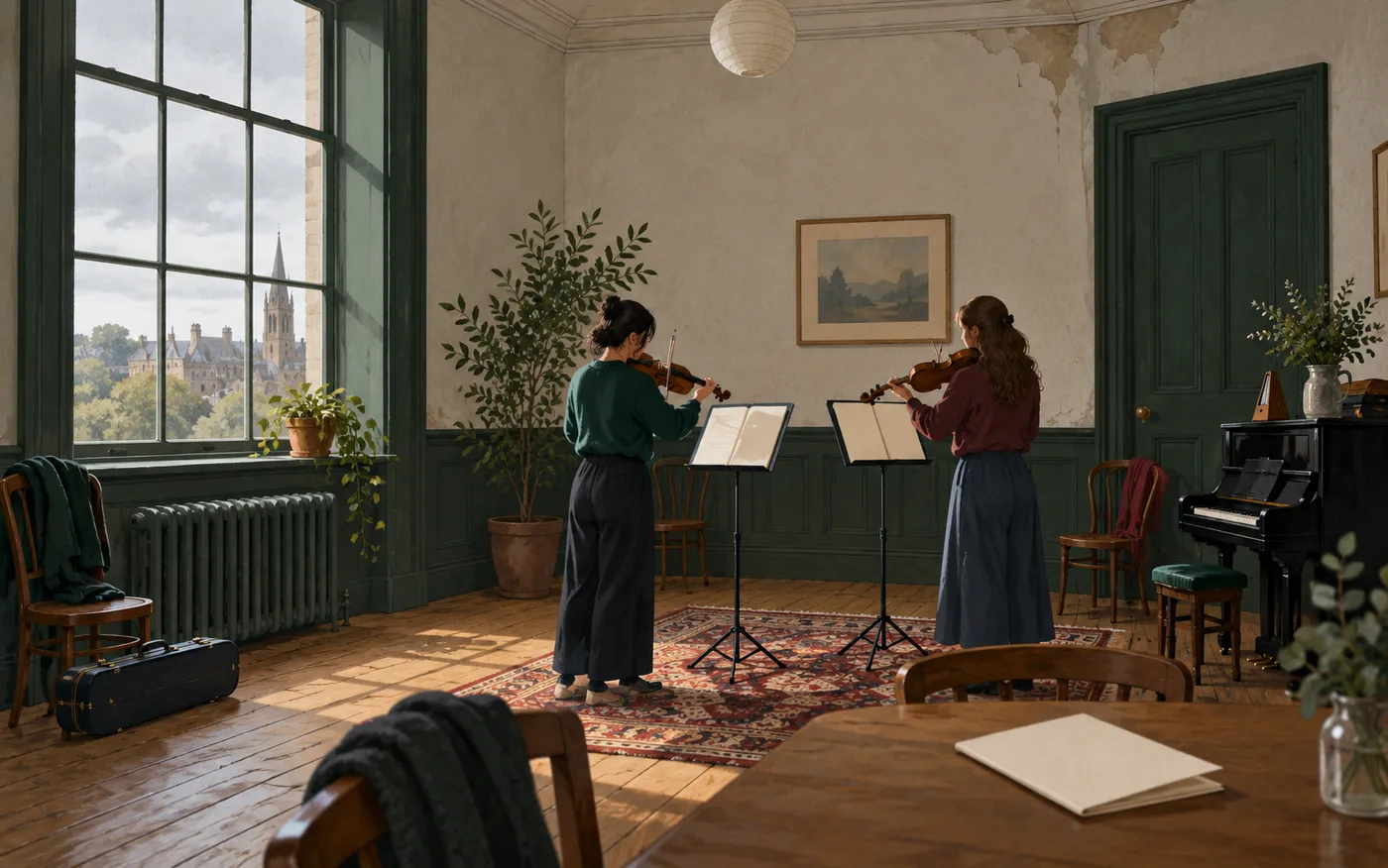
At the rehearsal room, Nora found her sister turning the music stands towards the window. Celia had arrived early, as she always did when she wished to make her arrival seem incidental. On the table lay two programmes. Nora's name was above Celia's. Both played the violin; only Nora's photograph had been requested.
'You've had your hair cut,' Celia said. Nora had expected something about the tour, or the twelve years since their last concert together. 'You haven't,' she replied. Celia touched the knot at the back of her head, then returned to the stands.
The room belonged to the music school where their mother had taught. Tomorrow's concert would pay for a new roof. Nora had offered a recital; Celia had suggested a duet. The billing1, their mother used to say, was for people who couldn't hear.
Nora opened her case. Inside, the velvet was threadbare2 where her thumb always rested. Celia's case still had the small dent Nora had made at fourteen, dropping it on the stairs. For years Nora had remembered the dent as evidence of Celia's pettiness3: she had never let Nora forget it. Today she wondered whether the case had simply been too expensive to replace.
'The opening, shall we?' Celia asked. They played. Nora held back4 where she would usually press ahead. Celia, who had learnt to follow her sister before she had learnt to read, waited too. The phrase collapsed into a politeness neither of them could sustain.
'You can take your time,' Celia said. 'I was.' 'So was I.' From the street came the thin complaint of a reversing van. Nora tightened her bow, though it needed no tightening.
The difficult passage they played twice. The easy one they could not get through. It was their mother's arrangement: a tune passed from one violin to the other, with neither allowed to keep it for long. Celia set down her bow. 'She never wrote the dynamics5 in.' 'She expected us to listen.' 'Yes,' Celia said. 'She did.'
Nora looked at the programmes. Across the top of Celia's copy, a pencil line ran beneath the word 'duet'. 'I didn't ask them to put me first.' 'I didn't say you had.' Nora folded her programme, carefully matching the corners. The gesture felt rehearsed6, although she had never made it before.
'Do you want me to ring the printer?' she asked. Celia looked towards the ceiling, where a damp patch had spread beyond the edge of an old repair. 'I want the roof to stop leaking.' Nora laughed, too quickly. Celia did not.
Then Celia moved her stand. A few inches only, but enough for Nora to see her face above the music. 'Again?' Nora loosened her grip7. This time, when the tune reached her, she gave it back before it was quite finished.
Outside, the van had gone. Celia turned the page for them both. Nora caught the corner before it fell back. They had always been good at that: the small, practical accommodations8 by which two people could continue, even when neither knew what to call the arrangement.
सरल शब्दों में
Nora arrives for a rehearsal with her sister Celia. Nora is the better-known violinist, and the publicity gives her more attention.
Celia mentions Nora's haircut rather than their long separation as performers. Nora gives a short reply about Celia's hair.
They are raising money for the music school's roof. Nora offered to perform alone, while Celia proposed playing together.
Nora notices the old dent she made in Celia's violin case. She begins to consider the cost of replacing it, rather than seeing it only as a reminder of blame.
Both sisters wait for the other to lead, and the music breaks down.
Each says she was taking her time. Nora adjusts her bow to occupy herself.
They manage the difficult passage but struggle to share the tune in their mother's arrangement. Their mother's expectation that they listen also suggests listening to one another.
Nora says she did not choose the order of their names. Celia says she did not accuse her. Nora carefully folds her programme.
Nora offers to ring the printer. Celia replies that she wants the leaking roof repaired, leaving her feelings about the publicity unstated.
Celia moves her stand so that the sisters can see each other. They try again, and Nora passes the tune back.
They help each other turn a page. The shared action shows a small change, while their larger problems remain open.