Updated
Phrasebook
Post office phrases in English: send a parcel and check delivery
Practise post office phrases in English for sending letters and parcels, checking postage and asking about tracking, with examples and a quiz.
- A2
- 15 phrases
- 3 situations
- Learn this in the A2 notebook →
In short
Say I'd like to send this parcel to Spain, please, then ask about the price and delivery options. Give the destination before choosing a service. Proof of posting and proof of delivery show different things.
Yellow the idea to rememberBlue English to learnRed watch out
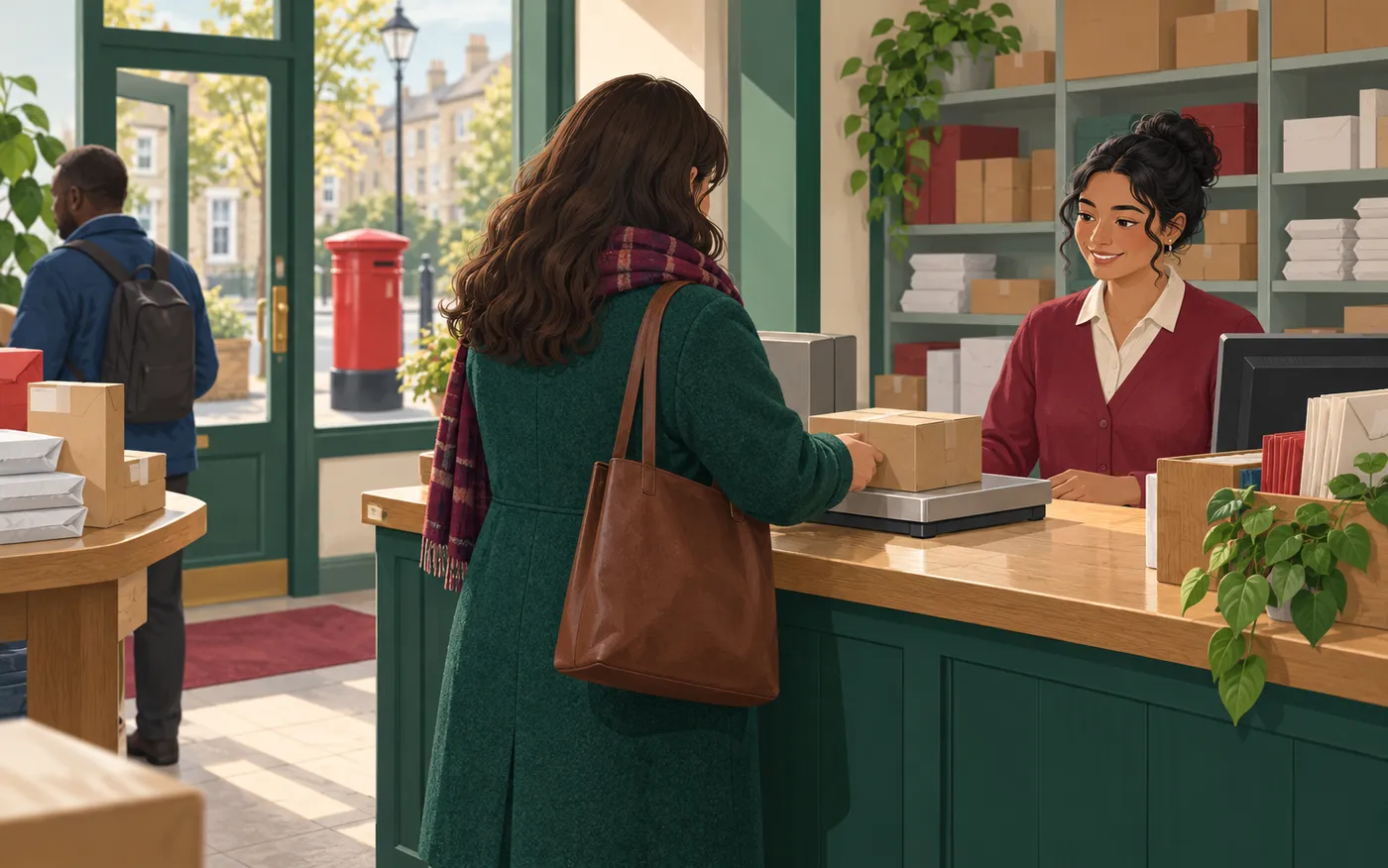
What do you say at the counter?
Sending a parcel
Choosing a service
Finishing
What is the difference between postage and a stamp?
Postage is the amount paid to send something. A stamp is one way to show that postage has been paid. A parcel is a package; a letter is usually a written message in an envelope. Size and thickness can affect the service, so show the item rather than choosing only from its everyday name.
Write the recipient's name and full address clearly. The recipient is the person receiving the item; the sender is the person posting it. A return address tells the postal service where to send it back if delivery fails. British English usually uses postcode, while American English uses ZIP code for the US system.
Ask staff to explain any condition you do not understand before paying. Does that cover the value of the contents? asks about the service you are buying. Keep the receipt and ask where to find the reference number. These questions teach the conversation; the answers depend on the item, destination and selected service.
Does that include tracking?
Ask whether the service lets you follow the parcel.