Phrasebook

Asking for and giving directions in English

Practise asking for and giving directions with four English conversations, walking instructions, missed turns and a picture scene of town landmarks.

In short

Start with Excuse me. How do I get to the library? To give directions, use a direction and a place to look for: Turn left at the bank. You go past a place, but turn at a place: Go past the cafe, then turn right at the lights.

Yellow the idea to rememberBlue English to learnRed watch out
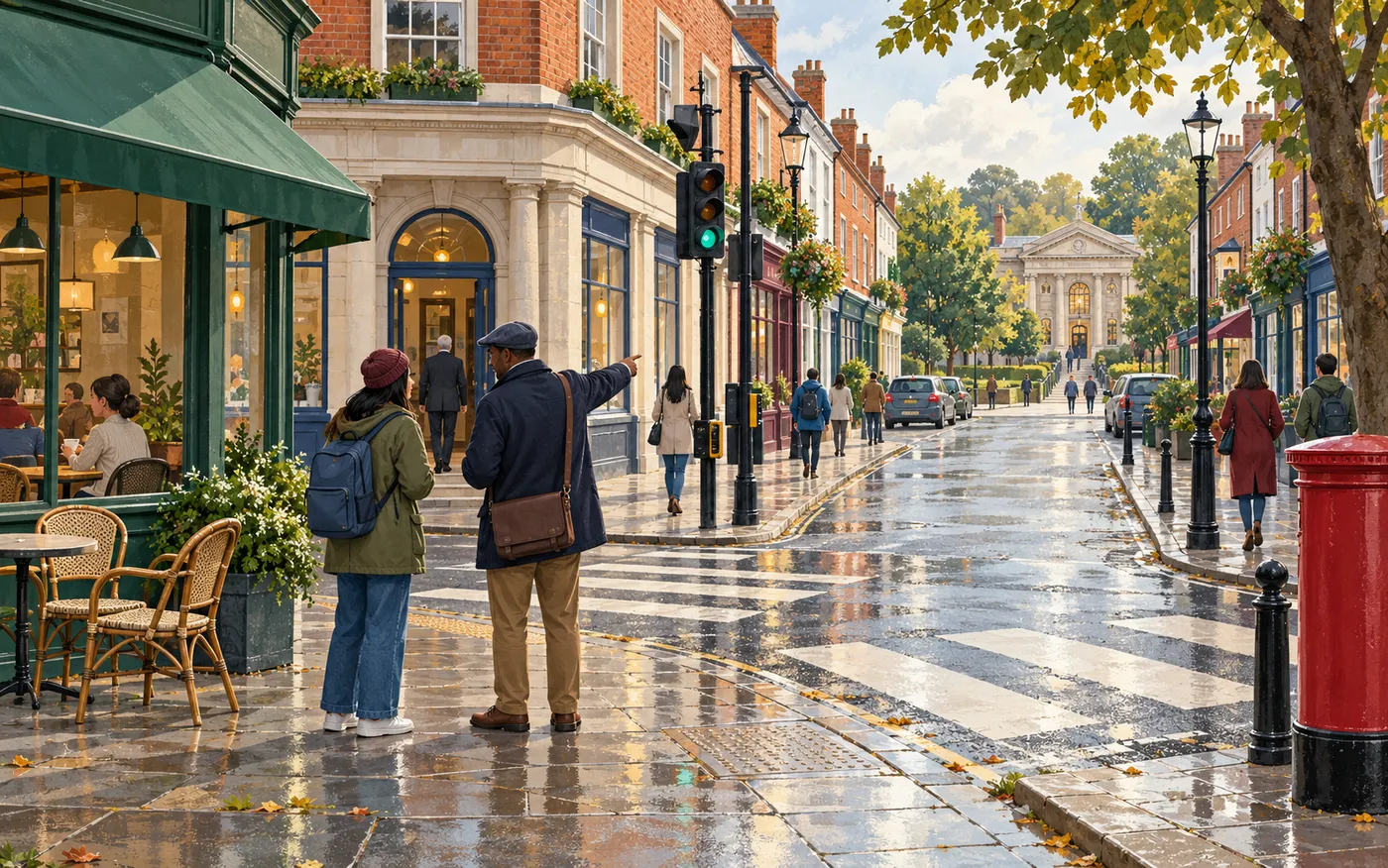
A passer-by points out a route along a British high street.
Ask How do I get to the library? and look for a familiar landmark. Illustration: Atelier
1

How do you ask the way?

You have just arrived at the station. You want to find the library.

YouExcuse me. How do I get to the library?You ask for the route.
Other personGo straight on along this road.Keep walking in the same direction.
Other personGo past the cafe and the bank.Keep walking when you reach these places.
Other personThe library is next to the park, on your left.The library is beside the park, on the left side of the road.
YouIs it far from here?You ask about the distance.
Other personNo, it's about five minutes on foot.You can walk there in about five minutes.
2

How do you give a short route?

A visitor asks you for help. Give one step at a time.

Other personExcuse me. Is there a bank near here?The visitor wants a bank.
YouYes. Turn right at the traffic lights.Change direction when you reach the lights.
YouThen go straight on.Keep going along that road.
YouThe bank is on your right, just after the cafe.You pass the cafe first, then reach the bank.
Other personSo, right at the lights, then past the cafe?The visitor checks the two steps.
YouThat's right. The bank is the next building.You say the route is correct.
3

What do you say if you miss a turn?

Ask about the part you did not understand.

YouSorry, could you say that again, please?You ask to hear the directions again.
Other personTake the second turning on the left.Pass the first road on the left. Turn into the next one.
YouDid you say the first or the second?You check which turning.
Other personThe second. It's just after the bank.The speaker repeats the number and adds a place.
YouAnd then do I cross the road?You check the next step.
Other personYes. Use the zebra crossing.Cross where there are black and white stripes.
4

How do you find the person you are meeting?

You are near the station. Your friend is waiting outside the cafe.

YouI'm outside the station. Where are you?You tell your friend where you are.
Other personI'm outside the cafe, opposite the station.Your friend is across the road from you.
YouIs it the cafe with the tables outside?You check which cafe.
Other personYes. Go left to the crossing, then cross the road.Your friend gives you two steps.
YouI can see you now. I'll be there in a minute.You have found your friend.
Other personGreat. I'll wait here.Your friend will stay in the same place.

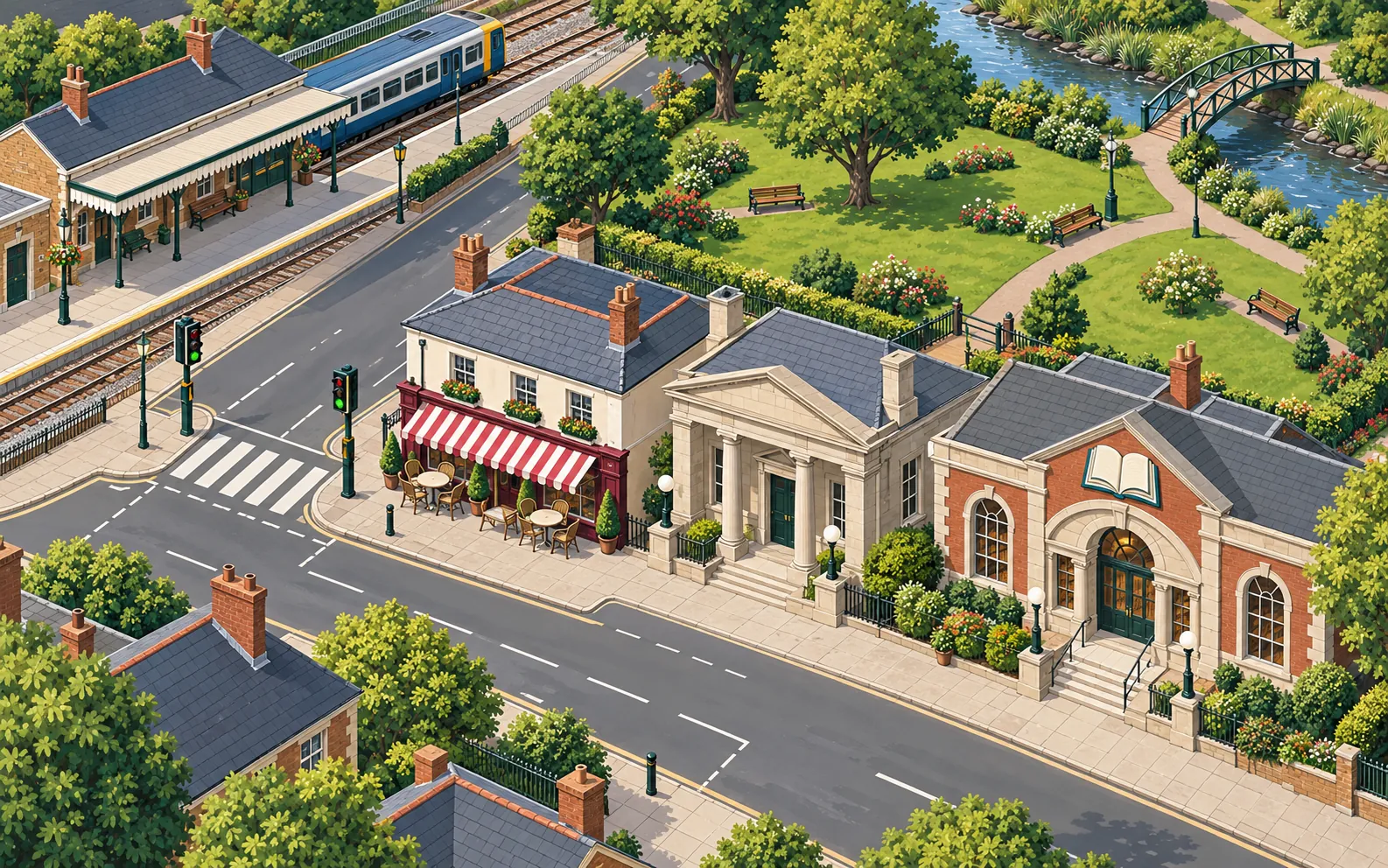
Which landmarks can help you find the way?

Explore the town: find eight useful landmarks

A clear bird's-eye illustration of a small British town centre. A main road runs past a railway station on one side and a cafe with outdoor tables opposite it.

What do opposite, next to and past mean?

Useful words for a walking route
PhraseMeaningExample
oppositeon the other side of the road, facing a placeThe cafe is opposite the station.
next tobeside a placeThe library is next to the park.
go pastcontinue beyond a placeGo past the bank.
turn atchange direction when you reach a placeTurn left at the lights.
on your lefton the left side as you travelThe library is on your left.
go straight oncontinue in the same directionGo straight on until you reach the cafe.

In British English, straight on and straight ahead both mean continue in the same direction. Take the first left means the same as take the first turning on the left.

Which small words do you need?

  • How do I get the station?How do I get to the station?

    Use get to before a place: get to the station.

  • Turn to left at the bank.Turn left at the bank.

    Say turn left or turn right. Put at before the place where you turn.

Question 1No account needed
Someone says, 'Go past the cafe.' What do you do?

Choose one answer.

Answer and explanation

Keep walking beyond the cafe.. Go past means keep moving beyond a place. The cafe is a point on your route.

Question 2No account needed
The station is opposite the cafe. Where is it?

Choose one answer.

Answer and explanation

Across the road from the cafe. Here, opposite means facing the cafe from the other side of the road.

Question 3No account needed
You miss the number of a turning. What do you ask?

Choose one answer.

Answer and explanation

Did you say the first or the second?. This question checks the exact detail you missed: which turning to take.

Question 4No account needed
Choose the correct sentence.

Choose one answer.

Answer and explanation

Turn right at the lights.. Use turn right with no to. Use at to name the point where you change direction.

Built from