Lee buscando lo que omite el catálogo
The archivist
At the far end of the reading room stood a desk that nobody used. Nell kept it clear, although the archive had long since run out of space. Her predecessor had called it the public desk. To put a box on it would have seemed a small breach of faith.
The letter arrived on a Tuesday, folded into quarters and addressed to the archivist rather than to Nell. Its writer wanted to know why the catalogue described the rebuilding of the old swimming baths as a benefactor's gift. Her father had laid the tiles, she wrote. His wages had arrived six weeks late. She had his pay slips. Below this, where a signature should have been, the paper was blank.
Nell sent her reply to the email address on the envelope. The description was a finding aid1, she explained, not a history of the baths. It summarised the collection received from the benefactor's family. Further material could be considered in due course2. She read the reply twice. It was courteous, accurate and unlikely to encourage another letter.
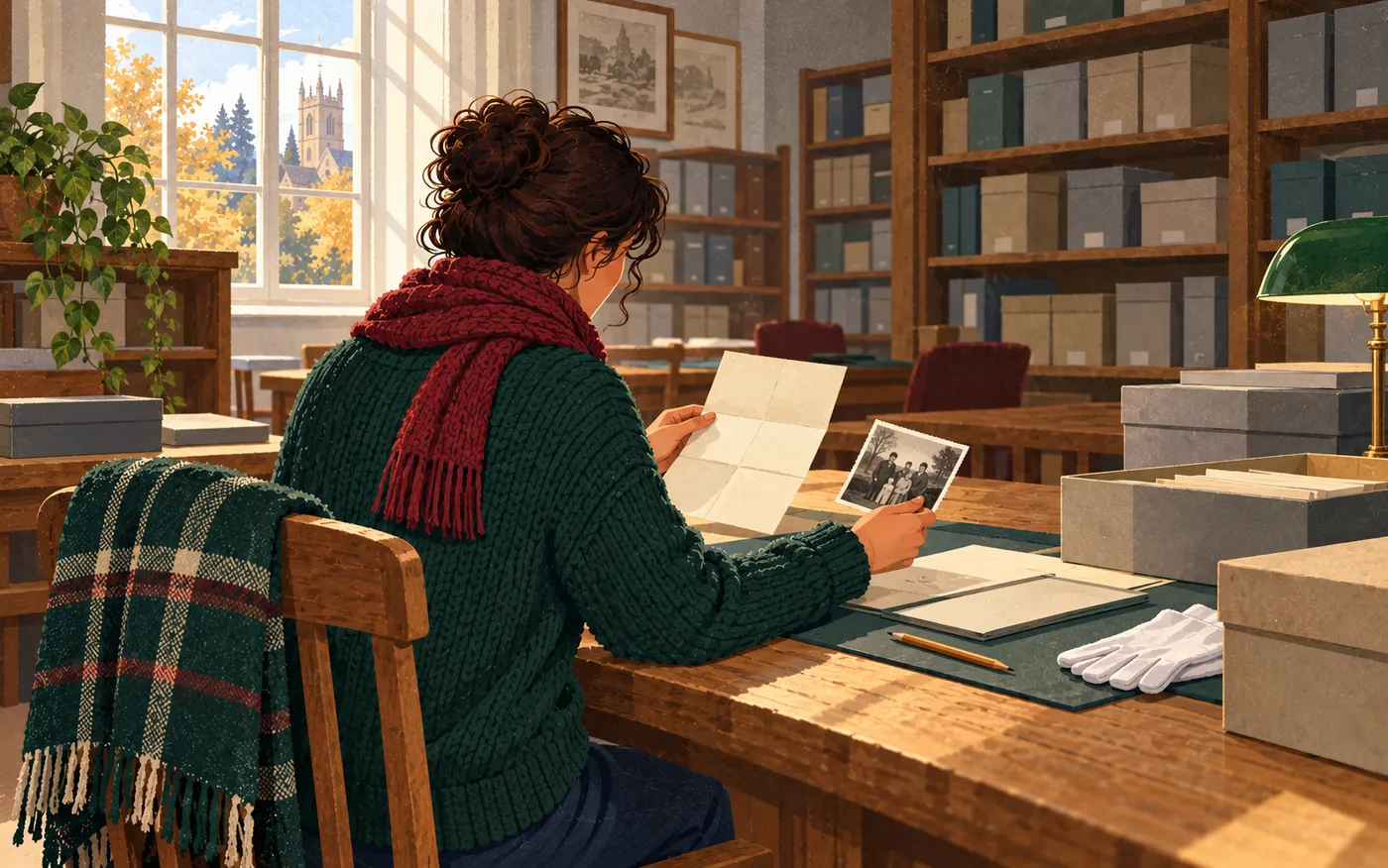
The following afternoon a woman appeared carrying a biscuit tin. She wore a coat too warm for the room and declined to take it off. 'You said further material,' she told Nell. Inside the tin lay twenty-seven pay slips, a photograph and a bus ticket. The slips recorded wages in arrears3; the photograph showed six men beside an unfinished pool. Someone had cut a seventh man out of the picture. Half a sleeve survived.
'Which one is your father?' Nell asked. 'The one holding the trowel. The missing one's his brother.' Nell reached for an accession form4. She could accept the papers, she said, subject to the usual checks. The woman put a finger on the photograph. 'Will you put their names where people can find them?'
Names required evidence. Dates required checking. These were the ordinary scruples5 of her work, and Nell believed in them. Yet she had accepted the word gift from a typed list supplied by the family. No one had asked which part of the rebuilding it covered. She had mistaken the confidence of the typewriter for the confidence of the evidence.
The woman said her name was Ruth. She had left the letter unsigned because her brother still rented a workshop from the benefactor's grandson. 'I'm not asking you to say he was a bad man.' Nell noticed that she had been preparing precisely that defence. She moved the empty form aside.
They spent an hour recording what Ruth knew and where she had learnt it. The pay slips supported a delay in payment; the photograph supplied faces but few secure names. Ruth's account gave them a starting point. It also gave them questions. Nell wrote these down rather than smoothing them over6.
After Ruth left, Nell opened the catalogue. She added a reference to the new material and changed the description to 'Papers relating to the benefactor's contribution to the rebuilding'. It was a provisional7 revision. She knew how easily that word could become an excuse to stop.
In the draft exhibition label, however, the old sentence remained. Nell hovered over it, then saved the file without changing it. The launch was on Friday. Someone would have to telephone the family.
She took the biscuit tin to the public desk. Before leaving, she opened a new note: 'Who else should we ask?' For once, in due course8 seemed less like a date than a decision about who would have to wait.
Con palabras más sencillas
There is a desk for visitors in the crowded archive. Nell keeps it free.
A letter challenges the catalogue's description of the rebuilding of some swimming baths. The writer says her father worked there and was paid late.
Nell replies that the catalogue is a guide to a collection. She says other material can be considered later.
The writer brings pay slips and a damaged photograph to the archive.
She asks whether the workers' names will be easy to find.
Nell sees that she has checked the worker's story more carefully than the family's description.
The visitor, Ruth, explains why she was afraid to sign her letter. Nell listens.
They record Ruth's account, keeping its evidence and its unanswered questions clear.
Nell makes the catalogue more precise, but the change still needs further work.
She leaves the exhibition label unchanged. Changing it will involve a difficult conversation.
She makes room for Ruth's material and writes a question about other people to contact. She now understands that a delay affects whose story gets heard.