読みながら考えましょう。語り手は最後に、どのような旅をするのでしょうか。
Low tide at Holy Island
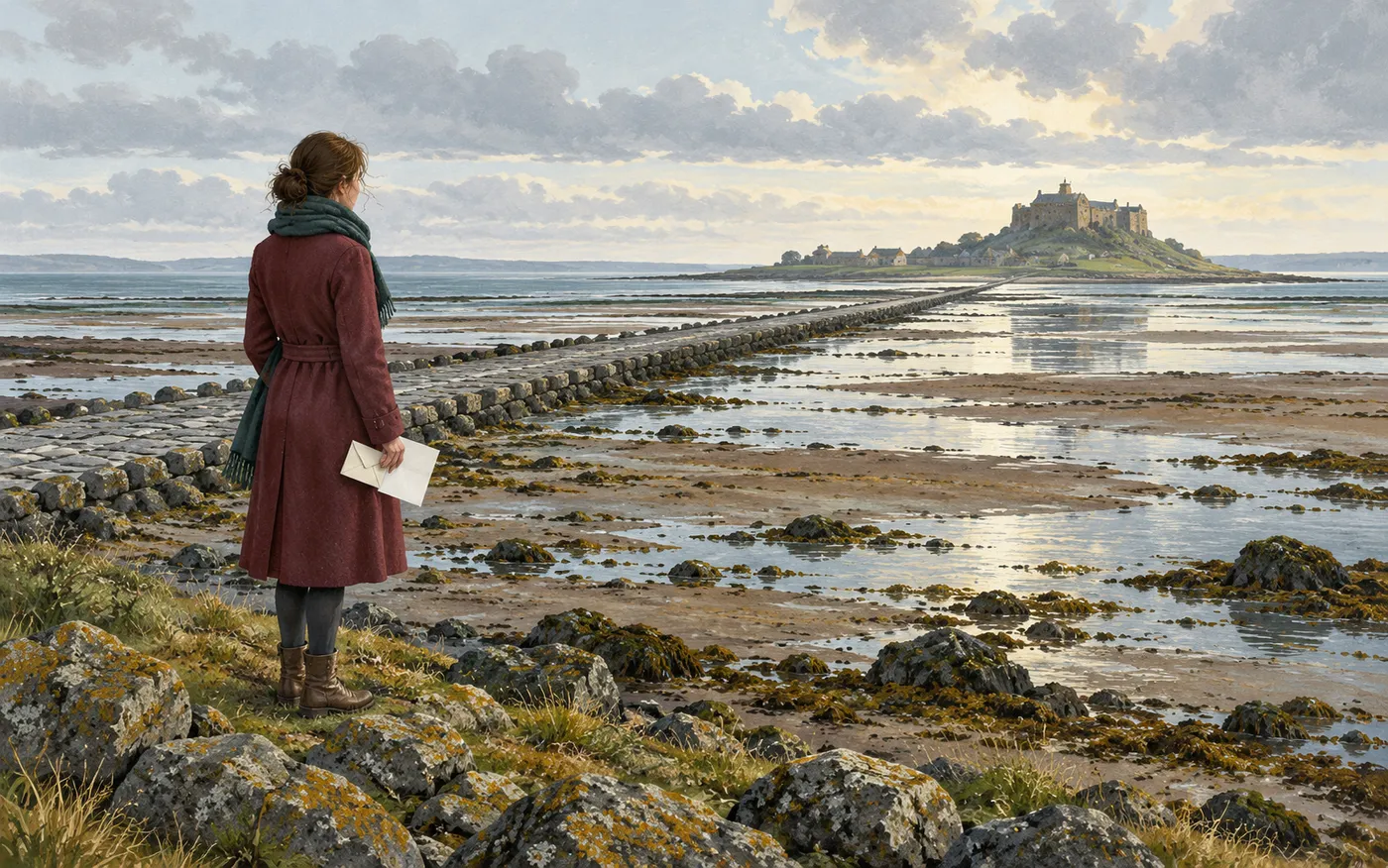
The road to Holy Island lay across the sand like a pencil line somebody had begun to rub out. Beyond it, the island was a low, dark shape beneath the cloud. I stopped on the mainland and unfolded the tide table1. The paper had softened along its creases. My sister had circled yesterday's date.
That was my first excuse. The second was the letter in my coat pocket, which I had brought because leaving it at home would have felt like an answer. Ruth had written three weeks earlier. She was spending a few days on the island. Would I come? We could walk, she said. We needn't talk about Dad.
I had read that last sentence so often that it no longer sounded kind. It sounded like a condition I might fail to meet. Since the funeral, our conversations had been practical: a bill, a key, the name of someone who could take the furniture. We were efficient with objects. With each other, we had become less sure-footed2.
From the parking area, I watched a thin ribbon of water3 shine beside the causeway. The wind lifted a corner of the table and snapped it against my thumb. Yesterday's numbers were useless. I rang the guesthouse where Ruth was staying and asked about the current safe crossing times. The owner checked them. The crossing period had ended; the road was closed. I would have to wait until later.
For a moment I felt an almost shameful surge of relief4. The sea had made the decision. I could drive home and tell Ruth I had tried. A tide was an excellent reason: large, impersonal, difficult to argue with.
Then my phone lit up. A message from Ruth: 'Are you still coming?' I began to type: 'Afraid I've missed it.' The sentence looked neat5, almost cheerful. It made my absence sound like a small problem with a train.
I deleted it. Across the sand, the water was gathering into separate silver threads. Soon they would join. I imagined Ruth looking towards the mainland, unable to see me, perhaps not looking at all. That last possibility stung6 more than it should have.
'I'm here,' I wrote. 'On the wrong side. I can wait.'
Her reply came slowly enough for me to regret the message. 'So can I.'
I tucked7 the letter inside the folded table and put both in my pocket. There was a café further inland. I would find it, order something hot, and ring her. I still had no idea what we would say. But the afternoon, which had seemed to be closing around me, now had room in it8.