Histoire adaptée au niveau

Nouvelle en anglais B1 : bloqués par la neige, avec des questions

Lisez une nouvelle en anglais B1 sur trois inconnus dans une gare écossaise enneigée : huit glosses, une scène de gare et des questions sur les conditionnels.

L’essentiel

Trois inconnus sont bloqués dans une gare écossaise lorsque la neige interrompt leur voyage. Observez la différence entre une suite possible, If the road clears, a minibus will come, et une situation imaginée, If I were at home, I'd be complaining about the heating ; la forme passée peut ici décrire un présent imaginé.

Jaune l’idée à retenirBleu l’anglais à retenirRouge point de vigilance

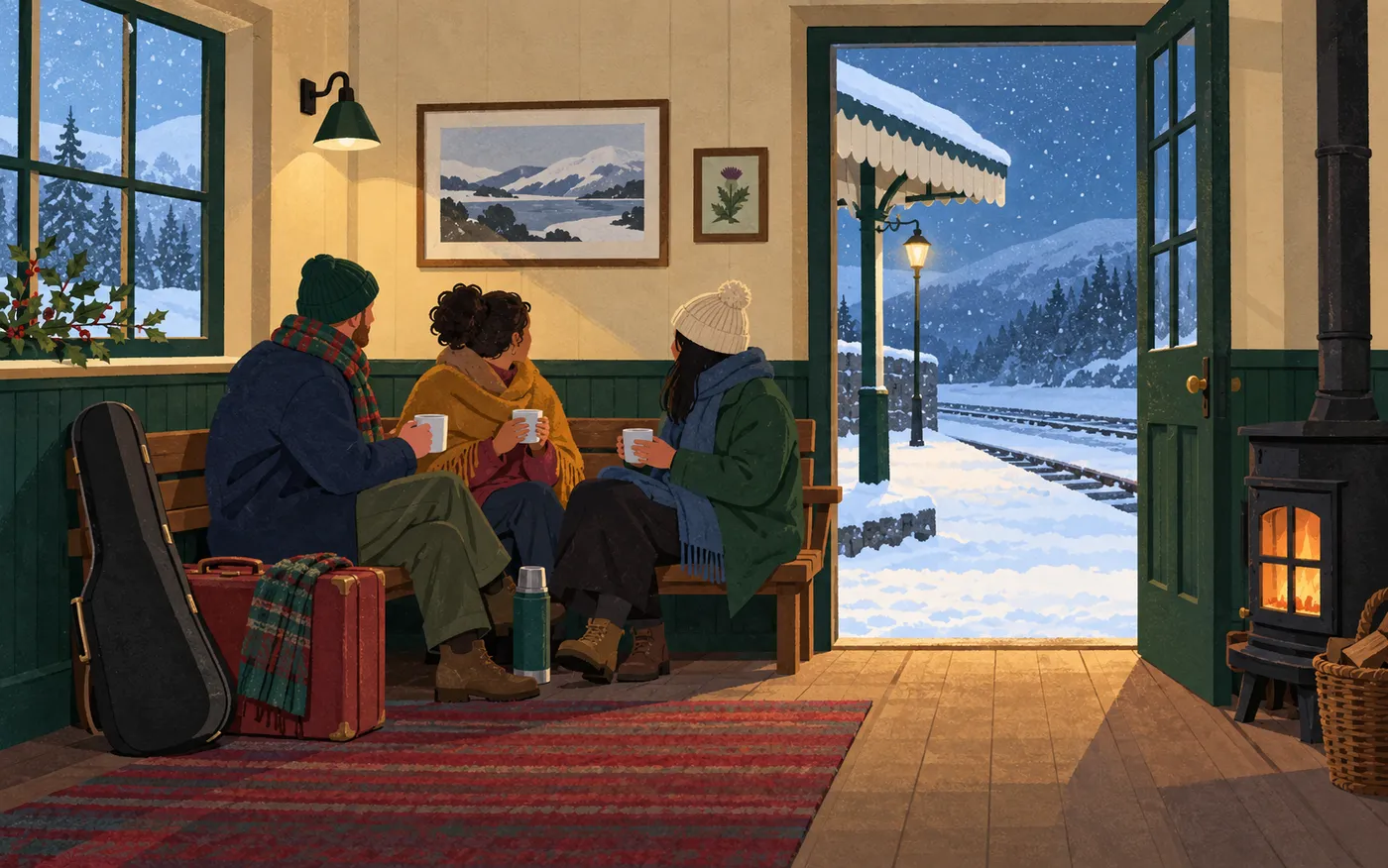
Trois voyageurs partagent des boissons chaudes dans une salle d’attente de gare chauffée, tandis que la neige recouvre le quai dehors.
Pendant l’attente, Lena imagine : If I were at home, I'd be complaining about the heating. Illustration : Atelier

Nouvelle B1 – Un voyage en hiver

Snowed in

The snow began while Lena was changing trains at a small station in the Scottish Highlands. At first, it looked beautiful. Then the departure board1 went blank.

'Nothing's moving tonight,' said Euan, the station assistant. 'The line is blocked.'

Lena sat on a wooden bench beside her suitcase2. She had promised to help her sister move house the next morning. Opposite her, a man held a violin case. A woman in a green coat was staring at her phone.

'No signal,' the woman said. 'I'm Amina, by the way.'

'Ben,' said the man. 'I was going to play at a wedding. I suppose they'll have to sing.'

Euan opened the waiting room3, and they carried their bags inside. Lena held her cold hands near the radiator4. Outside, snow covered the platform.

'If the road clears, a minibus will come,' Euan told them. 'I'll check again in half an hour.'

Amina opened a flask5 of soup. 'If we share this, we'll all have something warm.'

There wasn't much, but Euan found three mugs. Ben offered some oatcakes from his bag. Soon, they were eating together.

'If I were at home, I'd be complaining about the heating,' Lena said. Everyone laughed.

Ben took out his violin. He played a quiet tune, then a faster one. Amina tapped6 her foot. Lena stopped checking the clock.

An hour later, Euan returned. 'The road's clear. The minibus is on its way.'

Ben closed his case, and Amina put away the empty flask. Lena looked at the mugs on the bench. She had arrived feeling worried and alone. Now she was almost sorry to leave.

Outside, the snow had stopped. They wrapped up7 warmly and walked towards the minibus together.

'If you're ever in Glasgow, come and hear me play,' Ben said.

Lena smiled. 'Only if you bring the oatcakes8.'

En termes plus simples

Lena was changing trains when heavy snow stopped the trains.

Euan said that no trains could move that night.

Lena needed to help her sister the next morning. Two other passengers were waiting too.

Amina could not get a phone signal.

Ben had planned to play his violin at a wedding.

Euan opened a warm room for them.

A minibus could come after the road was clear.

Amina offered to share her soup.

They shared soup and oatcakes.

Lena joked about how she would feel at home.

Ben played music. Lena began to enjoy the wait.

Later, the road was clear and a minibus was coming.

Lena felt close to the people she had just met.

They put on warm clothes and went outside.

Ben invited them to hear him play in Glasgow.

Lena joked that she wanted more oatcakes too.
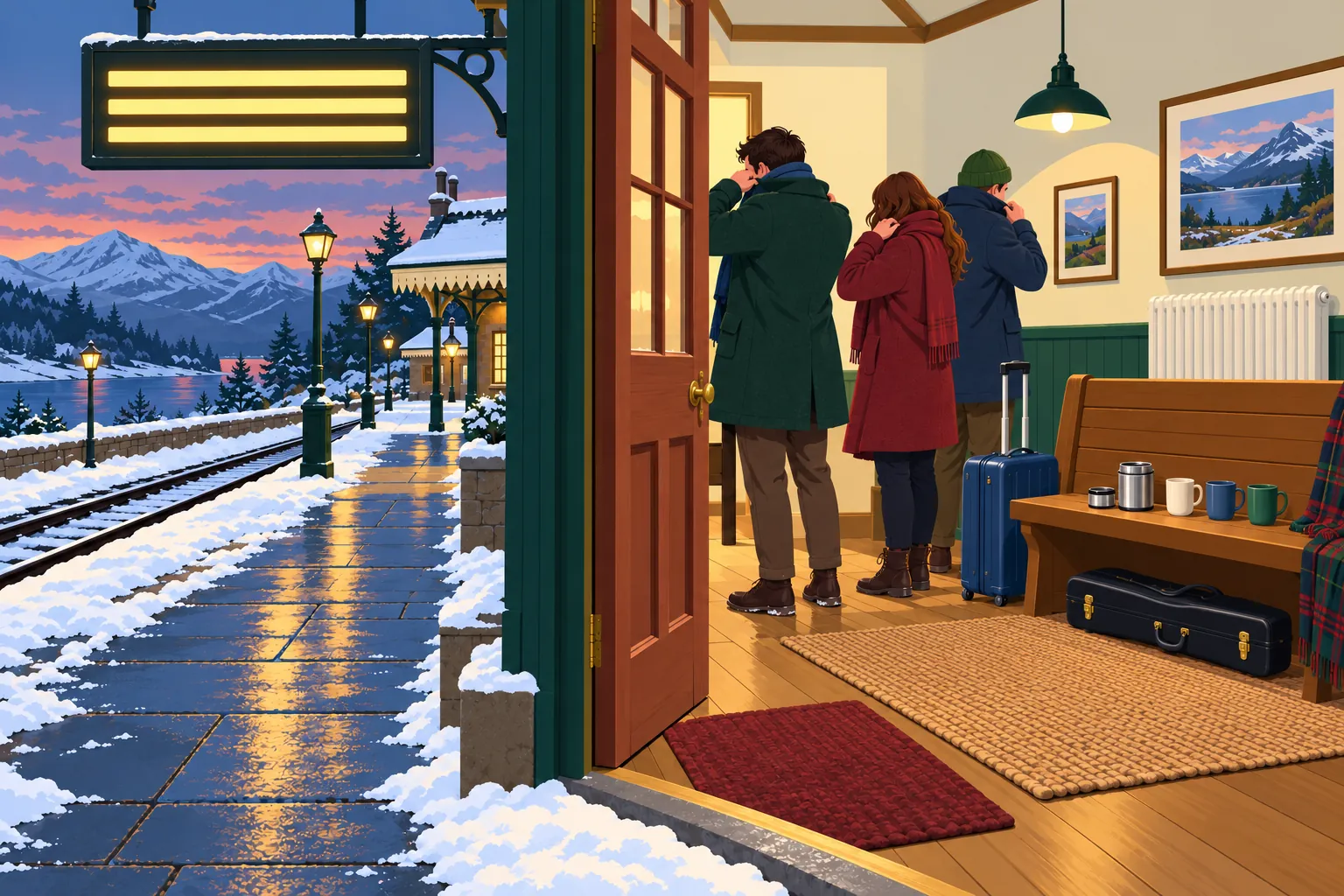
Où attendent les voyageurs ?

Explorez la gare enneigée

Vue en coupe d’une petite gare écossaise à la tombée du jour. À gauche, sur un quai extérieur enneigé, un panneau de départs lumineux ne présente aucun texte lisible.

Quelles conditions sont possibles et lesquelles sont imaginées ?

Utilisez la situation pour comprendre la forme verbale
Les mots de l’histoireSensStructure
If the road clears, a minibus will come.La route pourrait être dégagée plus tard.if + présent, will + forme de base du verbe
If we share this, we'll all have something warm.Il est possible de partager la soupe maintenant.if + présent, will + forme de base du verbe
If I were at home, I'd be complaining about the heating.Lena est à la gare. Elle s’imagine chez elle au même moment.if + passé, would + forme de base du verbe

Dans If I were at home, were aide à exprimer une situation imaginée maintenant. Dans If you're ever in Glasgow, come and hear me play, la deuxième partie est une invitation. Une phrase avec if peut aussi se terminer par une consigne ou une invitation.

  • If the road will clear, a minibus will come.If the road clears, a minibus will come.

    Utilisez le présent après if dans cette condition future : if the road clears.

  • If I were at home, I will be complaining.If I were at home, I'd be complaining.

    Lena imagine une autre situation présente : elle utilise donc would, contracté en 'd.

Qu’est-ce qui change pendant l’attente des voyageurs ?

Question 1Aucun compte nécessaire
Pourquoi Lena souhaite-t-elle poursuivre son voyage ?

Choisissez une seule réponse.

Réponse et explication

She has promised to help her sister move house.. L’histoire indique que Lena a promis d’aider sa sœur à déménager le lendemain matin.

Question 2Aucun compte nécessaire
Que doit-il se passer avant que le minibus puisse atteindre la gare ?

Choisissez une seule réponse.

Réponse et explication

The road has to become clear.. Euan dit qu’un minibus viendra si la route est dégagée. Plus tard, il confirme qu’elle l’est.

Question 3Aucun compte nécessaire
Pourquoi Lena regrette-t-elle presque de partir ?

Choisissez une seule réponse.

Réponse et explication

She has enjoyed sharing food and music with the others.. Partager de la nourriture et écouter Ben transforme l’attente. Lena ne se sent plus inquiète et seule.

Question 4Aucun compte nécessaire
Lena dit : « If I were at home, I'd be complaining about the heating. » Où est-elle ?

Choisissez une seule réponse.

Réponse et explication

At the station, imagining being at home.. Lena est toujours dans la salle d’attente. La forme passée were introduit une situation présente imaginée.

Établi à partir de