पढ़ना

Underground पर B2 अंग्रेज़ी पठन: प्रश्नोत्तरी

1863 से युद्धकालीन आश्रयों तक Underground पर B2 अंग्रेज़ी पढ़ें: समयरेखा, कर्मवाच्य रूप, कृदंत उपवाक्य और पठन प्रश्न।

संक्षेप में

London की पहली भूमिगत रेलवे 10 जनवरी 1863 को खुली; गहरी सुरंगें और स्पष्ट नक्शे बाद में आए। इतिहास पढ़ें और were dug व passengers studying it देखें। अकेला -ing रूप नहीं बताता कि घटना अभी हो रही है।

पीला याद रखने योग्य मुख्य बातनीला सीखने योग्य अंग्रेज़ीलाल सावधानी

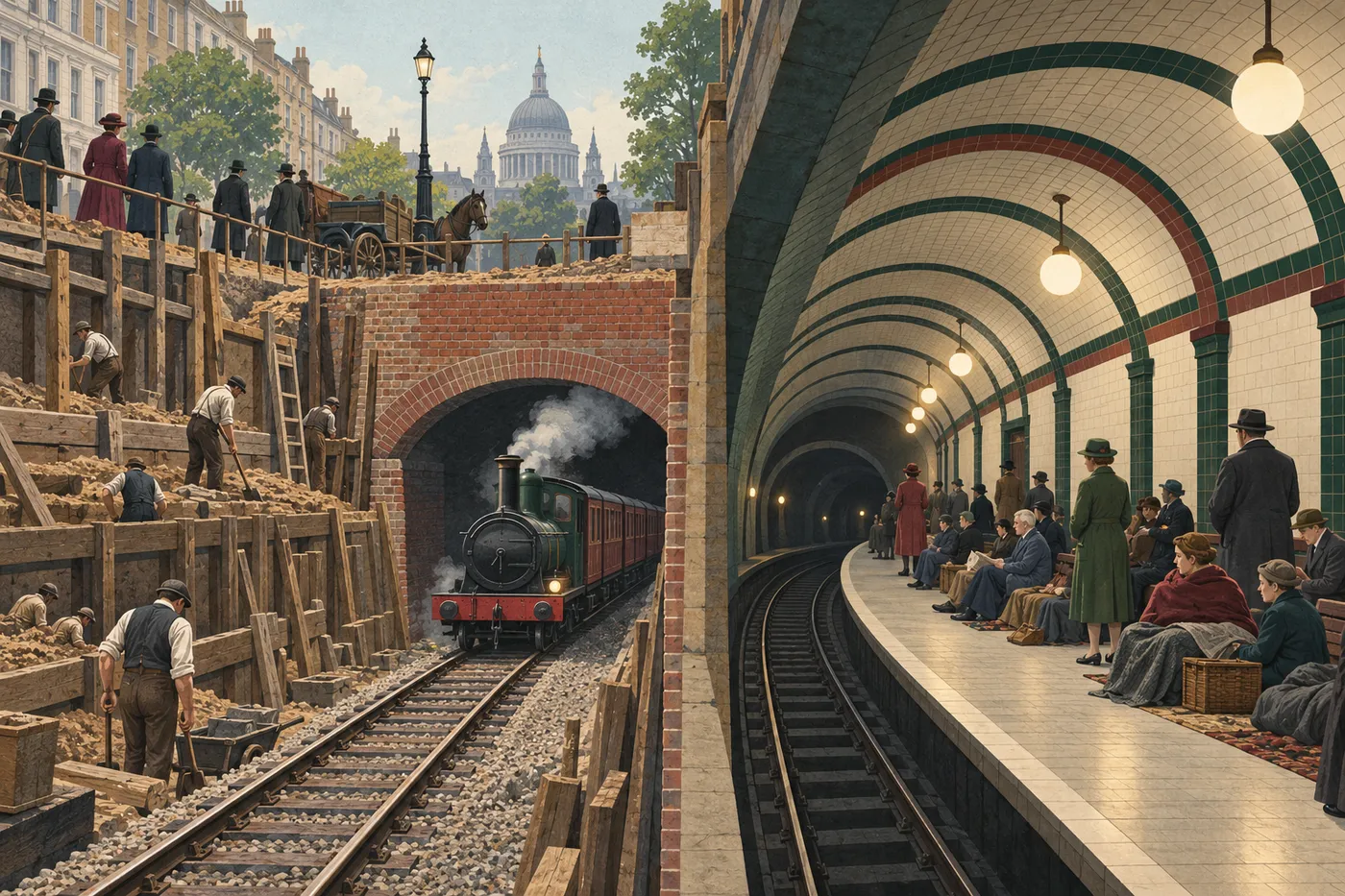
शुरुआती भाप ट्रेन उथली सुरंग से जाती है और लोग स्टेशन के प्लेटफ़ॉर्म पर आश्रय लेते हैं।
The railway was built near the surface, and people later sheltered on its platforms. चित्र: Atelier

सड़कों के नीचे की रेलवे से संपर्कों के नक्शे तक

How London learnt to travel underground

On 10 January 1863, the Metropolitan Railway opened to passengers between Paddington and Farringdon. Connecting major railway stations, it offered a new route through London. It was the world's first underground passenger railway. The trains were pulled by steam locomotives1, so an underground journey began with technology already familiar from railways above ground.

The early lines were built using a method called cut and cover2. Long trenches3 were dug from the street, tracks were laid, and a roof was built over them. Built close to the surface, these lines were different from the deep tunnels many people now picture. Work could change the streets above: buildings sometimes had to be removed. In 1868, the first section of the District Railway opened between South Kensington and Westminster.

A further change came in 1890, when the City & South London Railway opened. Its trains ran through deep tunnels, and the railway used electric power. Those narrow, round tunnels help explain the name the Tube4. Sections of that railway later became part of the Northern line.

As the network grew, understanding it became a design problem as well as an engineering one. In 1931, Harry Beck produced a diagrammatic map5. First issued in 1933, it used horizontal, vertical and diagonal lines, with evenly spaced stations. Designed to show connections rather than exact distances, the map helped passengers plan journeys. Passengers studying it could see where to change trains, although the space between two stations on the page did not show their true distance apart.

During the Second World War, Underground stations were used as air-raid shelters6. People sheltering7 on platforms gave places built for travel another purpose. The history of the Underground therefore includes much more than trains. It is also a story of construction, public safety and wayfinding8: helping people understand where they are and where to go next.

शुरुआती रेलवे को क्या चाहिए था?

इतिहास की चार चीज़ें

Underground का कौन-सा विकास पहले हुआ?

छह घटनाएँ क्रम में रखें

  1. 1863
    The Metropolitan Railway opens.यात्री Paddington और Farringdon के बीच भूमिगत यात्रा कर सकते हैं।
  2. 1868
    The first part of the District Railway opens.नया हिस्सा South Kensington और Westminster जोड़ता है।
  3. 1890
    The City & South London Railway opens.बिजली की रेलवे गहरी सुरंगों से जाती है।
  4. 1931
    Harry Beck designs a new map.डिज़ाइन नेटवर्क को सरल, नियमित रेखाओं से दिखाता है।
  5. 1933
    Beck's map is first issued.यात्रियों को नया आरेखीय नक्शा मिलता है।
  6. 1939-1945
    Stations are used as shelters during the Second World War.लोग हवाई हमलों से बचने भूमिगत जाते हैं।

इतिहास में कर्मवाच्य और कृदंत उपवाक्य क्यों हैं?

कर्ता खोजकर छोटा रूप पढ़ें
पाठ के शब्दसंबंध
Long trenches were dug.खाइयों पर काम हुआ। Workers dug them.
Built close to the surface, these lines were different.The lines were built close to the surface.
First issued in 1933, it used horizontal, vertical and diagonal lines.The map was first issued in 1933. दोनों हिस्सों का कर्ता नक्शा है।
Passengers studying it could see where to change trains.The passengers were studying the map. -ing वाक्यांश उनका वर्णन करता है।
People sheltering on platforms gave places built for travel another purpose.People were sheltering there. The places had been built for travel.

कर्मवाच्य में काम का असर पाने वाली चीज़ पहले आती है। tracks were laid में ध्यान पटरियों पर है। कृदंत उपवाक्य वर्णन छोटा कर सकता है: यहाँ people sheltering, people who were sheltering है। आसपास के वाक्य से समय खोजें।

  • The trenches were dig from the street.The trenches were dug from the street.

    were + dug रखें। Dug, dig का भूतकृदंत है।

  • Designed to show connections, passengers found the map useful.Designed to show connections, the map helped passengers plan journeys.

    नक्शा डिज़ाइन हुआ था, यात्री नहीं। शुरुआती वर्णन के बाद the map रखें।

क्या तारीखें, डिज़ाइन के चुनाव और व्याकरण जोड़ सकते हैं?

प्रश्न 1खाते की ज़रूरत नहीं
शुरुआती cut-and-cover लाइनें कैसे बनीं?

एक उत्तर चुनें।

उत्तर और व्याख्या

Trenches were dug, tracks were laid, and a roof was added.. पाठ तीन चरण देता है: खाइयाँ खोदना, पटरियाँ बिछाना और छत बनाना।

प्रश्न 2खाते की ज़रूरत नहीं
1890 में खुली रेलवे से क्या बदला?

एक उत्तर चुनें।

उत्तर और व्याख्या

It used deep tunnels and electric trains.. City & South London Railway में गहरी सुरंगें और बिजली थीं। पहले की Metropolitan Railway 1863 में खुली।

प्रश्न 3खाते की ज़रूरत नहीं
दूरियाँ बदलने पर भी Beck का नक्शा उपयोगी क्यों था?

एक उत्तर चुनें।

उत्तर और व्याख्या

It made connections between lines easier to see.. नक्शा संपर्कों पर केंद्रित था। सही दूरियों के बिना भी यात्री देख सकते थे कि ट्रेन कहाँ बदलें।

प्रश्न 4खाते की ज़रूरत नहीं
इस पाठ में 'People sheltering on platforms' का क्या अर्थ है?

एक उत्तर चुनें।

उत्तर और व्याख्या

People who were sheltering there during the war. Sheltering लोगों का वर्णन है। दूसरा विश्व युद्ध अतीत का समय देता है।

प्रश्न 5खाते की ज़रूरत नहीं
'Underground stations were used as air-raid shelters' का मुख्य केंद्र क्या है?

एक उत्तर चुनें।

उत्तर और व्याख्या

The stations and their wartime use. कर्मवाच्य Underground stations को कर्ता बनाकर बताता है कि युद्ध में उनका उपयोग कैसे बदला।

आधारित पाठ्यक्रम