القراءة

قراءة إنجليزية للمستوى B2 عن مترو Underground: اختبار

جرّب قراءة إنجليزية للمستوى B2 عن مترو Underground من عام 1863 إلى ملاجئ الحرب، مع خط زمني وصيغ المبني للمجهول وجمل بصيغ مشتقة من الفعل وأسئلة قراءة.

باختصار

افتُتح أول خط حديدي تحت الأرض في London في 10 يناير 1863؛ وجاءت الأنفاق الأعمق والخرائط الأوضح لاحقًا. اقرأ التاريخ ولاحظ were dug وpassengers studying it. صيغة -ing وحدها لا تخبرك بأن الحدث يجري الآن.

أصفر الفكرة الجديرة بالتذكّرأزرق تعبير إنجليزي للتعلّمأحمر انتبه

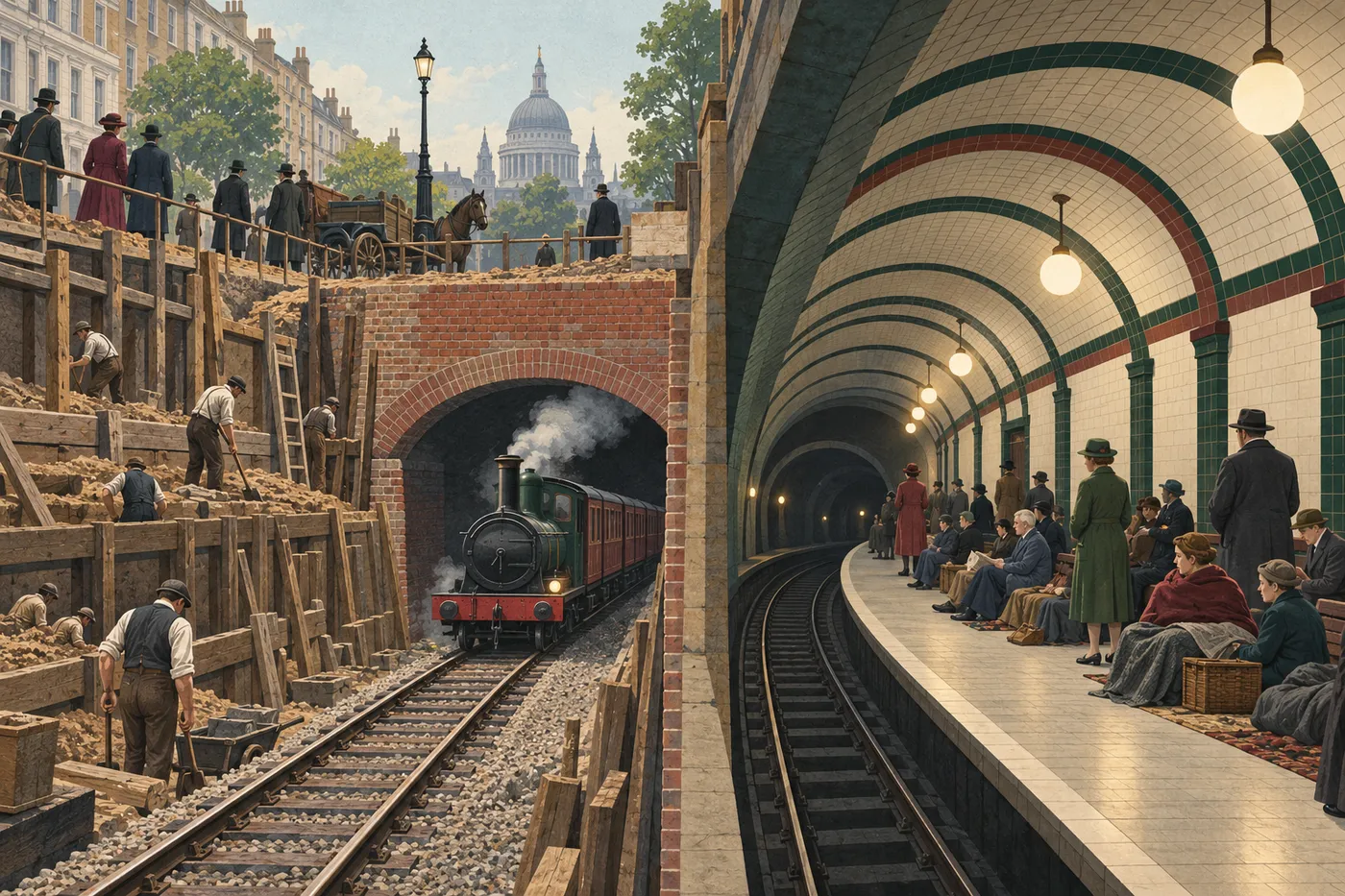
قطار بخاري قديم يمر في نفق ضحل، بينما يحتمي الناس على رصيف محطة.
The railway was built near the surface, and people later sheltered on its platforms. الرسم: Atelier

من سكة حديد تحت الشوارع إلى خريطة للوصلات

How London learnt to travel underground

On 10 January 1863, the Metropolitan Railway opened to passengers between Paddington and Farringdon. Connecting major railway stations, it offered a new route through London. It was the world's first underground passenger railway. The trains were pulled by steam locomotives1, so an underground journey began with technology already familiar from railways above ground.

The early lines were built using a method called cut and cover2. Long trenches3 were dug from the street, tracks were laid, and a roof was built over them. Built close to the surface, these lines were different from the deep tunnels many people now picture. Work could change the streets above: buildings sometimes had to be removed. In 1868, the first section of the District Railway opened between South Kensington and Westminster.

A further change came in 1890, when the City & South London Railway opened. Its trains ran through deep tunnels, and the railway used electric power. Those narrow, round tunnels help explain the name the Tube4. Sections of that railway later became part of the Northern line.

As the network grew, understanding it became a design problem as well as an engineering one. In 1931, Harry Beck produced a diagrammatic map5. First issued in 1933, it used horizontal, vertical and diagonal lines, with evenly spaced stations. Designed to show connections rather than exact distances, the map helped passengers plan journeys. Passengers studying it could see where to change trains, although the space between two stations on the page did not show their true distance apart.

During the Second World War, Underground stations were used as air-raid shelters6. People sheltering7 on platforms gave places built for travel another purpose. The history of the Underground therefore includes much more than trains. It is also a story of construction, public safety and wayfinding8: helping people understand where they are and where to go next.

ما الذي احتاج إليه الخط الحديدي المبكر؟

أربعة أشياء من التاريخ

أي تطور في مترو Underground جاء أولًا؟

رتّب ست لحظات

  1. 1863
    The Metropolitan Railway opens.يمكن للركاب السفر تحت الأرض بين Paddington وFarringdon.
  2. 1868
    The first part of the District Railway opens.يربط القسم الجديد South Kensington وWestminster.
  3. 1890
    The City & South London Railway opens.يعمل خط حديدي كهربائي عبر أنفاق عميقة.
  4. 1931
    Harry Beck designs a new map.يعرض التصميم الشبكة بخطوط بسيطة ومنتظمة.
  5. 1933
    Beck's map is first issued.يتلقى الركاب الخريطة التخطيطية الجديدة.
  6. 1939-1945
    Stations are used as shelters during the Second World War.ينزل الناس تحت الأرض للحماية من الغارات الجوية.

لماذا يستخدم النص التاريخي المبني للمجهول والجمل بصيغ مشتقة من الفعل؟

افهم الصيغة الأقصر بتحديد فاعلها
كلمات من النصالعلاقة
Long trenches were dug.وقعت عملية الحفر على الخنادق. Workers dug them.
Built close to the surface, these lines were different.The lines were built close to the surface.
First issued in 1933, it used horizontal, vertical and diagonal lines.The map was first issued in 1933. والخريطة فاعل الجزأين من حيث البنية النحوية الإنجليزية.
Passengers studying it could see where to change trains.The passengers were studying the map. وتصفهم عبارة -ing.
People sheltering on platforms gave places built for travel another purpose.People were sheltering there. The places had been built for travel.

يضع المبني للمجهول متلقي الفعل أولًا. في tracks were laid، يركز النص على القضبان. ويمكن للجملة ذات الصيغة المشتقة أن تختصر الوصف: تعني people sheltering هنا people who were sheltering. استخدم الجملة المحيطة لتحديد الوقت.

  • The trenches were dig from the street.The trenches were dug from the street.

    استخدم were + dug. فكلمة Dug هي اسم المفعول من dig.

  • Designed to show connections, passengers found the map useful.Designed to show connections, the map helped passengers plan journeys.

    الخريطة هي التي صُممت، لا الركاب. ضع the map بعد الوصف الافتتاحي.

هل يمكنك الربط بين التواريخ واختيارات التصميم والقواعد؟

السؤال 1لا تحتاج إلى حساب
كيف بُنيت الخطوط الأولى بطريقة الحفر والتغطية؟

اختر إجابة واحدة.

الإجابة والشرح

Trenches were dug, tracks were laid, and a roof was added.. يذكر النص ثلاث مراحل: حفر الخنادق ومد القضبان وبناء سقف.

السؤال 2لا تحتاج إلى حساب
ما الذي تغير مع الخط الذي افتُتح عام 1890؟

اختر إجابة واحدة.

الإجابة والشرح

It used deep tunnels and electric trains.. استخدم City & South London Railway أنفاقًا عميقة وطاقة كهربائية. أما Metropolitan Railway السابق فافتُتح عام 1863.

السؤال 3لا تحتاج إلى حساب
لماذا قد تكون خريطة Beck مفيدة رغم تغيير المسافات؟

اختر إجابة واحدة.

الإجابة والشرح

It made connections between lines easier to see.. ركزت الخريطة على الوصلات. واستطاع الركاب رؤية مواضع تبديل القطارات دون الحاجة إلى مسافات دقيقة.

السؤال 4لا تحتاج إلى حساب
ماذا تعني «People sheltering on platforms» في هذا النص؟

اختر إجابة واحدة.

الإجابة والشرح

People who were sheltering there during the war. تصف Sheltering الناس. وتحدد الحرب العالمية الثانية الزمن الماضي.

السؤال 5لا تحتاج إلى حساب
ما محور التركيز الرئيسي في «Underground stations were used as air-raid shelters»؟

اختر إجابة واحدة.

الإجابة والشرح

The stations and their wartime use. يجعل المبني للمجهول Underground stations في موقع الفاعل النحوي الإنجليزي، ويخبرنا كيف تغير استخدامها خلال الحرب.

مُعدّ انطلاقًا من