Updated
Matching game
Body idioms: match the meaning
Learn body idioms with natural examples and clear meanings, then match expressions to situations and check how figurative wording works in context.
- B2
- 10 pairs
- Tap to match
- Learn this in the B2 notebook →
In short
Body idioms use words such as hand, eye and heart to express a different idea: give someone a hand means help them. Learn the whole expression with its meaning. Translating each body word separately can hide the meaning. Match the ten expressions, then try them in conversation.
Yellow the idea to rememberBlue English to learnRed watch out
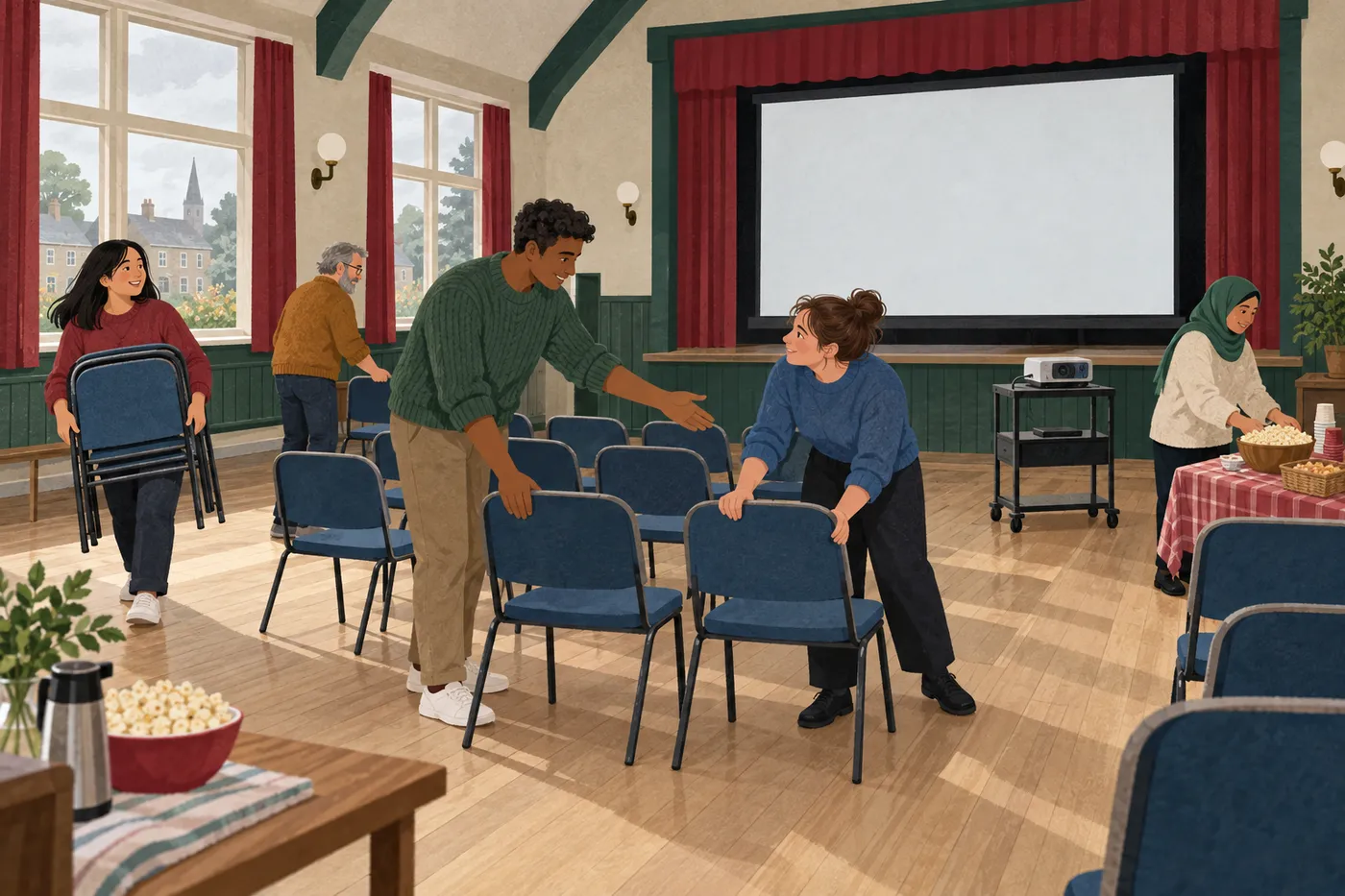
What do these body idioms mean?
Tap one on the left, then its partner on the right.
How do you use the idioms in a sentence?
| Situation | What someone says |
|---|---|
| Buying equipment | The new projector cost an arm and a leg. |
| Moving furniture | Could you give me a hand with these chairs? |
| Looking after the door | Could you keep an eye on the entrance while I make the tea? |
| Reacting to a surprising joke | The director's coming tonight? You're pulling my leg! |
| Feeling nervous | I agreed to introduce the film, but now I'm getting cold feet. |
| Remembering a much-loved place | It broke her heart when the little cinema closed. |
| Preparing a welcome | You don't have to learn your introduction by heart. |
| Raising a concern | I need to get something off my chest: I'm doing most of the preparation. |
| Choosing a film | We don't always see eye to eye on which films to show. |
| Encouraging a friend | Keep your chin up. Tonight was quiet, but more people may come next time. |
Most of these expressions suit friendly speech and informal messages. Keep your chin up is warm encouragement; use it when you know the person well enough, and listen to their problem too. For an event instruction, Please watch the entrance until six gives more exact information than Keep an eye on things.
Which body parts appear in these expressions?
These cards show the ordinary body parts. The meanings in the game belong to the whole expressions. Someone who gets cold feet may be wearing warm socks.
Body words inside the idioms
Find:
Which parts of an idiom can change?
Change the verb for the time and change the person where needed: give me a hand, gave her a hand; pull my leg, pulling his leg. Keep the other words in their usual form. The small words belong to the expression too.
- Could you give me the hand with these chairs?Could you give me a hand with these chairs?
The expression is give someone a hand, with a.
- I learnt the introduction with heart.I learnt the introduction by heart.
Use by heart when you can repeat something from memory.
- We don't see eye with eye.We don't see eye to eye.
Keep to in see eye to eye. Add with for the person: I see eye to eye with Jo.